


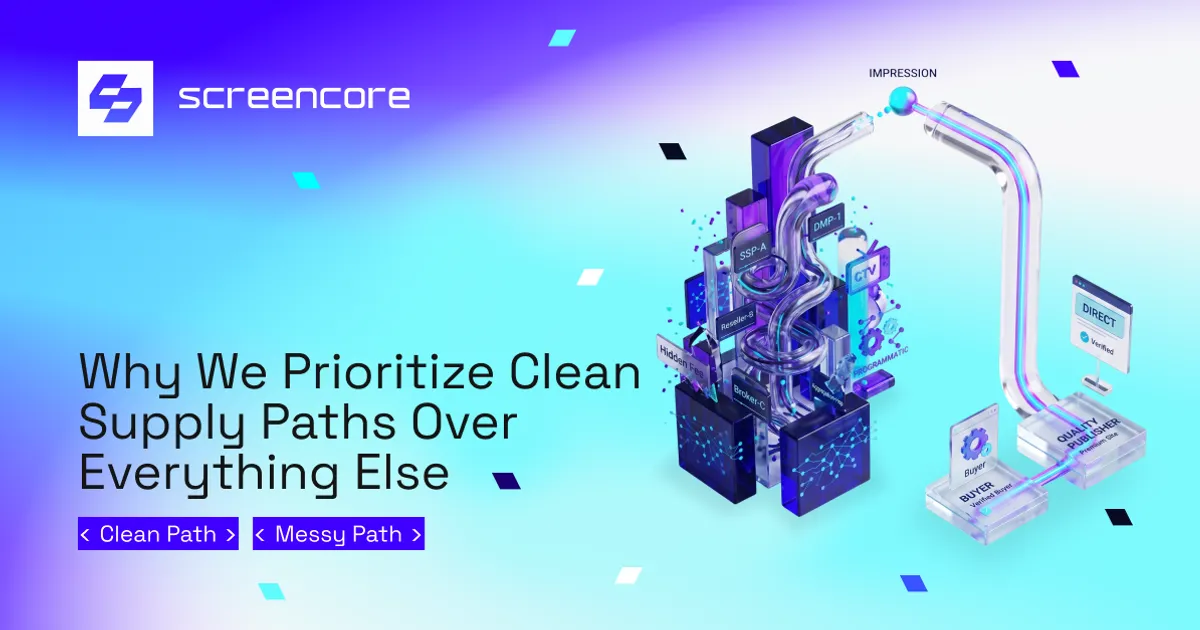
For years, programmatic advertising chased one number above all others.
Scale.
More publishers. More exchanges. More impressions. More opportunities to bid.
On paper, it sounded logical. If you increase the number of available impressions, performance should improve.
Except it often didn't.
The industry built incredibly sophisticated buying technology while quietly accepting an inefficient supply chain. Every extra reseller, every duplicated auction and every unnecessary intermediary added friction that advertisers eventually paid for.
Most never realised it.
The invoice didn't say, "You paid for the same impression three times."
It simply looked like another campaign report.
After spending enough time inside programmatic, one lesson becomes impossible to ignore.
Good buying starts long before the bid.
It starts with the quality of the supply.
More Inventory Doesn't Mean More Opportunity
One of the biggest misconceptions in ad tech is that a larger supply graph automatically creates better campaign performance.
Experience tells a different story.
Adding more supply partners often introduces more duplication than diversity.
The same publisher inventory appears through multiple exchanges. The same impression travels through several intermediaries before reaching a DSP. Every participant takes a fee, yet the advertiser still ends up competing for exactly the same opportunity.
Nothing about that process makes media buying smarter.
It simply makes it more expensive.
This is why experienced traders rarely celebrate the biggest supply graph.
They look for the cleanest one.
Fewer unnecessary hops between publisher and advertiser usually translate into greater transparency, more predictable pricing and stronger campaign performance.
The goal isn't buying more inventory.
It's buying the right inventory more efficiently.
AI Can Only Optimise What It Sees
Artificial intelligence has become remarkably good at recognising patterns.
But AI isn't magic.
It learns from the signals it receives.
If those signals come from duplicated auctions, poor-quality inventory or fragmented supply paths, optimisation becomes less reliable.
The algorithm may still produce acceptable results.
It simply works much harder than it should.
Think about it this way.
If the same impression appears five different times through five different supply paths, AI doesn't discover five opportunities.
It discovers one opportunity disguised as five.
That creates unnecessary complexity before optimisation has even started.
The conversation around AI often focuses on bidding strategies.
It probably shouldn't.
The quality of incoming supply has a greater influence on campaign outcomes than many advertisers realise.
Clean inputs create better outputs.
That's true in machine learning.
It's equally true in media buying.
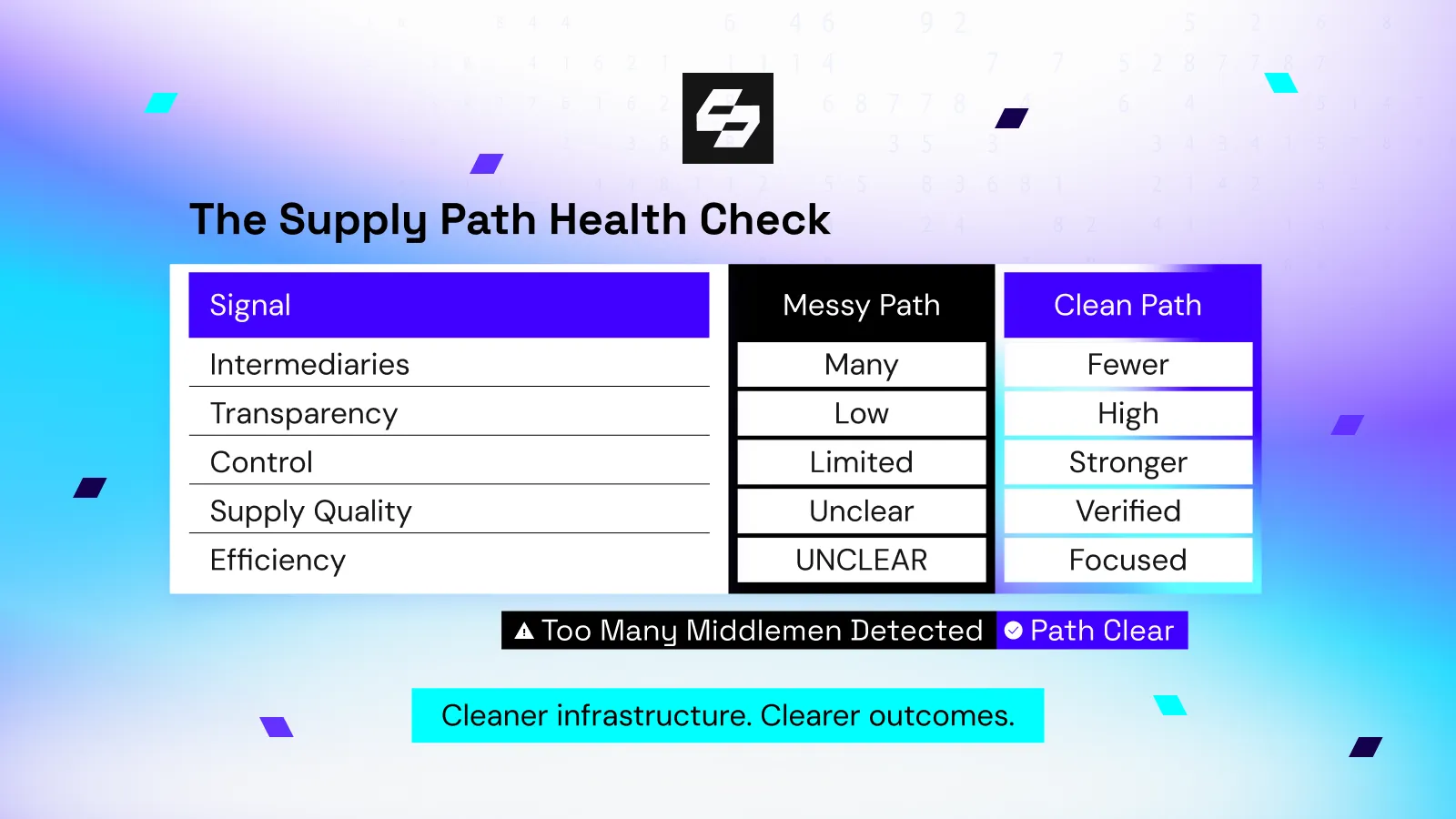
Supply Path Optimization (SPO) removes inefficient routes, improving supply quality, transparency, and campaign efficiency.
Supply Path Optimisation Is No Longer Optional
A few years ago, Supply Path Optimization, or SPO, felt like an advanced topic discussed mostly by large holding companies.
Today it's becoming standard practice.
Not because it sounds technically impressive.
Because budgets are under greater scrutiny than ever.
Marketing teams are expected to explain where every advertising dollar goes. Procurement teams ask tougher questions. CFOs expect greater accountability.
Reducing unnecessary intermediaries answers all three.
A cleaner supply path means fewer hidden fees, fewer duplicated auctions and a clearer understanding of how media budgets move from advertiser to publisher.
Transparency has become a commercial advantage rather than a compliance exercise.
That's an important shift.
Premium Publishers Benefit Too
SPO isn't only about advertisers saving money.
Publishers have just as much to gain.
Quality publishers invest heavily in journalism, entertainment and original content. They deserve a buying ecosystem that reflects the value of those environments rather than burying them beneath unnecessary layers of reselling.
When supply becomes cleaner, publishers retain greater control over inventory quality and pricing. Advertisers gain more confidence in where campaigns appear. Both sides benefit from a healthier marketplace.
Everyone except the unnecessary middlemen.
That's one reason the industry continues moving toward more direct and transparent supply relationships.
The incentives finally align.
Why Transparency Matters More Than Cheap CPMs
Cheap media has always been tempting. It looks efficient inside a spreadsheet. The problem usually appears later. Low-cost inventory often arrives with unanswered questions.
Where did the impression originate?
How many intermediaries handled it?
Was it the publisher's preferred supply path?
Could the same impression have been purchased more directly?
Those questions matter because CPM alone rarely tells the full story.
A campaign delivering lower acquisition costs through premium inventory is usually more valuable than one achieving a slightly cheaper CPM across fragmented supply.
Experienced traders understand that instinctively.
Performance isn't determined by the price of an impression.
It's determined by the value created after the impression is served.
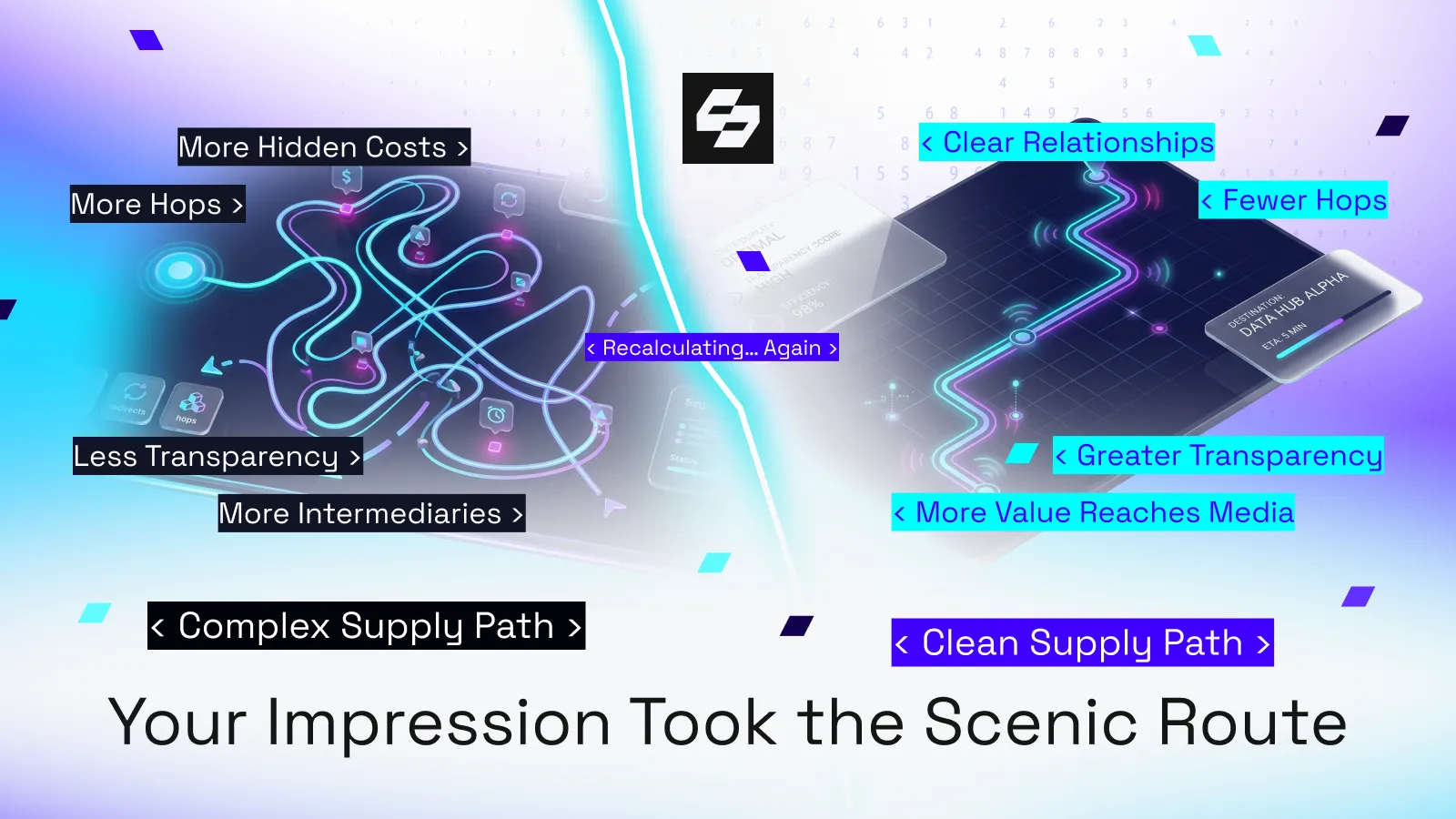
Every additional supply path increases costs and complexity. Cleaner routes help more media spend reach premium publishers.
Clean Supply Will Matter Even More as AI Evolves
Artificial intelligence is changing the mechanics of media buying.
It isn't changing the importance of trust.
Every optimisation model depends on the quality of the information flowing into it. Better algorithms can't compensate for inefficient supply chains forever. They may hide the problem for a while, but they don't remove it.
We've seen campaigns where AI appeared to perform well, only for deeper analysis to reveal that the same inventory was being evaluated repeatedly through multiple paths. The platform wasn't finding new opportunities. It was spending valuable processing power sorting through noise.
That becomes expensive.
Not only financially, but operationally.
The more duplicated auctions an AI model has to evaluate, the harder it becomes to identify the signals that genuinely matter. Faster technology doesn't solve that issue. Cleaner infrastructure does.
That's why supply quality deserves far more attention than it usually receives.
Omnichannel Campaigns Depend on Better Supply
The conversation around Supply Path Optimization often focuses on display advertising.
That's too narrow.
Today's campaigns move across Connected TV, online video, mobile apps and premium publisher environments. Each channel introduces its own supply relationships, auction dynamics and inventory standards.
Without a disciplined approach to supply, complexity grows quickly.
One weak link can affect campaign performance across the entire media plan.
That's another reason advertisers increasingly prefer working with platforms that manage supply quality consistently instead of leaving every buying decision to individual exchanges.
Omnichannel shouldn't mean fragmented.
It should mean coordinated.
When supply paths remain transparent across every screen, AI can evaluate opportunities with greater confidence, reporting becomes easier to understand and optimisation decisions become more reliable.
The campaign starts behaving like one strategy instead of several disconnected channels competing for budget.
Efficiency Creates Better Relationships
One aspect of clean supply rarely receives enough attention.
Relationships.
Publishers want advertisers to recognise the value of their inventory. Advertisers want confidence that media budgets reach quality publishers rather than disappearing into unnecessary transaction costs.
A cleaner supply chain benefits both.
Publishers gain stronger demand through direct, trusted relationships. Advertisers know more of every media dollar supports the environments where campaigns actually appear.
That's healthier for the ecosystem.
Programmatic has often been criticised for creating distance between buyers and sellers.
Supply Path Optimization helps reduce that distance.
Not by removing technology.
By making technology work with fewer unnecessary layers.
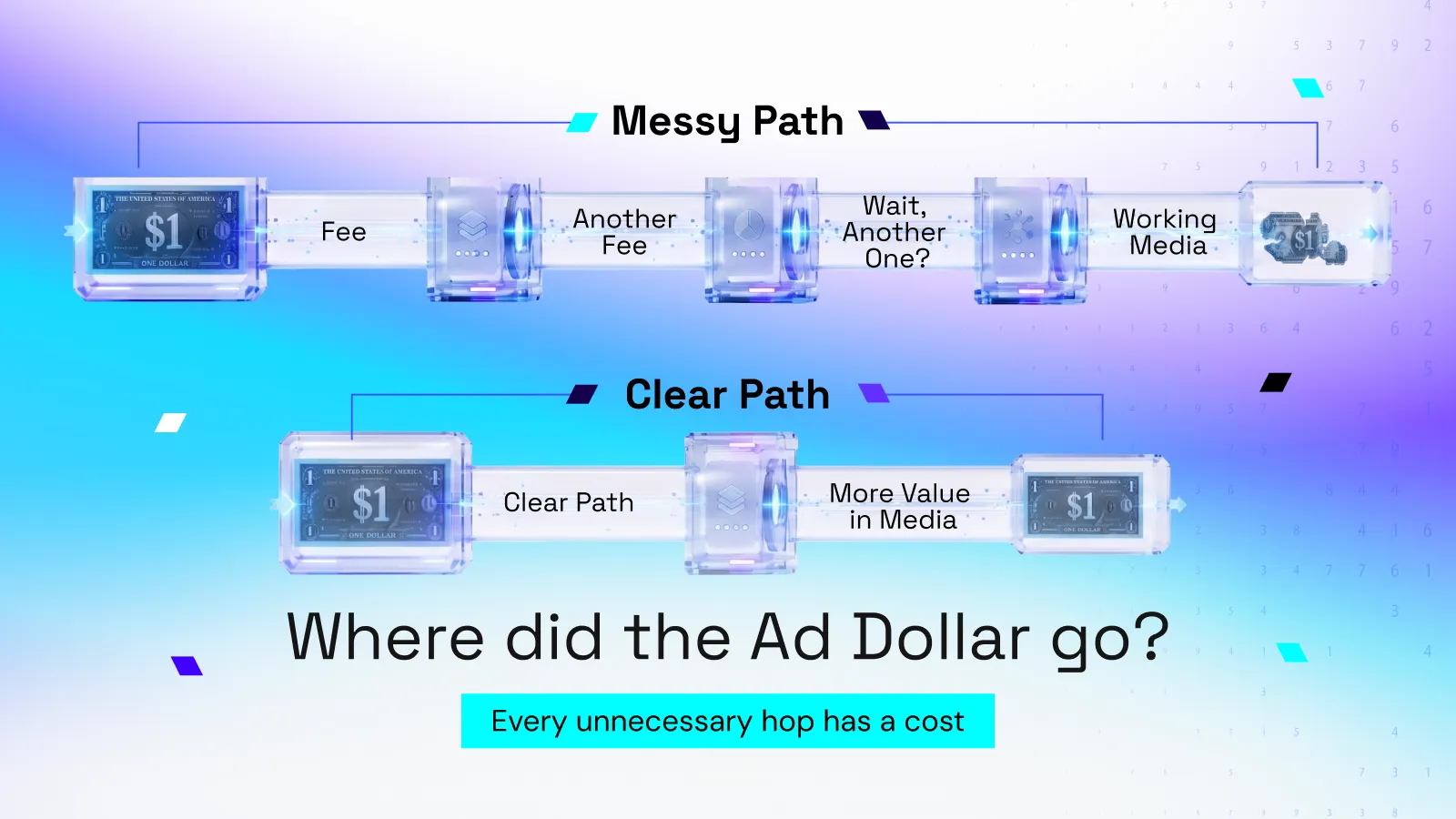
Reducing unnecessary intermediaries keeps more advertising budget working in quality media instead of transaction fees.
Measuring Success Beyond CPM
Campaign reports still tend to begin with CPM.
That's understandable.
It's an easy number to compare.
It just isn't the most useful one.
A lower CPM achieved through duplicated supply, inconsistent inventory quality or unclear reporting rarely represents genuine efficiency. Experienced media teams have learned to ask different questions.
How much working media reached premium publishers?
How transparent was the buying path?
How much unnecessary reselling occurred before the impression reached the advertiser?
Those answers reveal far more about campaign quality than a headline CPM ever will.
The industry is slowly moving in that direction.
That's a positive change.
Because better measurement encourages better buying behaviour.
Why Screencore Puts Supply Quality First
At Screencore, we believe optimisation begins before the first bid is placed.
AI performs best when it works with transparent, verified and efficient supply rather than navigating unnecessary complexity. That's why our infrastructure prioritises clean supply paths across CTV, video, display and mobile, giving advertisers greater visibility into where budgets go and helping publishers preserve the value of their inventory.
By connecting more than 5,000 advertisers with 30,000+ publishers, processing 500,000 real-time bid requests every second, delivering over 2 billion monthly impressions across 160+ global markets, and maintaining an average 95%+ viewability rate,
Screencore provides an environment where smarter optimisation starts with better supply. These principles are reflected throughout the Screencore Media Kit, which highlights transparent auctions, verified premium inventory, AI-powered optimisation and privacy-first infrastructure.
Technology should simplify advertising.
Clean supply is one of the simplest ways to make that happen.
Better Supply Creates Better Advertising
Programmatic doesn't have a transparency problem because the technology is broken.
It has one because complexity became acceptable.
The industry spent years adding more routes, more intermediaries and more auctions without asking whether any of them improved outcomes.
Many didn't.
That's changing.
Advertisers are becoming more selective. Publishers want greater control over their inventory. AI rewards cleaner data instead of larger volumes of it.
All of those trends point in the same direction.
The strongest campaigns won't be built on the biggest supply graphs.
They'll be built on the cleanest ones.
And that's exactly where programmatic delivers its greatest value.
Clean supply paths make every impression work harder. But another trend is reshaping how advertisers compete for those impressions: the rapid growth of retail media and the rising cost of consumer attention.
Explore why attention is becoming one of advertising's most valuable assets — and how brands can compete more effectively across channels in our previous article, "As Retail Media Grows, Is Attention Becoming More Expensive?"
Build Smarter Campaigns with Cleaner Supply
Better performance doesn't begin with a higher bid.
It begins with transparent supply, verified premium inventory and technology that removes unnecessary complexity before optimisation even starts.
Screencore helps advertisers and publishers unlock better results through AI-powered programmatic infrastructure built around clean supply paths, cross-screen activation and complete transparency.
Talk to our team and discover how cleaner supply can improve every campaign.