


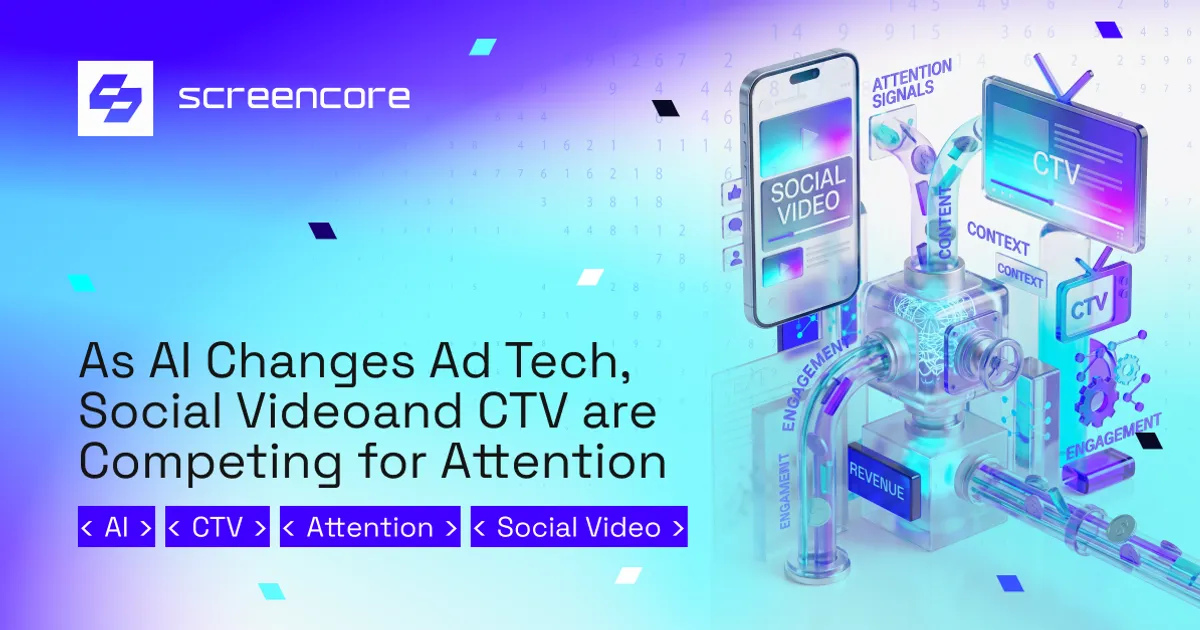
The advertising industry loves a new rivalry. Desktop versus mobile. Open web versus walled gardens. Linear television versus streaming. Now another debate is taking shape. Social video versus Connected TV. It sounds like advertisers will eventually have to choose one side. They won't. The real competition isn't between platforms. It's for attention.
That distinction matters because AI is quietly changing how media is bought, measured and optimised. At the same time, people are splitting their viewing habits between short-form social feeds and premium streaming services. The result is a media landscape that feels more fragmented than ever, even as technology promises greater efficiency.
Running campaigns has become easier.
Understanding where attention actually lives has become much harder.
AI Has Changed the Rules Faster Than Most Teams Expected
A few years ago, artificial intelligence was treated as an experimental feature inside advertising platforms.
Today it's making thousands of bidding decisions before a campaign manager has finished their morning coffee. That's progress. It's also exposing weaknesses that were easier to ignore when optimisation happened manually.
AI doesn't care whether an impression comes from social video, Connected TV or a mobile website. It looks at probability.
Will this impression deliver value? Will this audience engage? Is this inventory worth paying for? Those questions sound simple.
The answers become remarkably complicated once campaigns begin running across multiple channels simultaneously.
The strongest AI models don't simply buy more impressions. They reject more of them.
That's one of the biggest shifts happening inside programmatic advertising.
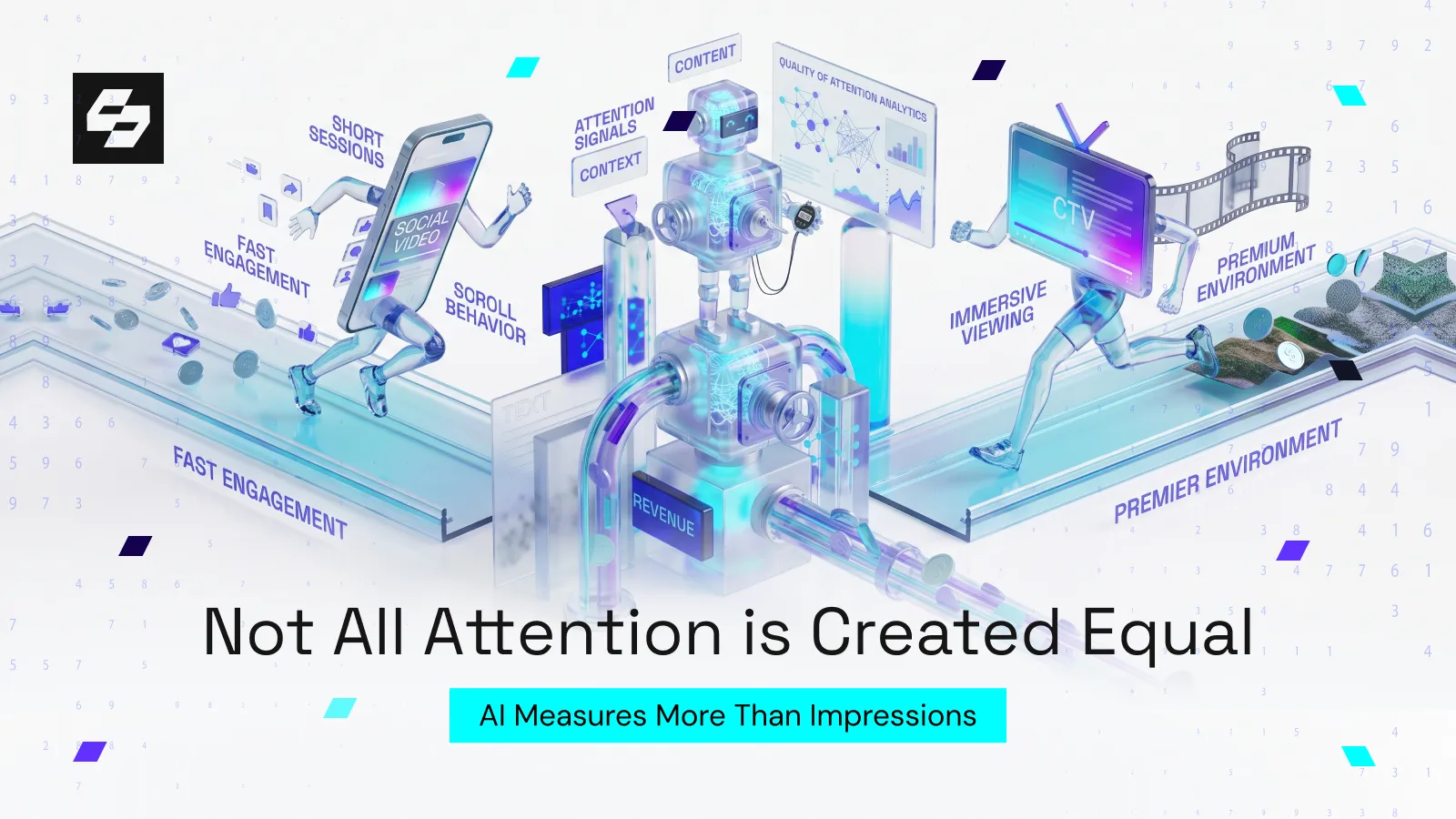
Social Video and Connected TV attract attention in different ways. While social feeds drive rapid engagement through short-form content, Connected TV provides immersive viewing in premium environments. AI evaluates contextual signals and user behavior across both channels to optimize campaign performance.
Social Video Owns Habit
Open almost any phone. Someone is watching a vertical video. Not because they planned to. Because the next clip is already waiting.
Social platforms have mastered habit better than almost any media channel in history. Endless scrolling, algorithmic recommendations and short-form content create extraordinary amounts of engagement.
Advertisers naturally followed. The audience was there. The inventory kept growing. The performance looked impressive. But engagement and attention are different things.
People often watch dozens of short videos within minutes. They move quickly, rarely staying with one piece of content for long. That behaviour creates enormous scale, yet it also means brands have only seconds to leave an impression before users swipe again.
Social video rewards immediacy.
It punishes hesitation.
Creative quality becomes almost as important as targeting because weak messaging disappears before it has a chance to register.
Connected TV Wins a Different Battle
Connected TV asks viewers for something social platforms rarely do.
Time.
Someone settling down to watch a streaming series isn't looking for the next distraction. They're choosing to stay with long-form content for twenty or thirty minutes — or sometimes much longer.
That's a completely different viewing mindset.
The advertising opportunities reflect it.
CTV campaigns aren't competing against endless scrolling.
They're appearing inside premium content where viewers are already invested.
That changes how brands are remembered.
Advertisers frequently focus on completion rates or viewability when discussing Connected TV.
Those metrics matter.
The bigger advantage is context.
People expect advertising around professionally produced entertainment. They pay more attention because the surrounding content has already earned their trust.
That isn't something an algorithm can manufacture.
AI Doesn't Pick Winners. It Finds Balance.
One of the biggest misconceptions surrounding AI is that it eventually identifies a single "best" channel.
Experience suggests otherwise.
The strongest campaigns rarely depend on one environment.
Instead, AI gradually learns how each channel contributes to the customer journey.
Social video introduces products to audiences who weren't actively searching.
CTV builds credibility through premium storytelling.
Display reinforces the message.
Mobile captures action when people are ready to respond.
Viewed individually, every channel has limitations.
Viewed together, they begin filling each other's gaps.
That's where modern programmatic has quietly become much smarter.
The objective isn't finding one perfect placement.
It's understanding how multiple environments influence the same customer over time.
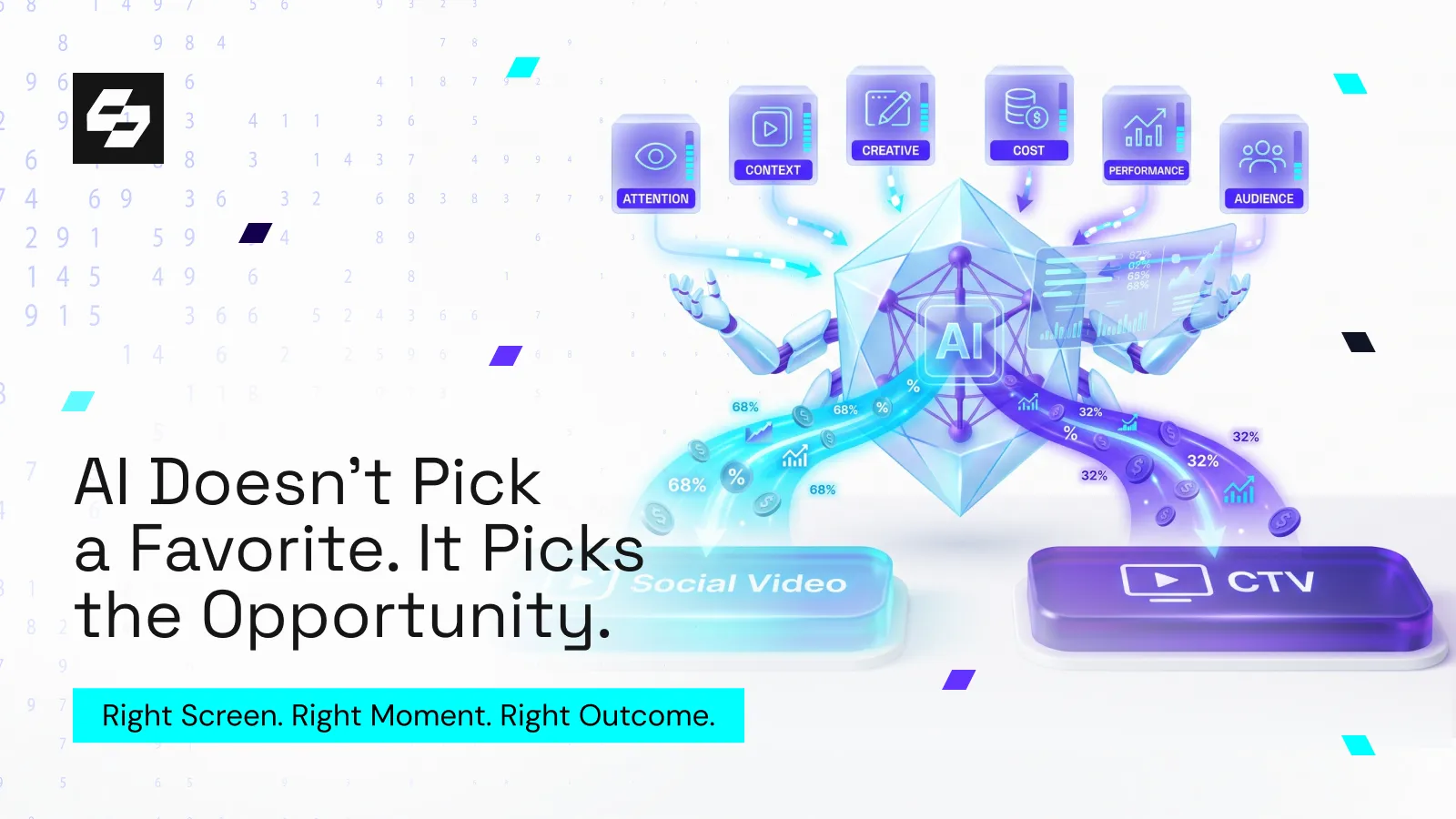
Modern AI doesn't prioritize one advertising channel over another. Instead, it continuously analyzes audience signals, creative performance, contextual relevance, and campaign objectives to determine whether Social Video or Connected TV offers the greatest opportunity at any given moment.
The Real Metric Is Attention, Not Impressions
For years, advertisers celebrated delivery. Millions of impressions. Billions of impressions. Campaigns that reached almost everyone. The industry is becoming more selective. Attention has become far more valuable than exposure.
An impression that appears while someone actively watches premium streaming content carries a different weight than one that flashes between rapid scrolls.
Neither is inherently better. They simply perform different jobs.
AI is helping advertisers recognise that distinction because it evaluates engagement patterns instead of relying only on traditional campaign metrics.
That shift encourages marketers to think differently about media planning.
Instead of asking where audiences spend the most time, they're beginning to ask where attention lasts the longest.
Those are two very different questions.
Technology Still Needs Human Judgement
Artificial intelligence has become remarkably good at recognising patterns.
It still doesn't understand brand ambition.
It doesn't know when a product launch requires maximum reach instead of maximum efficiency. It can't explain why a premium streaming environment might be strategically more valuable for one campaign than another, even if short-term performance metrics look similar.
That's where experienced traders continue to make the difference. Technology processes signals. People provide direction.
The strongest advertising teams aren't choosing between human expertise and AI. They're combining both to make better media decisions.
CTV and Social Video Will End Up Working Together
The discussion often turns into a competition.
Should brands invest more in TikTok, Instagram Reels and YouTube Shorts? Or should budgets shift toward Connected TV?
That's the wrong question.
Each channel captures attention in a different state of mind.
Social video is built around discovery. People aren't looking for products when they open their feeds. They're looking for entertainment, recommendations or simply something interesting enough to keep scrolling. A well-timed video can introduce a brand to millions of people who had no intention of making a purchase five minutes earlier.
CTV works differently.
Viewers are settled. They're engaged. They've chosen the content instead of stumbling across it. That creates an environment where storytelling carries more weight and where premium brands often see stronger recall and greater trust.
One channel creates curiosity. The other reinforces confidence.
The campaigns delivering the strongest business outcomes increasingly use both.
AI Is Quietly Changing Budget Allocation
One of the biggest changes happening inside DSPs isn't visible to advertisers.
Budgets have become much more fluid.
Campaign managers used to decide exactly how much money each channel would receive before a campaign started. Those allocations often stayed fixed for weeks.
AI has made that approach feel outdated.
Modern optimisation engines continuously evaluate live performance signals across multiple environments. If premium CTV inventory starts generating stronger engagement than expected, budgets can gradually increase there. If short-form social video begins driving lower acquisition costs during a specific period, spending can shift without waiting for the next reporting cycle.
That flexibility creates obvious performance gains.
It also creates a new responsibility.
Advertisers need to understand why budgets move — not simply accept that they moved.
Explainable optimisation is becoming just as valuable as optimisation itself. Marketing teams need confidence that every adjustment reflects real performance rather than hidden platform logic.
Technology should make media buying easier to understand.
Not more mysterious.
Privacy Is Reshaping Both Channels
Cookies are disappearing. That isn't news anymore. What's becoming interesting is how different channels are responding.
Social platforms continue to rely heavily on their own first-party ecosystems. Their strength comes from understanding user behaviour within closed environments.
Connected TV has taken a different route.
Its advantage lies in premium content, household-level signals and contextual understanding rather than endless streams of personal browsing data.
Neither model is perfect.
Both will continue evolving.
For advertisers, the practical takeaway is straightforward.
Campaign performance will depend less on collecting every possible data point and more on making smarter use of the signals that remain available.
That's exactly where AI becomes genuinely useful.
Not because it replaces missing data.
Because it learns how to work more intelligently with the information already available.
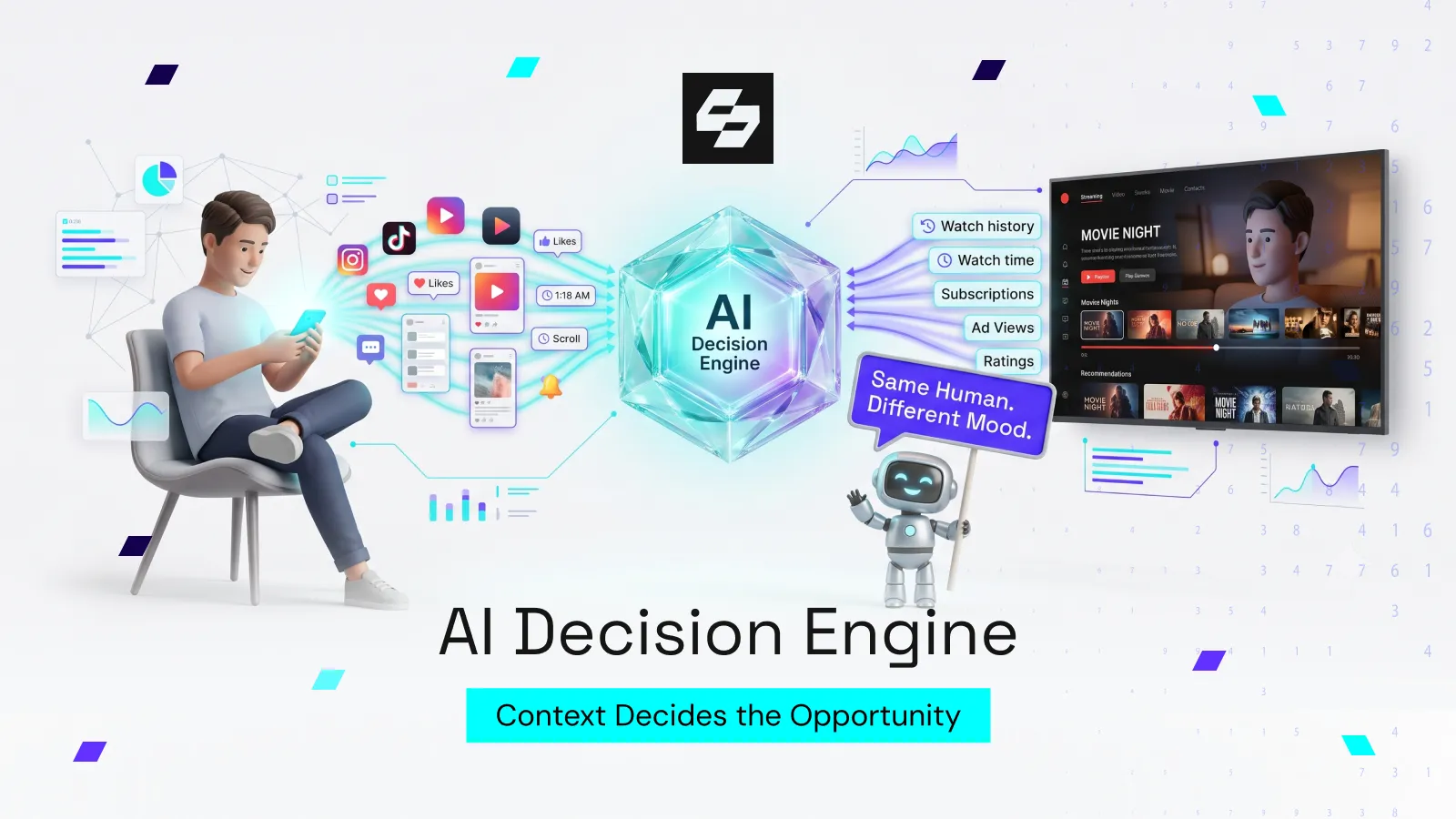
Consumers move between social platforms and Connected TV throughout the day. Screencore's AI Decision Engine evaluates context, viewing behavior, and audience signals across screens to deliver ads where they are most likely to drive meaningful engagement and business outcomes.
Why Screencore Focuses on Cross-Screen Performance
At Screencore, we don't see social video and Connected TV as competing products.
We see them as complementary parts of the same customer journey.
People move naturally between smartphones, laptops, streaming platforms and connected devices throughout the day. Campaigns should move with them.
That's why Screencore combines AI-powered optimisation with transparent programmatic infrastructure across CTV, video, display and mobile advertising. Advertisers benefit from verified premium inventory, privacy-first technology and cross-screen activation while maintaining full visibility into campaign performance.
Today, Screencore connects 5,000+ advertisers with 30,000+ publishers, processes 500,000 real-time bid requests every second, delivers more than 2 billion monthly impressions across 160+ global markets, and maintains an average 95%+ viewability rate through verified inventory and transparent programmatic infrastructure.
These capabilities are outlined throughout the Screencore Media Kit, including its emphasis on AI-powered optimization, cross-screen activation, transparent auctions, and premium supply.
The objective isn't simply reaching people across more screens.
It's making every screen contribute to the same business outcome.
Attention Will Remain the Most Valuable Currency
Technology will continue changing. AI models will become faster. Measurement will become more sophisticated. New formats will appear, and existing platforms will evolve.
One thing is unlikely to change. People still decide what deserves their attention. Some moments last three seconds while someone scrolls through a social feed. Others last thirty seconds during a premium streaming programme. Both moments matter.
Advertisers who recognise the difference — and use AI to connect those experiences rather than separate them — will build stronger campaigns than those still treating every impression as equal.
Because attention has never been distributed evenly.
Now we finally have the technology to understand why.
Artificial intelligence is also transforming the mechanics behind every impression, bid and auction.
Read our previous article, "Inside the New Programmatic Auction: What Advertisers Need to Know," to discover how today's programmatic auctions are evolving and why transparency has become one of the biggest competitive advantages in digital advertising.
Ready to Reach Audiences Across Every Screen?
Winning attention requires more than buying impressions.
It takes premium inventory, transparent technology and AI that knows when — and where — to deliver your message.
Screencore helps advertisers activate smarter campaigns across CTV, video, display and mobile through privacy-first programmatic infrastructure designed for measurable performance.
Talk to our team and discover how cross-screen advertising can deliver stronger business results.