



The programmatic industry optimized around volume, reach, and automation. More inventory, more bid requests, more exchanges, and more audience signals became the standard definition of progress. But in 2026, advertisers are starting to realize that scale alone does not guarantee outcomes.
In fact, too much scale often creates the opposite problem.
Today’s programmatic ecosystem generates enormous amounts of noise.
Advertisers face duplicated inventory, fragmented supply paths, low-quality placements, inconsistent measurement standards, and increasingly complex media environments. As a result, brands are shifting away from open-market buying strategies and moving toward a more controlled, transparent, and performance-focused model: curated supply.
The future of programmatic advertising is no longer about accessing everything.
It is about accessing the right inventory, through the right supply paths, with the right data and operational control.
Why the Open Marketplace Model Is Losing Momentum
The early growth of programmatic advertising was built on accessibility. Open exchanges allowed advertisers to buy inventory at massive scale across thousands of websites and apps in real time. Automation solved many inefficiencies that existed in traditional media buying.
But over time, the open marketplace became increasingly difficult to manage.
As the supply chain expanded, advertisers lost visibility into where impressions originated, how many intermediaries participated in each transaction, and whether inventory quality matched campaign expectations. The ecosystem became crowded with resellers, duplicated auctions, made-for-advertising sites, and inconsistent audience signals.
This created a fundamental challenge for advertisers: more inventory did not necessarily mean more value.
In many cases, brands discovered they were spending significant portions of their budgets on low-quality impressions or inefficient supply paths that added operational complexity without improving performance.
As economic pressure and performance scrutiny increased, advertisers began reassessing what programmatic efficiency actually means.
The answer increasingly points toward curated supply.
What Curated Supply Actually Means
Curated supply is often misunderstood as simply another form of private marketplace buying. In reality, it represents a broader evolution of how inventory, audience data, contextual signals, and media quality are packaged together.
Curated programmatic environments combine premium inventory with carefully selected audience and performance signals before campaigns are activated. Instead of filtering massive amounts of inventory downstream, advertisers gain access to pre-validated, optimized supply designed around specific outcomes.
This fundamentally changes how media buying operates.
Rather than chasing scale across fragmented environments, advertisers focus on precision, transparency, and quality from the beginning of the transaction.
Curated supply reduces operational waste because the supply path itself becomes smarter.
For advertisers, this means fewer unknowns, cleaner inventory, stronger brand safety standards, and better alignment between media investment and campaign objectives.
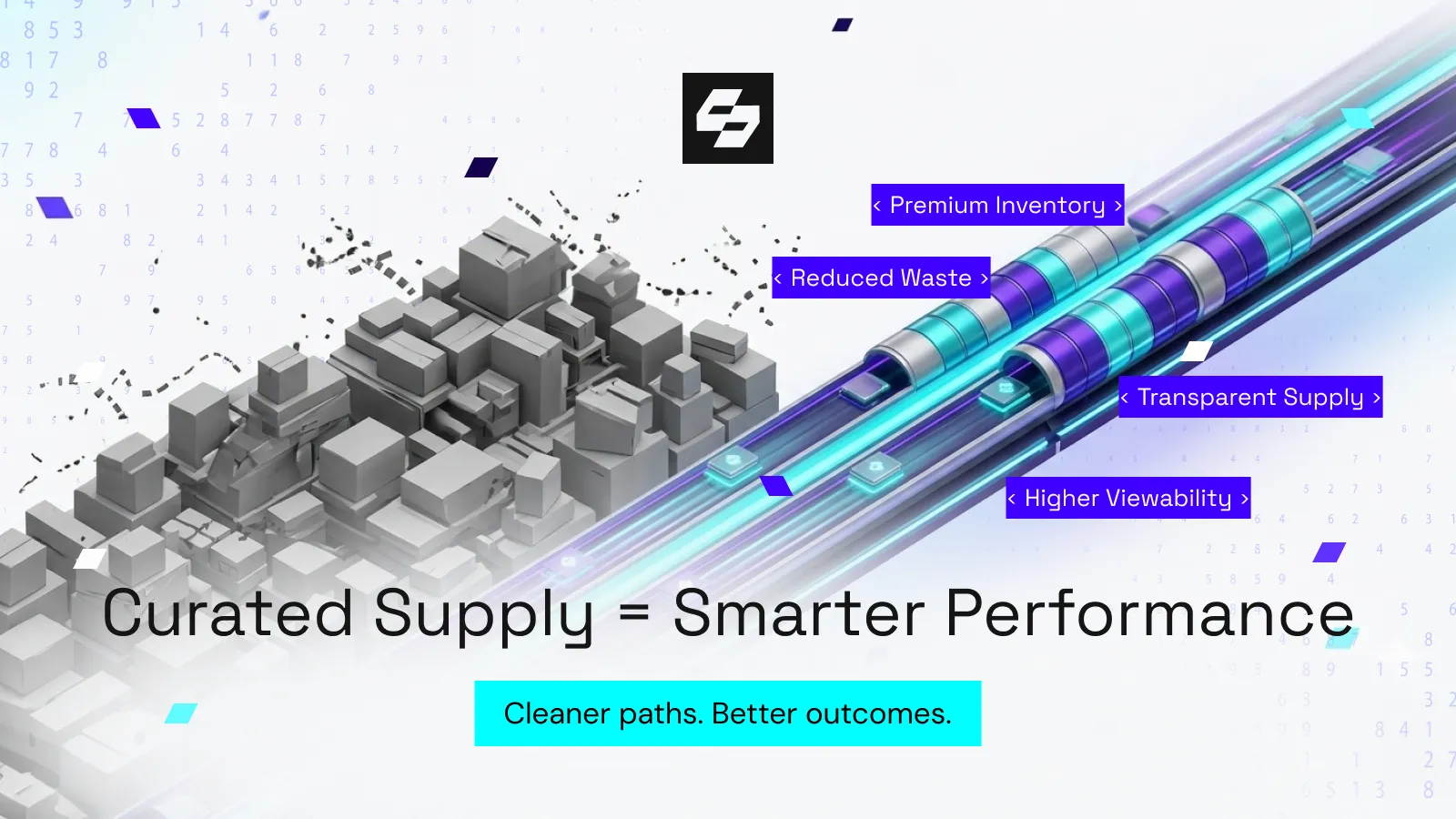
Supply Path Optimization (SPO) removes waste from programmatic advertising, delivering cleaner inventory, higher viewability, and stronger campaign performance.
Why Signal Quality Matters More Than Scale
The advertising industry is entering an era where signal quality matters more than signal quantity.
Privacy regulation, the decline of third-party cookies, and fragmentation across devices have weakened many traditional targeting models. At the same time, AI-powered optimization systems depend heavily on high-quality inputs to deliver meaningful outcomes.
Poor inventory quality creates poor optimization signals.
This is one of the key reasons curated supply is becoming increasingly important in modern adtech infrastructure. Curated marketplaces provide cleaner environments where contextual relevance, audience quality, and publisher standards are more tightly controlled.
As a result, machine learning systems can optimize against stronger signals instead of navigating chaotic open-market conditions.
This shift is particularly visible across Connected TV, retail media, and omnichannel programmatic environments where advertisers demand greater confidence in inventory quality and measurement consistency.
In simple terms, curated supply helps advertisers separate signal from noise.
And in a fragmented digital ecosystem, that becomes a competitive advantage.
The Rise of Supply Path Intelligence
Supply path optimization was originally designed to reduce unnecessary intermediaries and improve cost efficiency. But in 2026, the concept is evolving into something much larger.
Advertisers are no longer only optimizing for cheaper access to inventory. They are optimizing for intelligence.
Modern curated supply strategies combine inventory quality, contextual targeting, performance history, audience composition, identity frameworks, and transparency standards into a more intentional buying model.
This creates a stronger operational foundation for both advertisers and publishers.
Publishers benefit because curated environments prioritize premium inventory and reduce commoditization. Advertisers benefit because campaigns run within more predictable and accountable ecosystems.
The result is a healthier programmatic marketplace built around long-term value rather than short-term arbitrage.
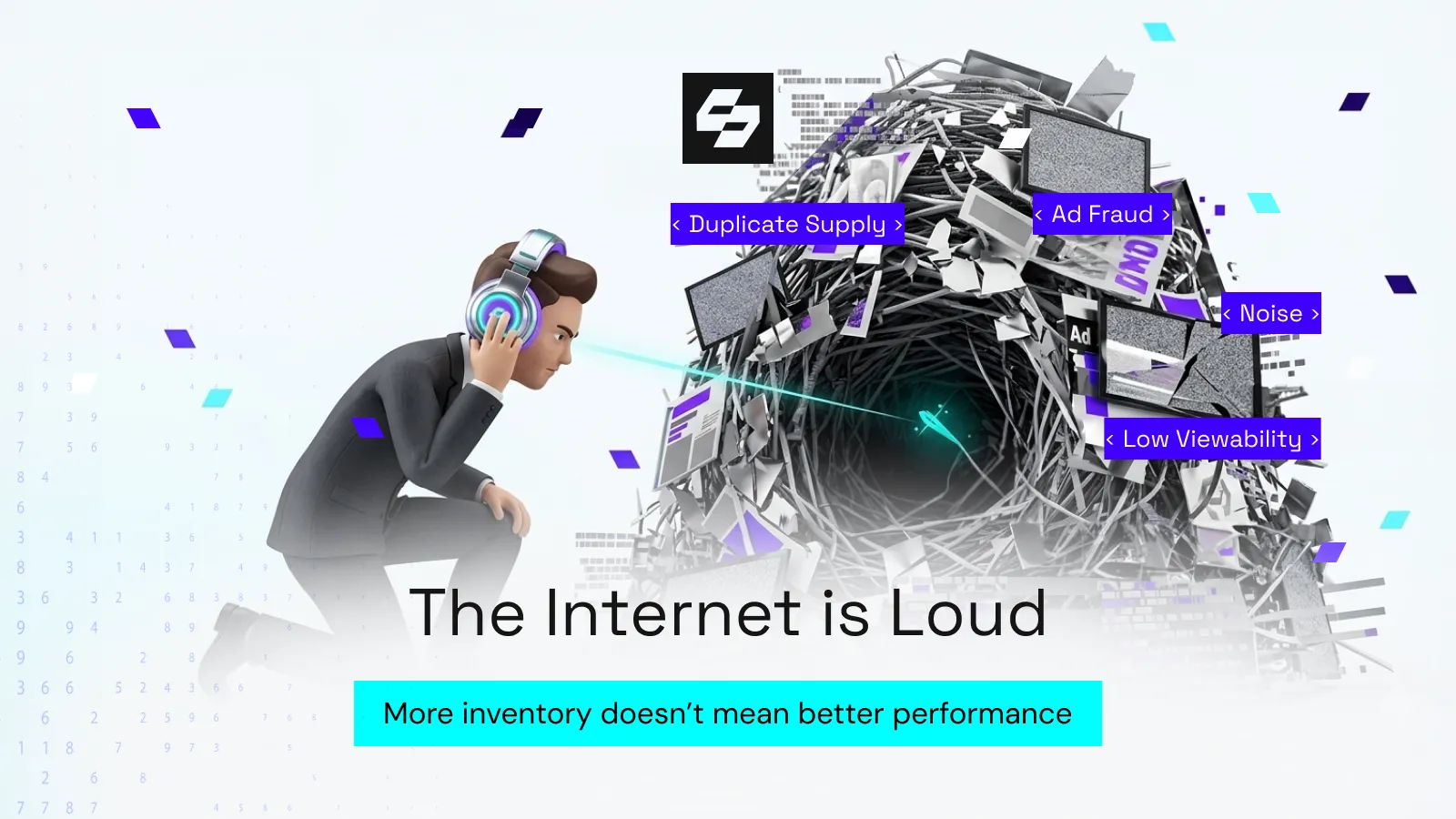
More inventory doesn't guarantee better results. Curated programmatic supply helps advertisers avoid fraud, duplicate inventory, and low-viewability impressions.
AI Is Accelerating the Shift Toward Curation
Artificial intelligence is rapidly becoming central to programmatic execution. AI-driven bidding, audience modeling, contextual analysis, and autonomous optimization systems are transforming how campaigns are managed.
But AI also amplifies the importance of inventory quality.
Algorithms can only optimize effectively when they operate within trustworthy environments. If low-quality inventory enters the system, AI simply automates inefficiency at greater speed.
This is why curated supply is becoming increasingly important in AI-powered advertising infrastructure.
By narrowing the universe of inventory to high-quality, performance-oriented environments, curated marketplaces create better conditions for automation and machine learning. AI systems gain access to stronger contextual signals, more reliable audience data, and cleaner measurement frameworks.
The future of AI in advertising will not depend only on smarter algorithms.
It will depend on smarter supply.
Transparency and Curation Now Go Together
The rise of curated supply also reflects a broader demand for transparency across adtech.
Advertisers want clearer visibility into who packages inventory, how deals are structured, which publishers participate, and how media spend flows through the ecosystem. Industry initiatives around deal standardization and supply chain transparency are accelerating because buyers increasingly prioritize accountability.
Curated supply naturally supports this shift because it reduces fragmentation and creates more direct relationships between buyers, publishers, and infrastructure partners.
In many ways, curation is becoming the operational answer to the transparency crisis in adtech.
It replaces uncontrolled scale with structured quality.

In modern programmatic advertising, better signals outperform bigger inventory pools. Curated supply, SPO, and verified inventory help advertisers focus on quality, transparency, and measurable outcomes.
What the Future of Programmatic Looks Like
Programmatic advertising is not becoming smaller. It is becoming smarter.
Automation will continue expanding across CTV, retail media, audio, digital out-of-home, and omnichannel activation. But the next generation of growth will likely be driven by curated ecosystems rather than unrestricted open-market buying.
Advertisers increasingly want quality over quantity, precision over complexity, and trusted supply over endless inventory access.
This changes how infrastructure platforms, publishers, and technology providers must operate.
The companies that succeed in the next phase of adtech will be those that help advertisers build cleaner, more efficient, and more transparent media environments.
Because in modern programmatic advertising, reducing noise is no longer optional.
It is essential for performance.
Curated supply is closely connected to another major shift happening across digital advertising: the growing demand for transparency and operational control.
Want to understand how CTV performance is actually measured? Read our guide on CTV measurement and the evolving adtech M&A landscape.
Build Smarter Programmatic Infrastructure With Screencore
At Screencore, we help companies build scalable adtech infrastructure designed for transparency, efficiency, and measurable outcomes.
As curated supply becomes central to modern programmatic strategy, businesses need flexible infrastructure that supports premium inventory access, intelligent supply path management, and future-ready monetization models.
Whether you are scaling a CTV platform, optimizing programmatic operations, or building next-generation advertising solutions, our team can help.
Connect with Screencore to build smarter advertising infrastructure for the future.