



Connected TV has become one of the most important growth channels in digital advertising.
Streaming audiences continue expanding, traditional linear TV budgets are shifting into programmatic environments, and advertisers are increasing investment across CTV ecosystems worldwide. But as spending accelerates, the industry is facing a major challenge that is reshaping the future of advertising technology.
In 2026, the biggest competitive advantage in Connected TV is no longer simply inventory access or streaming scale. It is the ability to understand audience behavior, unify fragmented identity signals, and prove measurable business outcomes across devices and channels.
This is why CTV measurement has become the new battleground in adtech.
And it is also why data infrastructure companies, identity providers, analytics platforms, and measurement vendors are becoming prime acquisition targets across the advertising industry.
The next wave of adtech consolidation is increasingly being driven by one thing: signal ownership.
Why CTV Measurement Became So Critical
The rise of streaming transformed how audiences consume content, but it also fragmented the advertising ecosystem.
Unlike traditional television, Connected TV operates across multiple devices, platforms, operating systems, publishers, and identity frameworks. Advertisers can now reach viewers through smart TVs, streaming apps, gaming consoles, FAST channels, mobile devices, and retail media integrations — often within the same campaign.
This created enormous opportunity.
But it also created enormous complexity.
For advertisers, one of the biggest challenges in CTV is understanding exactly who saw an ad, how often they saw it, and whether exposure actually influenced business outcomes.
Cross-device attribution remains difficult. Identity resolution is inconsistent. Walled gardens limit visibility. Frequency management is fragmented. Measurement standards vary between platforms.
As CTV budgets grow larger, advertisers are demanding stronger accountability.
The industry is moving away from impression-based buying and toward outcome-based measurement models where audience quality, attribution accuracy, and performance visibility matter far more than raw reach alone.
This shift is placing data signals at the center of the adtech economy.
Why Data Signals Have Become Strategic Assets
In modern advertising infrastructure, data signals are no longer just optimization inputs.
They are strategic assets.
Every authenticated login, content interaction, viewing behavior, contextual pattern, household identifier, retail signal, and first-party audience touchpoint contributes to a larger identity ecosystem that powers targeting and measurement.
In Connected TV, these signals are especially valuable because deterministic identity remains limited compared to other digital channels.
As privacy regulations tighten and third-party identifiers decline, advertisers increasingly depend on high-quality first-party and contextual signals to understand audience behavior across fragmented environments.
This explains why adtech companies are aggressively investing in identity graphs, clean room technology, retail media integrations, contextual intelligence platforms, and advanced measurement infrastructure.
The companies that control trusted audience signals gain a major competitive advantage in the future advertising ecosystem.
And increasingly, acquisition activity reflects this reality.
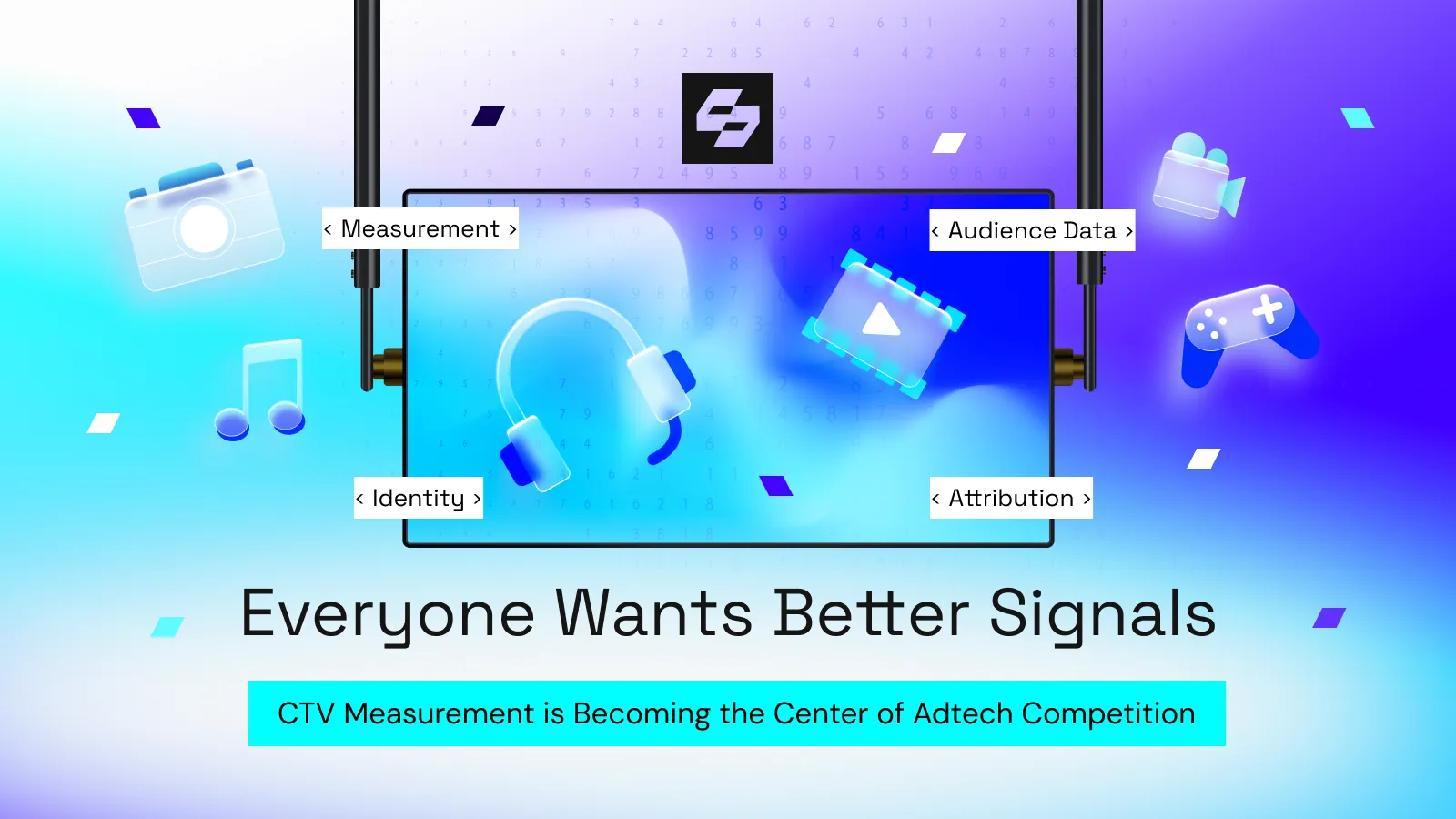
Identity, attribution, and audience data are becoming the most valuable assets in CTV.
Why Adtech M&A Is Accelerating Around Measurement
The adtech industry has entered a new consolidation cycle.
But unlike previous waves of mergers and acquisitions that focused heavily on inventory scale or platform expansion, the current market is centered around data infrastructure and measurement capabilities.
Large advertising platforms, SSPs, DSPs, retail media companies, and streaming providers are acquiring businesses that strengthen their visibility into audience behavior and campaign outcomes.
Measurement companies now sit at the center of strategic growth discussions because they help solve some of the industry’s biggest operational problems.
Advertisers want unified reporting across channels. They want transparent attribution. They want better frequency management. They want stronger identity resolution between streaming, retail media, mobile, and web environments.
Most importantly, they want confidence that media investment is driving measurable business impact.
As a result, measurement infrastructure is no longer considered a supporting layer of advertising technology.
It is becoming core infrastructure.
The strongest data intelligence platforms are becoming the industry's most strategic acquisitions.
Retail Media Is Intensifying the Measurement Race
Retail media is playing a major role in accelerating this shift.
Retailers possess some of the most valuable first-party consumer data in the advertising industry. Purchase behavior, loyalty signals, transactional insights, and authenticated customer relationships create powerful measurement opportunities that advertisers increasingly want connected to CTV environments.
This convergence between retail media and Connected TV is changing how attribution works.
Brands now expect streaming campaigns to connect directly with commerce outcomes. They want to understand not only whether audiences viewed an ad, but whether exposure influenced online purchases, in-store visits, subscription behavior, or long-term customer value.
This creates enormous demand for interoperable measurement systems that can connect media exposure to commerce activity in privacy-safe ways.
As retail media and CTV continue converging, companies that own strong signal infrastructure become increasingly attractive acquisition targets.

Advertisers are shifting from reach metrics to outcome-driven measurement.
AI Is Raising the Stakes Even Further
Artificial intelligence is making CTV measurement even more important.
AI-powered advertising systems rely heavily on high-quality signals to optimize campaigns effectively. Predictive bidding, audience modeling, contextual analysis, dynamic creative optimization, and autonomous media buying all depend on reliable data infrastructure.
Poor measurement creates poor optimization.
This means that weak signal quality does not only impact reporting — it impacts campaign execution itself.
As AI becomes more deeply integrated into advertising systems, signal ownership becomes directly connected to performance efficiency.
Companies with stronger identity frameworks, cleaner audience signals, and better attribution infrastructure can train more effective optimization models.
This is one reason why data-centric adtech businesses are attracting increasing strategic interest across the market.
The future of advertising will not simply belong to companies with the largest media inventory.
It will belong to companies with the best signal intelligence.
Transparency Is Becoming Essential in CTV
Another factor driving the measurement race is transparency.
Advertisers increasingly want visibility into how CTV inventory is sourced, measured, and optimized. Industry concerns around invalid traffic, duplicated reach, hidden fees, and inconsistent reporting standards continue pushing buyers toward more accountable infrastructure models.
Measurement providers play a central role in solving these problems.
Independent verification systems, identity resolution frameworks, and transparent attribution models help advertisers validate campaign performance across fragmented streaming environments.
This is particularly important as CTV becomes more programmatic.
Automation increases scale, but it also increases the importance of trusted measurement frameworks. Without transparency, advertisers struggle to evaluate true campaign effectiveness.
As a result, the future of CTV advertising depends heavily on measurement standardization and trusted data infrastructure.
What the Future of CTV Looks Like
Connected TV is rapidly evolving from a premium awareness channel into a fully measurable performance environment.
The next phase of growth will likely focus less on expanding streaming inventory and more on improving signal quality, attribution accuracy, and interoperability across ecosystems.
This changes how adtech companies compete.
Success increasingly depends on identity infrastructure, audience intelligence, commerce integration, contextual understanding, and measurement transparency.
In many ways, the industry is rebuilding television around data.
And the companies that own trusted signals are positioning themselves at the center of that transformation.
This is why CTV measurement is becoming the defining battleground of modern adtech.
Because in a fragmented streaming world, signal intelligence creates power.
The race for stronger measurement and audience intelligence is closely tied to another major industry shift: the growing importance of first-party data.
Explore our previous article, where we explored how publishers are using audience ownership and contextual intelligence to compete in a shrinking RFP market.
Build Smarter CTV Infrastructure With Screencore
At Screencore, we help companies build scalable advertising infrastructure designed for the future of Connected TV and programmatic media.
As measurement, identity resolution, and signal intelligence become central to modern advertising ecosystems, businesses need flexible technology capable of supporting transparent activation, advanced monetization, and cross-channel scalability.
Whether you are building CTV platforms, optimizing programmatic operations, or scaling next-generation adtech infrastructure, our team can help.
Ready to build smarter, scalable CTV and adtech infrastructure? Contact our team.