


Advertising has always been an auction. Attention has always been the prize. What's changing is the number of bidders.
A few years ago, brands mainly fought for space on search engines, social platforms and the open web. Today, retailers have joined the race. Every major commerce platform has become a media company, offering advertisers access to shoppers who are already close to making a purchase.
It's an attractive proposition. The budgets prove it.
Retail media is growing at a pace few expected, and for good reason. First-party data has become more valuable as privacy regulations reshape digital advertising. Brands like the idea of reaching consumers while they're actively comparing products instead of hoping they'll remember an ad they saw hours earlier.
But growth creates pressure. When more advertisers compete for the same audience, attention inevitably becomes more expensive. That's where the real conversation begins.
Retail Media Isn't Stealing Budgets
It's redistributing expectations. Many marketers initially treated retail media as another channel that would simply absorb spend from display advertising or paid social.
That's not what happened. Instead, retail media changed how advertisers evaluate performance. Boards want clearer attribution.
Finance teams want every advertising dollar connected to measurable outcomes. Marketing leaders are expected to explain not only where budgets went, but why they produced commercial value.
Retail media fits neatly into that mindset because it often sits close to the point of purchase. The feedback loop feels shorter. Success appears easier to measure.
That doesn't mean every campaign automatically performs better. It means expectations have become much higher across every channel.
Programmatic advertising, Connected TV and premium video are now judged against the same business outcomes rather than competing inside separate reporting dashboards. That's a healthy shift.
Attention Doesn't Expand Because Budgets Do
One assumption quietly drives much of the discussion around retail media. If spending increases, opportunities increase as well.
Consumer behaviour suggests otherwise. People still have the same twenty-four hours. They don't suddenly start watching more videos, reading more articles or browsing more shopping apps simply because advertisers decide to spend more money.
Attention remains finite. Budgets don't.
That's why CPM inflation shouldn't surprise anyone.
More demand chasing the same audience almost always increases competition. The question isn't whether attention becomes more expensive. It already has.
The more important question is whether advertisers receive more value in return. Sometimes they do. Sometimes they're simply paying more to compete inside increasingly crowded environments.
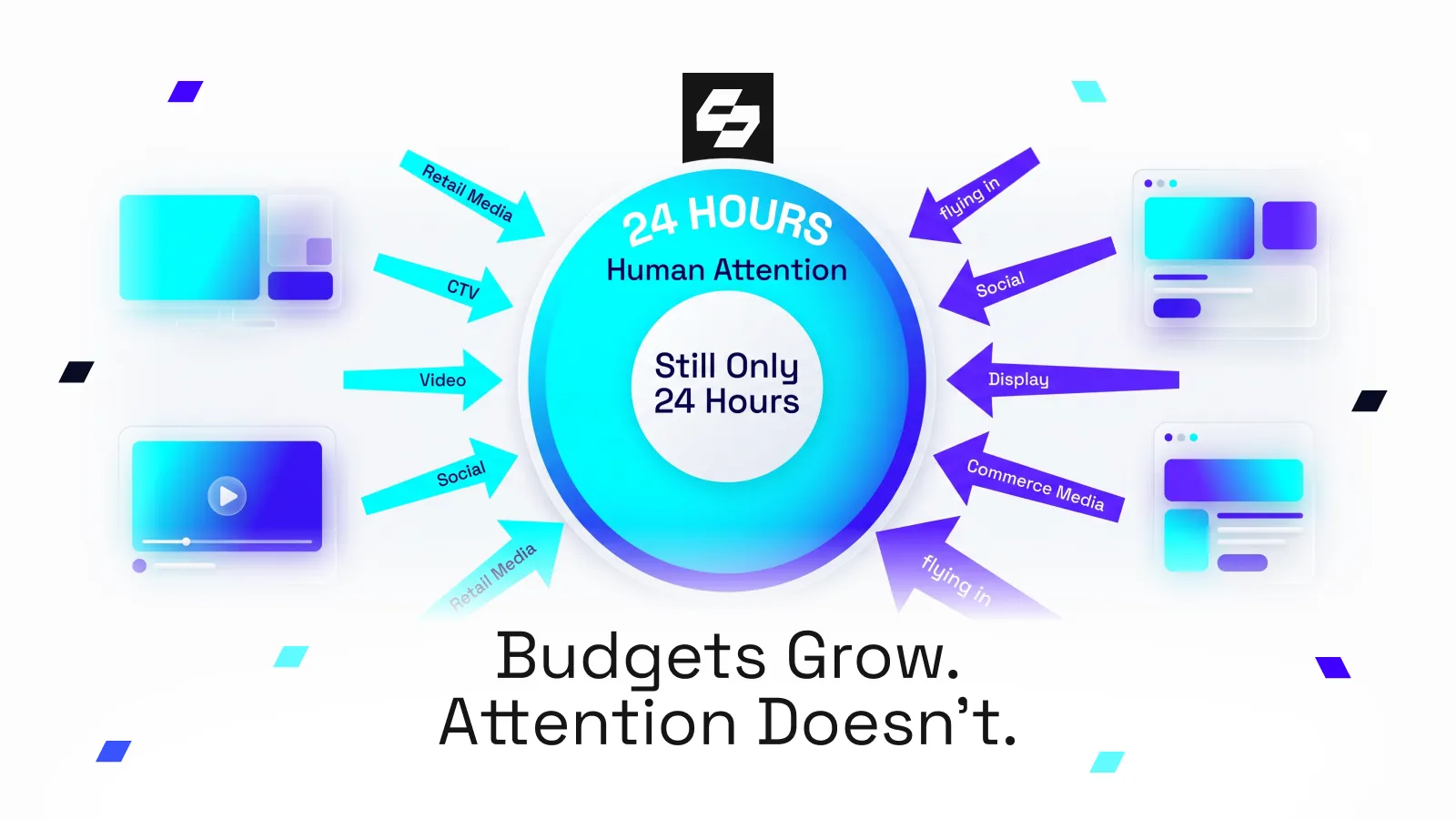
Advertising budgets and channels can expand. Human attention cannot. More demand for the same audiences increases competition for meaningful attention.
AI Is Making Those Decisions Faster
Retail media has accelerated another trend. Artificial intelligence has become responsible for a growing number of media decisions.
Campaigns running across retail networks, Connected TV, display and video now generate enormous amounts of behavioural data. No trading desk can manually process that volume with the speed modern advertising demands.
AI fills the gap. It evaluates bidding opportunities, predicts engagement, reallocates budgets and identifies patterns that would otherwise remain invisible.
But here's an observation that deserves more attention. AI doesn't reduce competition. It intensifies it.
Every major advertiser now has access to sophisticated optimisation tools. Everyone can identify valuable audiences more quickly. Everyone can respond to performance changes within minutes instead of days.
The competitive advantage no longer comes from simply having AI. It comes from feeding AI better opportunities than everyone else.
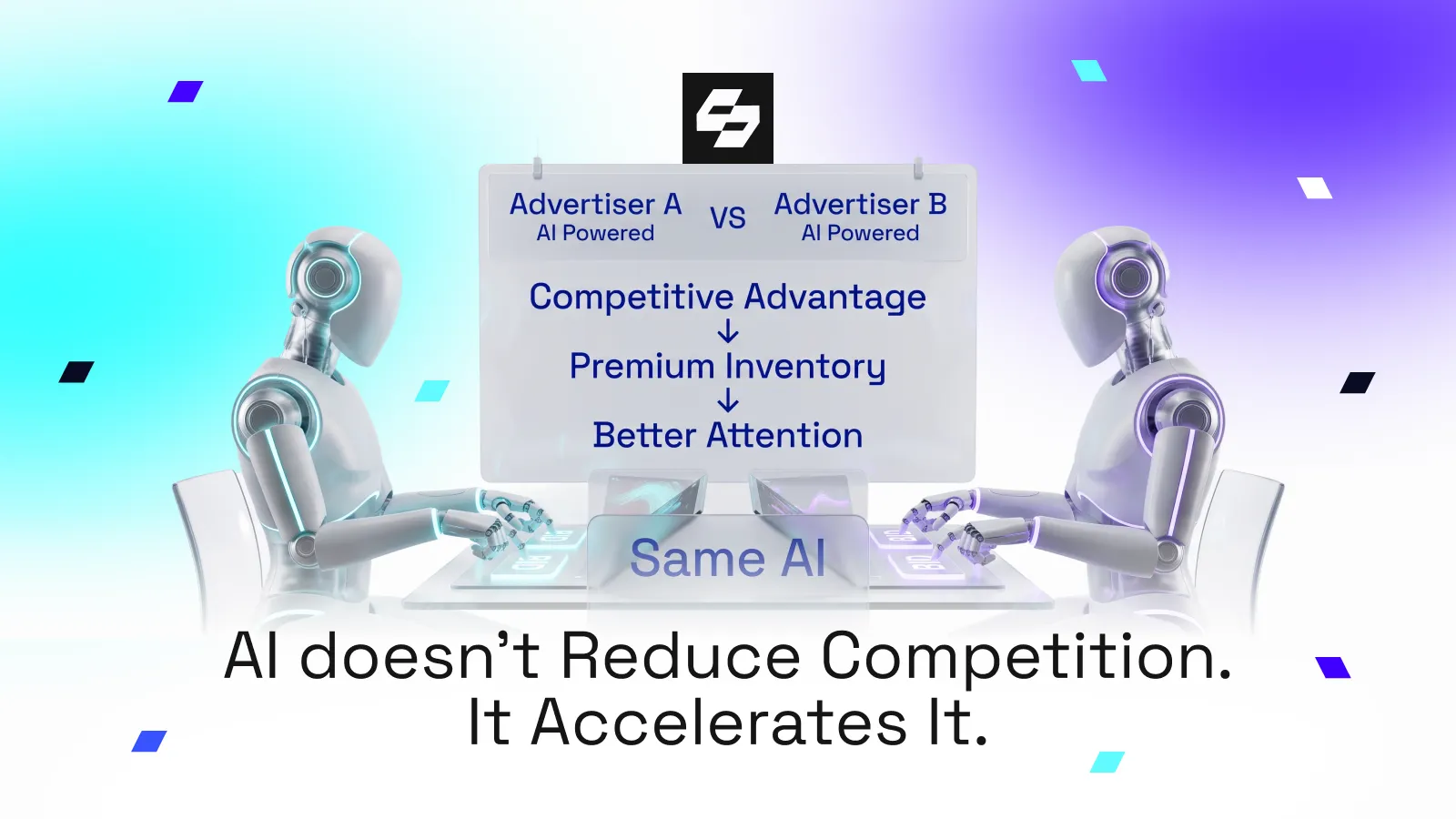
AI makes programmatic decisions faster, but it doesn't eliminate competition. The advantage increasingly comes from giving algorithms access to better inventory and stronger opportunities.
Premium Environments Become More Valuable
As competition increases, media quality becomes more important. That's usually the opposite of what happens during periods of aggressive growth. Some advertisers chase cheaper inventory to maintain reach.
Others focus entirely on efficiency metrics without asking whether users actually paid attention to the campaign.
Experience says those shortcuts rarely age well. Premium environments continue attracting investment because they offer something scarce. Trust.
People behave differently when they consume content they actively choose to watch or read. Streaming platforms, trusted publishers and high-quality video environments create stronger attention than endless pages built only to generate advertising impressions.
That matters even more when budgets tighten. Every wasted impression becomes harder to justify.
Retail Media Is Part of a Bigger Ecosystem
Retail media will continue growing. That much seems obvious. The mistake is assuming it replaces everything else.
Consumers don't live exclusively inside retailer apps. They discover brands on social platforms. They watch streaming television after work. They read publisher content throughout the day. They move naturally between screens.
Advertising has to do the same. Retail media performs best when it's connected to a broader omnichannel strategy rather than operating as an isolated performance channel. That requires technology capable of understanding the complete customer journey instead of optimising one environment at a time.
Premium Publishers Become More Valuable as Competition Increases
When budgets become tighter, advertisers usually react in one of two ways. Some chase lower CPMs. Others become far more selective about where every impression appears. The second group usually performs better.
Retail media has made advertisers think harder about quality because it proved something many publishers have argued for years: context influences outcomes. Consumers behave differently when they're engaged with trusted content than when they're rushing through cluttered environments filled with low-value impressions.
The same logic applies outside retail media. Premium publishers don't simply provide inventory. They provide environments where advertising has a better chance of being noticed, remembered and trusted.
That's becoming a genuine competitive advantage. Attention is expensive because quality attention is limited.
AI Is Learning Where Attention Lasts Longer
Artificial intelligence doesn't care about industry buzzwords. It follows patterns.
If viewers consistently spend longer watching premium streaming content than rapidly scrolling through feeds, AI notices. If campaigns achieve stronger engagement within trusted publisher environments, budgets gradually move in that direction.
That's one of the biggest shifts happening inside modern DSPs. Optimisation is becoming less focused on buying the largest possible audience and more focused on finding audiences that actually engage.
The difference sounds subtle. Commercially, it's enormous. Reach has always been easy to measure. Attention is much harder. Yet attention is far more closely linked to business outcomes.
That's why AI increasingly evaluates signals such as engagement probability, content quality, historical performance and inventory transparency before deciding whether an impression deserves a bid.
The auction still happens in milliseconds. The decision behind it has become much more sophisticated.
Retail Media Won't Replace the Open Web
Some headlines suggest retail media will eventually dominate digital advertising. That feels unlikely.
Consumers don't spend their entire day inside retailer ecosystems. They stream television in the evening. They read publisher websites over breakfast. They browse news, sports and entertainment throughout the day. They discover products long before they decide to buy them.
Retail media performs exceptionally well near the point of purchase. Brand preference usually begins much earlier.
That's why advertisers increasingly connect retail media with premium video, Connected TV, display and mobile campaigns instead of treating them as isolated investments.
One channel creates awareness. Another builds trust. Another captures intent. Together they create momentum.
Transparency Has Become Part of Media Quality
The pressure on marketing teams has changed. Five years ago, proving campaign delivery was often enough.
Today, advertisers want to know why campaigns succeeded, which supply paths created value and where every advertising dollar actually went. That expectation reaches beyond retail media. It applies across every channel.
Transparent reporting gives marketers confidence to increase budgets because they understand what's driving performance instead of relying on assumptions. Opaque buying models create the opposite effect.
Even successful campaigns become difficult to scale when nobody fully understands how the results were achieved. Transparency isn't simply about reporting anymore. It's part of campaign optimization.
Why Screencore Focuses on Attention, Not Just Delivery
At Screencore, programmatic advertising isn't measured by the number of impressions delivered alone.
The objective is helping advertisers reach audiences in environments where attention creates measurable business value.
That approach combines AI-powered optimisation with privacy-first infrastructure, verified premium inventory and transparent programmatic execution across CTV, video, display and mobile.
By connecting more than 5,000 advertisers with 30,000+ publishers, processing 500,000 real-time bid requests every second, delivering 2 billion+ monthly impressions across 160+ global markets, and maintaining an average 95%+ viewability rate, Screencore helps brands compete for meaningful attention rather than simply buying larger volumes of media.
Technology can improve efficiency. Premium environments create attention. The strongest campaigns need both.
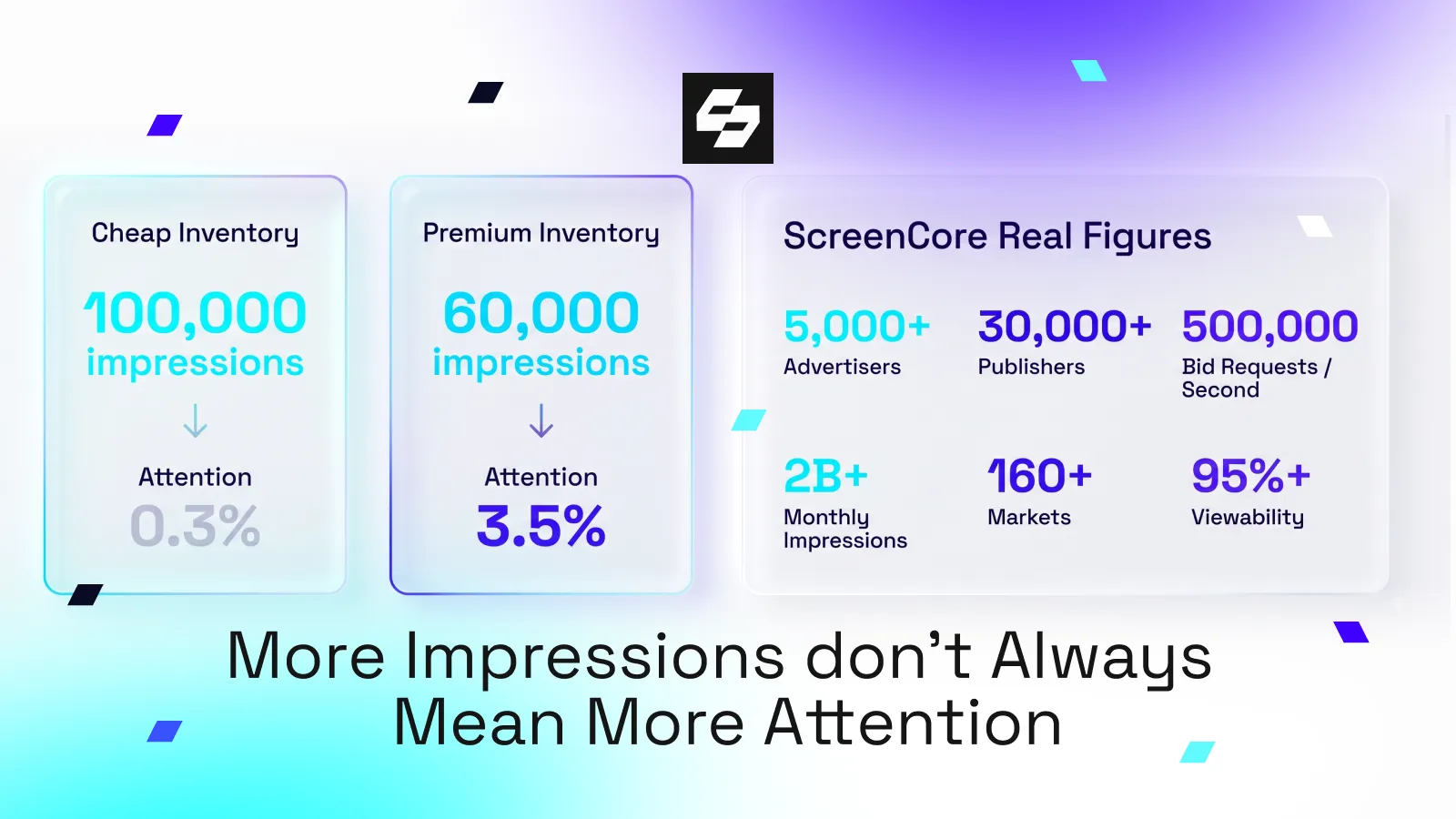
More impressions don't automatically create more attention. Screencore combines premium inventory, AI-powered optimization and transparent programmatic infrastructure to help advertisers focus on media quality and measurable performance.
Attention Will Keep Getting More Expensive
Retail media isn't making attention valuable. It's exposing how valuable attention has always been.
As more advertisers compete with better technology, AI-powered optimization and larger budgets, reaching consumers will continue becoming more competitive. That doesn't mean brands should chase every new channel.
It means they should invest where attention is genuine, measurable and supported by quality media. The advertisers that consistently outperform won't necessarily buy more impressions. They'll buy better ones.
That's a very different strategy. And increasingly, it's the one producing the strongest long-term results.
Retail media is changing how brands compete for attention, but another shift is happening at the same time. Artificial intelligence is reshaping how advertisers balance investment between social video, Connected TV and premium programmatic inventory.
Are your campaigns generating attention — or measurable results?
Winning attention is only the first step. Performance marketing connects media spend to outcomes such as clicks, leads, conversions, and ROAS, helping advertisers understand what actually drives value.
Discover how performance marketing works.
Turn Attention Into Measurable Performance
The best campaigns aren't built around the cheapest impressions. They're built around premium inventory, transparent technology and AI that knows where attention creates real business value.
Screencore helps advertisers activate high-performance campaigns across CTV, video, display and mobile through privacy-first programmatic infrastructure designed for measurable growth.
Talk to our team and discover how transparent programmatic can help your brand stand out.