


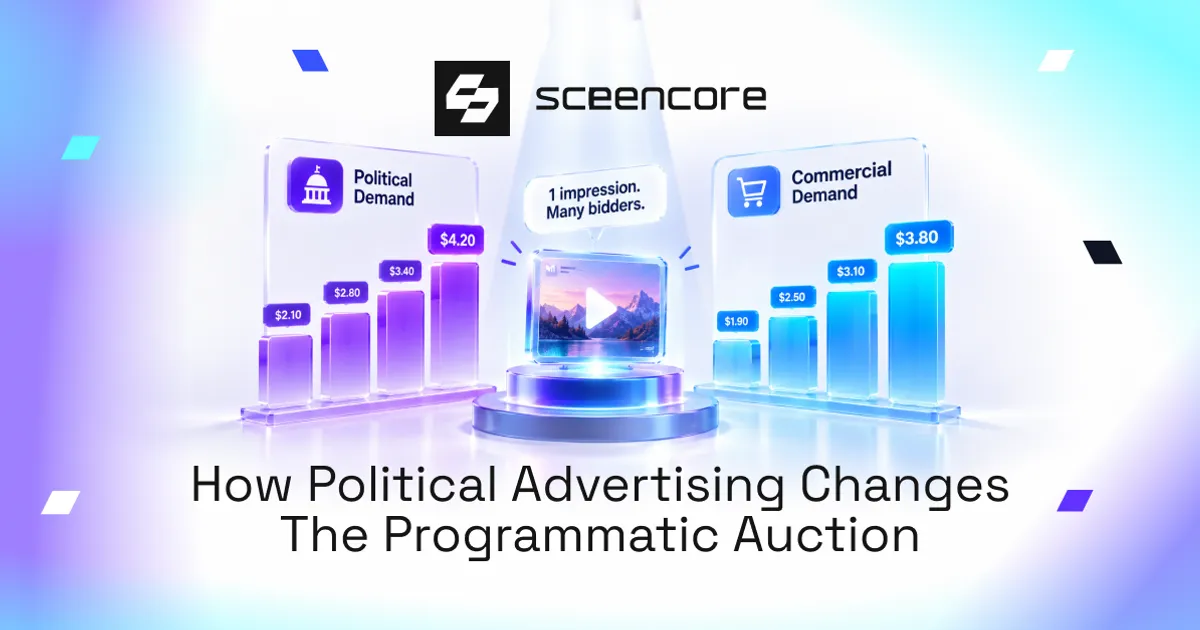
The political advertising season fundamentally shifts the rules of digital media buying.
While political campaigns and advocacy groups race to sway voters, commercial brands face an immediate operational reality: CPMs surge, premium inventory tightens, and standard bidding strategies experience sudden volatility.
Political campaigns operate on an entirely different economic logic than classic commercial marketing. They face strict calendar deadlines, aggressive capital deployment windows, and a single, non-negotiable objective: achieve maximum reach and share of voice right now, regardless of immediate spot efficiency.
Understanding how political budgets transform Real-Time Bidding (RTB) dynamics allows digital marketers to protect media performance, optimize frequency, and safeguard return on ad spend (ROAS) during high-pressure election cycles.
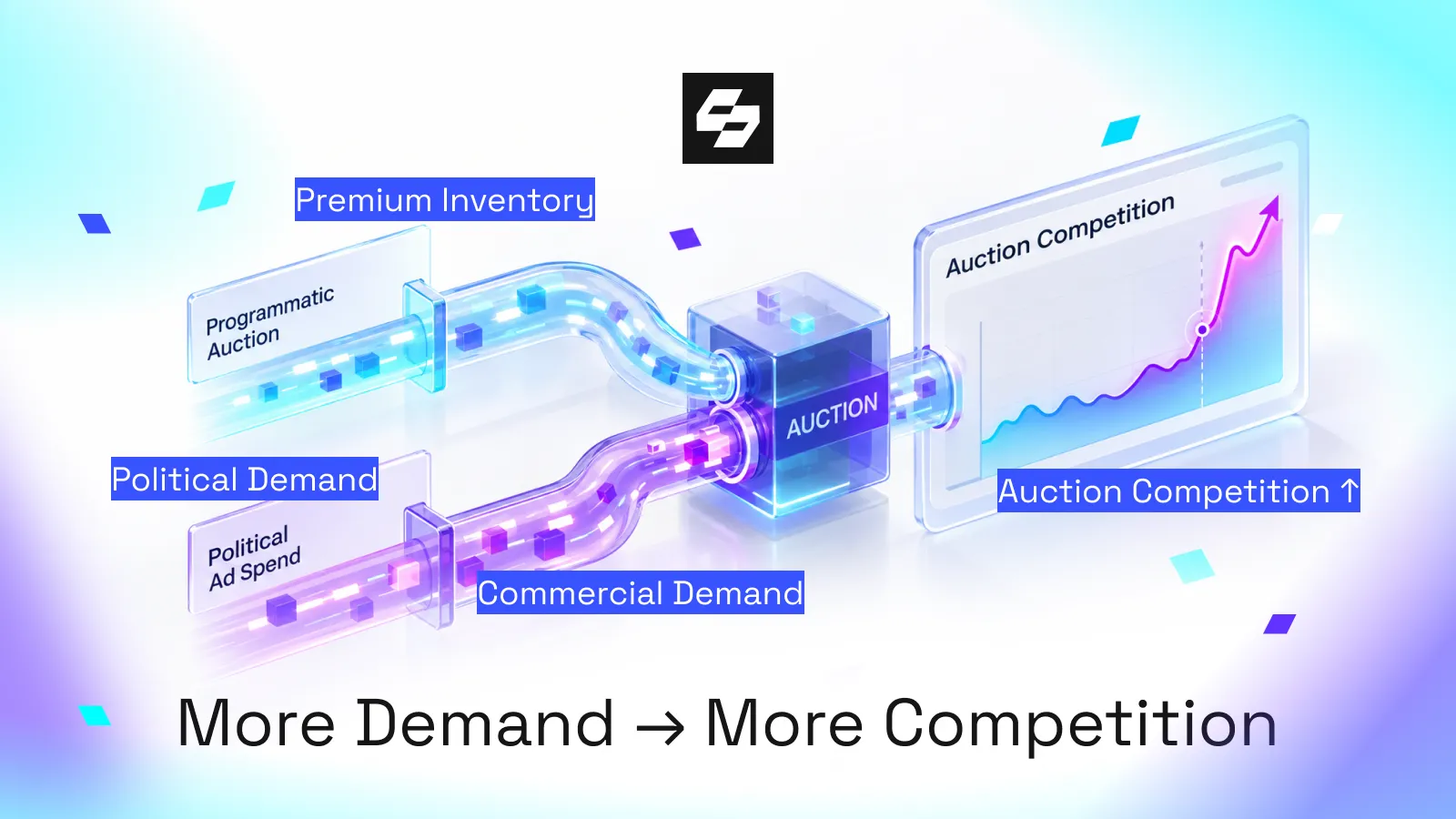
Higher political willingness-to-pay elevates programmatic bid levels and overall clearing prices above standard commercial benchmarks.
What Happens Inside the RTB Auction During Election Cycles?
Programmatic supply and demand operate in a real-time balance. When political budgets flood demand-side platforms (DSPs), that balance vanishes almost overnight.
Unlike commercial advertisers who optimize toward Customer Acquisition Cost (CAC), Return on Ad Spend (ROAS), or Lifetime Value (LTV), political spenders optimize toward time-bound exposure. Money unspent by election day carries zero value.
COMMERCIAL VS. POLITICAL | |
Commercial Bidding | Political Bidding |
• Long-term ROI & Efficiency • Strict Target CPA / CAC • Flexible Pacing & Schedules | • Fixed-Deadline Deployment • Aggressive Overbidding • Inflexible Target Windows |
This creates three structural shifts in the programmatic ecosystem:
1. Systematic Overbidding and Floor Price Inflation
To guarantee win rates on target audiences, political buyers place aggressive floor bids across open exchange and private marketplace (PMP) auctions. This drives up minimum clearing prices for all participating advertisers competing for similar demographics and geographies.
2. High Concentration in Key Designated Market Areas (DMAs)
Political demand is rarely distributed evenly. Battleground states, swing districts, and high-contested DMAs see exponential spikes in competition. Commercial brands targeting these specific regions experience severe CPM inflation compared to non-competitive markets.
3. Inventory Squeeze on High-Impact Formats
Political messaging relies heavily on sight, sound, and motion to drive emotional resonance. Consequently, Connected TV (CTV), non-skippable online video (OLV), and premium news environments face the highest inventory compression.

Multiple political and commercial buyers bid simultaneously for premium Connected TV inventory during peak election cycles.
5 Ways Political Spend Impacts Commercial Advertisers
When political ad dollars enter the ecosystem, commercial marketers feel the ripple effects across five core operational metrics.
Impact Area | What Happens | Commercial Risk |
CPM Rates | Average clearing CPMs rise by 20% to 100%+ in target geographies. | Budget exhausts faster with fewer total impressions delivered. |
Win Rates | Open auction win rates decline due to higher competitive bids. | Under-pacing on scheduled campaign goals. |
Frequency Creep | Uncoordinated buys lead to repeated exposures in non-political segments. | Viewer fatigue and wasted ad spend. |
Brand Safety | Ad placements appear adjacent to sensitive political commentary. | Potential brand misalignment or negative user perception. |
Inventory Availability | Premium publisher video inventory sells out early via programmatic direct/guaranteed. | Inability to secure high-impact placements during key retail periods. |
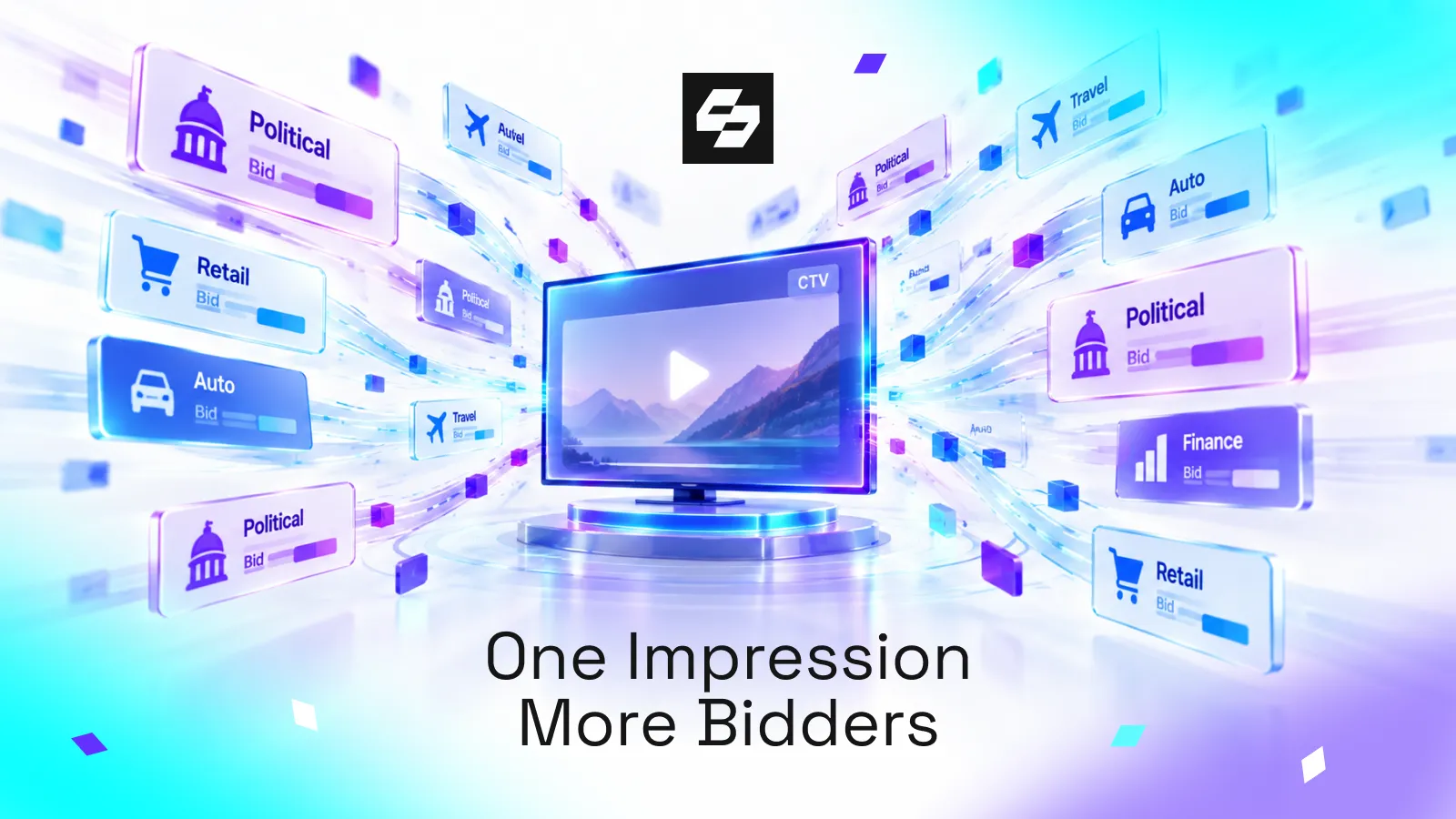
Increased political ad volume entering supply paths creates auction density and competition for available publisher impressions.
Key Drivers Behind Political Programmatic Volatility
Ten primary mechanisms dictate how political demand disrupts supply-path dynamics during peak campaign windows.
Inflexible Hard Deadlines: Political campaigns cannot extend flight dates. Bidding aggressiveness scales exponentially as election day approaches.
Hyper-Local Targeting Concentration: Heavy spend concentrates down to zip codes, congressional districts, and specific voter segments, squeezing hyper-local inventory.
High Demand for Connected TV (CTV): Streaming screens have replaced traditional linear TV for reaching cord-cutters, driving massive political capital into CTV supply paths.
First-Party Data Onboarding: Massive voter file matching creates high demand for specific cookie-less identifiers and IP-based targeting segments.
Programmatic Guaranteed Siphoning: Large political agencies lock down premium publisher inventory via direct and guaranteed deals months in advance, reducing open exchange supply.
Publisher Yield Management Adjustments: Supply-side platforms (SSPs) and publishers raise floor prices dynamically to capitalize on surging political willingness-to-pay.
Cross-Channel Pacing Spikes: Multi-channel campaigns (CTV, native, display, video) execute synchronized bid surges to dominate share of voice during key debate or news cycles.
Supply Path Redundancy (SPO Pressures): Multiple DSPs competing for the same publisher inventory inflate auction density across redundant routes.
Creative Review Delays: Increased regulatory scrutiny and publisher ad-review backlogs slow down overall inventory clearing times across ad servers.
Post-Election Drop-Off: Immediately following election dates, auction competition plummets, creating sudden clearing-price drops and pacing surges for remaining buyers.
How Commercial Brands Can Adapt and Win
Navigating a politically saturated programmatic landscape requires proactive media planning, intelligent infrastructure, and adaptive execution.
Strategy 1: Pivot Toward Programmatic Direct & PMPs
Relying solely on open exchange bidding leaves campaigns vulnerable to price spikes and unpredictable win rates. Securing Private Marketplace (PMP) deals or Programmatic Guaranteed (PG) contracts locks in floor rates and guarantees delivery on priority inventory.
Strategy 2: Implement Cross-Channel Frequency Capping
As competition squeezes reach, advertisers risk over-exposing the same small audience segment. Centralized, omnichannel frequency capping prevents budget waste and preserves ad experience quality across CTV, video, and display.
Strategy 3: Optimize Supply Paths (SPO)
Bypassing redundant intermediaries ensures your bid reaches the publisher without paying accumulated tech fees. Direct supply paths provide clearer auction visibility and help maintain competitive win rates without unnecessary overbidding.
Strategy 4: Leverage Alternative Geo-Targeting and Dayparts
If your target audience allows, shift delivery emphasis away from highly contested battleground DMAs or adjust dayparts to off-peak hours where political bidding pressure is less severe.
How Screencore Helps Marketers Navigate Market Volatility
Screencore gives advertisers the control, transparency, and infrastructure needed to execute efficient campaigns—even during peak political auction surges.
Omnichannel Auction Control: Unified execution across CTV, online video, display, and native lets you shift budget fluidly to channels with optimal clearing prices.
Direct Supply Integration (SPO): Direct connections to premium supply paths eliminate redundant fee layers, maximizing working media value per bid.
Advanced Frequency Capping: Prevent ad fatigue and eliminate duplicate impressions with cross-device and cross-publisher frequency management.
Granular Placement Reporting: Real-time visibility into CPM trends, win rates, and bid responses allows immediate optimization to avoid overpriced inventory pockets.
Final Thoughts
Political advertising seasonal spikes are predictable events. While they introduce temporary price pressure and inventory competition, they also reward advertisers who plan ahead with sophisticated media buying tools.
By moving beyond open-exchange dependency, optimizing supply paths, and actively managing cross-channel frequency, commercial brands can maintain efficiency, secure premium reach, and outperform competitors throughout high-demand election cycles.
FAQ
Why do CPMs increase during political election cycles?
CPMs rise because political campaigns deploy massive, time-sensitive budgets into programmatic auctions. Their willingness to overbid to guarantee impression delivery raises clearing prices and floor rates across the entire ecosystem.
Which ad formats are most affected by political advertising?
Connected TV (CTV) and premium non-skippable online video (OLV) experience the highest demand and price inflation, as political buyers prioritize high-impact television-style messaging in news and streaming content.
How can small-to-midsize advertisers compete during political peaks?
Smaller buyers can maintain performance by utilizing Private Marketplaces (PMPs), focusing on contextual targeting rather than hyper-competitive demographic segments, applying strict frequency caps, and using self-serve programmatic platforms like Screencore to monitor real-time clearing prices.
Does political ad spend affect display advertising as much as CTV?
While video and CTV see the highest price spikes, display advertising is also impacted—particularly on major news sites, local media outlets, and high-traffic political content channels where voter attention is concentrated.