



Political advertising has always created a strange few months for the media business.
Budgets accelerate. Local markets behave differently. Television inventory suddenly becomes more valuable in places that rarely dominate national media conversations.
But 2026 has another variable. The media infrastructure absorbing that money has changed.
CTV is bigger. Digital video is bigger. Programmatic pipes reach more premium environments. AI is making more decisions about bidding, pricing, pacing and inventory. Publishers have more ways to package and monetize audiences than they did during previous midterm cycles.
That means the 2026 U.S. election isn't simply bringing another wave of political advertising. It is arriving at a moment when the programmatic ecosystem itself is changing quickly. And we may learn quite a lot about how well that ecosystem works under pressure.
Political Money Is Already Moving Through the Media Market
We don't need to wait until November to see the effect.
Sinclair reported $59 million in political advertising revenue in Q2 2026, up 9% compared with the second quarter of the previous midterm cycle in 2022. Across the first six months of 2026, its political advertising revenue reached $77 million versus $12 million during the same period in 2025.
Gray Media tells a similar story. It reported $83 million in political advertising revenue in Q2 2026, compared with $9 million a year earlier.
Those are individual media companies, not the entire market. Still, they're useful signals.
Political demand isn't theoretical anymore.
For publishers and platforms, the interesting question is what happens as that demand intensifies closer to Election Day — and increasingly reaches digital and streaming environments alongside traditional television.
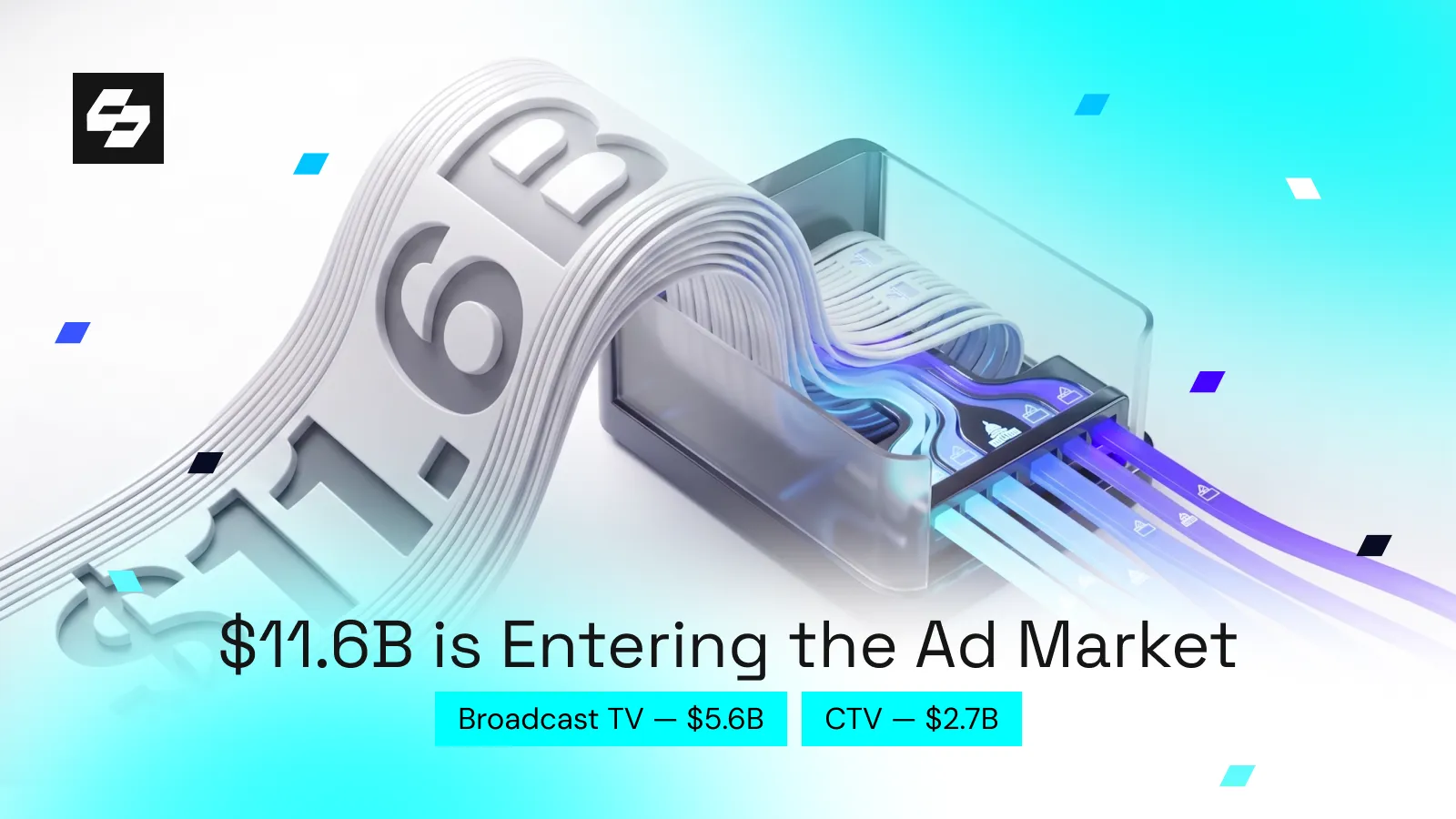
Projected 2026 US political advertising spend entering the media market across broadcast TV and connected TV.
CTV Is Entering This Election Cycle From a Very Different Position
CTV isn't a side experiment in the video plan anymore.
IAB projects U.S. digital video advertising to surpass $80 billion in 2026, up 11% year over year and growing nearly 20% faster than the overall advertising market. CTV itself is projected to grow 11%.
That matters because election advertising is entering a video ecosystem that was already becoming more competitive before political budgets accelerated.
CTV gives advertisers something traditional television couldn't offer in quite the same way: premium big-screen attention combined with digital audience signals, geographic targeting and programmatic execution.
That combination is attractive to commercial brands. It is attractive to political advertisers too. And there is still only one ad opportunity on the screen at a time.
The result may be greater pressure around desirable audiences, markets and premium video environments. But the bigger story isn't simply CPM inflation. It's whether the technology connecting buyers and sellers can allocate that demand efficiently.
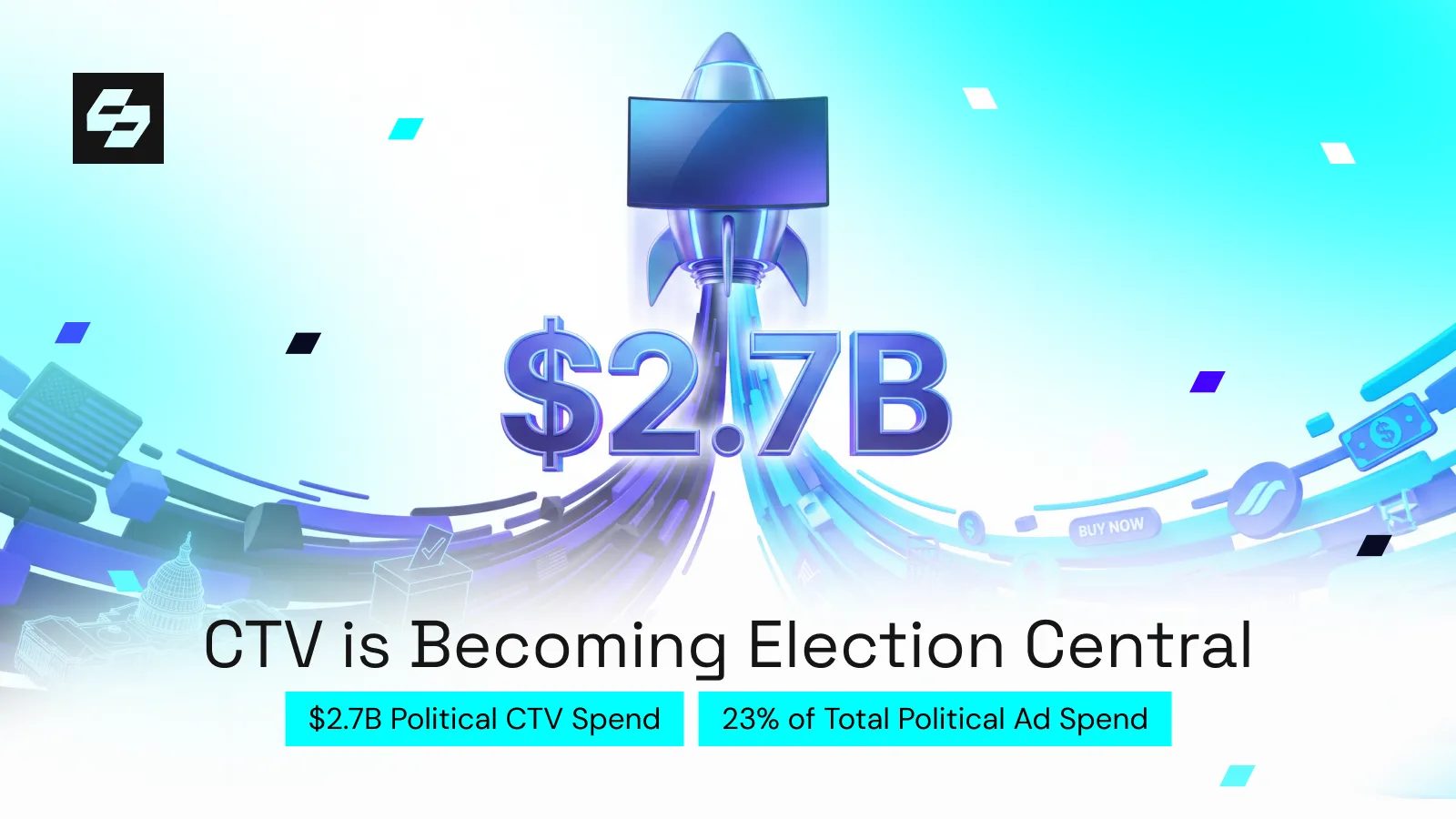
Connected TV advertising growth during the 2026 US election as political campaigns increase spending on premium CTV inventory.
More Demand Doesn't Automatically Mean Better Monetization
Publishers have an obvious reason to welcome periods of intense advertiser competition.
More demand can create stronger auction dynamics and higher revenue opportunities.
But anyone who has worked on the supply side knows that "more demand" and "better monetization" are not synonyms.
The quality of that demand matters. Auction mechanics matter. Pricing matters. Fill rate matters. So do latency, user experience and the routes through which buyers actually reach the inventory.
Election season can make these differences more visible.
A publisher with premium CTV inventory in a competitive political market may have multiple categories of buyers chasing the same audience. Political demand could arrive alongside retail, automotive, finance, travel and other commercial campaigns.
The job isn't simply to squeeze another ad onto the screen. It's to understand what the existing opportunity is worth.
Screencore's SSP is built around that principle, combining access to premium demand with real-time yield optimization, transparent auctions and flexible integrations for publishers. The aim is to improve the value of inventory rather than treat volume as the only monetization lever.
That distinction becomes much more important when demand spikes.
CTV Infrastructure Is Still Being Standardized
Here's something easy to overlook.
While billions of dollars are moving into digital video, parts of CTV's programmatic infrastructure are still being standardized.
In July 2026, IAB Tech Lab finalized updated guidance for its CTV Ad Portfolio, including signaling for newer formats through standards such as AdCOM, VAST and Native. The work covers emerging experiences such as Pause Ads, Screensaver Ads and Menu Ads.
Why does that matter to an election article? Because scale exposes inconsistency.
When relatively small budgets move through a fragmented environment, inefficiencies can remain manageable. When demand grows, buyers and publishers need a much clearer understanding of exactly what is being bought and sold.
IAB Tech Lab describes standardized signaling as a way to reduce manual processes and make programmatic CTV transactions more consistent and efficient.
The timing is interesting. CTV is attracting more advertiser attention at exactly the moment the industry is working to make the underlying trading infrastructure more scalable.
The 2026 election could accelerate that pressure.
Quality Will Matter More When Inventory Gets Crowded
Programmatic has never suffered from a shortage of impressions. Quality impressions are another matter.
IAB's 2026 research shows that as digital video budgets have grown, buyers have also become more demanding about quality and transparency. Audience delivery and targeting are becoming increasingly important in media selection.
Election pressure makes that logical. When desirable inventory becomes more competitive, paying for poor placements, unclear supply paths or low-quality traffic becomes more painful.
For advertisers, that means understanding what they are buying before simply increasing bids.
For publishers, it means maintaining inventory quality even when there is a temptation to maximize short-term election revenue.
And for AdTech platforms, it means making decisions fast without turning the auction into a black box.
Screencore approaches this through verified premium inventory, transparent auction infrastructure and optimization across CTV, video, display and mobile. The platform connects advertisers and publishers while providing visibility into supply, pricing and performance.
Busy markets don't make transparency less important. They make the cost of missing it higher.

Political and commercial advertisers competing for programmatic inventory as demand and CPM pressure increase during the 2026 US election.
AI Will Be Tested Too
AI is now involved in almost every serious conversation about programmatic advertising. The more useful question is what it actually does when market conditions change.
Election season gives us a practical test.
IAB's latest work on AI in programmatic video describes AI moving into planning, forecasting, bidding, pricing, optimization and measurement. For publishers, it is also influencing inventory evaluation and monetization.
That is precisely where a volatile media market needs intelligence.
If competition suddenly rises around certain markets or audience segments, bidding systems need to recognize it. Publishers need to understand changing inventory value. Buyers need to know when an impression still makes economic sense — and when it doesn't.
The interesting part isn't whether AI can bid faster than a person. Of course it can. The harder question is whether it can make a better decision.
IAB makes another important point: as AI takes more responsibility for decisions that move advertising dollars, transparency becomes more important.
That observation deserves more attention than another promise about automation.
Measurement and Verification Can't Be an Afterthought
CTV's growth has brought another familiar AdTech problem with it: fragmentation.
Different platforms, streaming environments and delivery methods can make measurement and verification complicated. IAB Europe's 2026 programmatic CTV guide specifically highlights media quality, fraud prevention, consent signaling, measurement, data usage and targeting as areas requiring clear best practices.
Election advertising won't create those problems. It could magnify them. More money flowing through a system tends to produce more questions about where that money went, what audiences were reached and whether the inventory delivered what buyers expected.
Commercial advertisers need those answers. Publishers need them. Technology partners do too. A healthy programmatic market cannot rely indefinitely on "the algorithm handled it" as an explanation.
What Happens After Election Day Matters Too
Political advertising has one unusual characteristic: a hard deadline.
Election Day arrives. Campaign budgets stop. Demand patterns change.
That creates an interesting challenge for publishers benefiting from temporary increases in political spend. The goal shouldn't be to build a monetization strategy that only looks impressive during an election quarter.
The stronger opportunity is to use periods of high demand to improve the underlying infrastructure: pricing, yield optimization, inventory quality, integrations, auction transparency and relationships with buyers.
Those improvements remain useful when the political money leaves. And it will leave.
This is why the 2026 election matters beyond politics. It could act as a stress test for a programmatic ecosystem already processing enormous volumes of video and CTV demand.
Screencore operates across that ecosystem, connecting advertisers, agencies and premium publishers through CTV, video, display and mobile while processing more than 500,000 bid requests per second and delivering more than 2 billion monthly impressions across 160+ active markets.
The scale is important. But this election cycle may remind the industry that scale without quality, transparency and intelligent decision-making isn't much of an advantage.
When demand gets crowded, those details stop looking like details.
Premium CTV Was Already Becoming More Competitive
The election isn't the only force changing premium streaming inventory.
Live sports are pulling major audiences — and major advertising budgets — into CTV as well. That creates another fascinating test for programmatic technology: how do advertisers reach high-value audiences when attention is concentrated around premium, time-sensitive content?
Explore that shift in our previous article, “Live Sports & Premium CTV Advertising.”
Build for the Market When It Gets Busy
Quiet markets make many advertising systems look efficient. Busy ones reveal the difference.
Screencore helps advertisers, agencies and publishers navigate programmatic advertising across CTV, video, display and mobile with AI-powered optimization, premium verified inventory, transparent auctions and real-time monetization technology.
Whether you're looking to improve campaign performance or capture more value from premium inventory, the goal is simple: make every opportunity work harder when competition rises.