

Your brand isn't running a political campaign. Your audience hasn't changed. Your advertising budget is exactly where it was last month.
So why are your CPMs suddenly climbing?
Election season can change the economics of digital advertising for everyone competing in the same markets. Political campaigns enter the auction with substantial budgets, tight deadlines, and specific geographic requirements. Commercial advertisers may find themselves competing for inventory that was easier to access just weeks earlier.
The impact isn't always dramatic. It depends on the market, channel, audience, and timing.
But one thing is clear: advertisers don't need to participate in an election to feel its effects.
For brands, agencies, and media buyers, understanding these changes is essential to maintaining efficient programmatic campaigns.
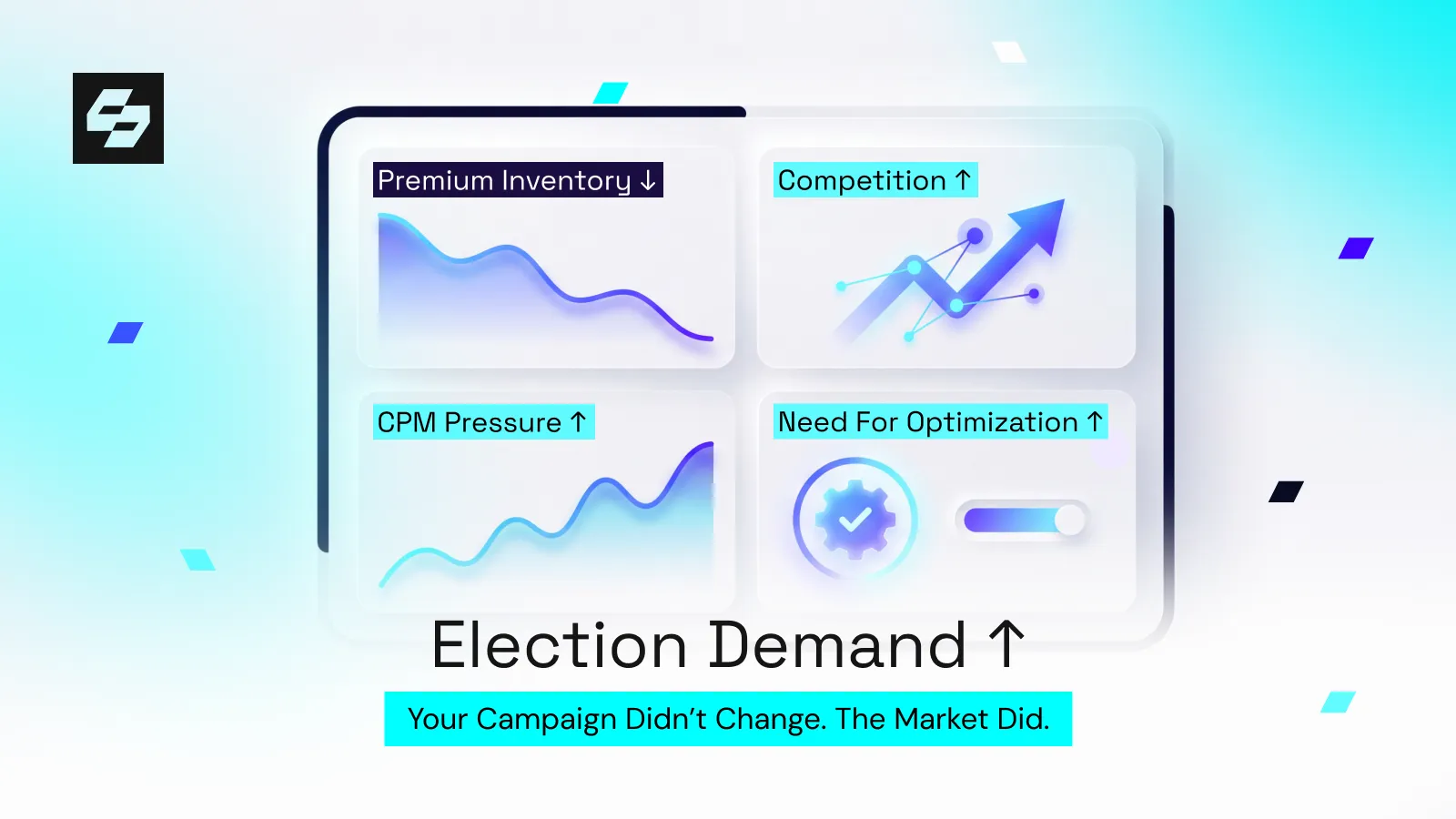
Concentrated political ad spend shifts auction dynamics, driving up CPMs and inventory competition across all commercial verticals
Why Election Season Changes the Advertising Market
Political advertising follows a different schedule from most commercial campaigns.
A retail brand can extend a promotion. A software company can move its launch date. Election campaigns, however, operate around fixed voting dates and other time-sensitive events.
This creates periods of concentrated advertising demand.
Campaigns may increase spending in particular regions, compete for local news audiences, or shift budgets between television, Connected TV (CTV), and digital channels.
When several advertisers target similar inventory at the same time, auction dynamics change.
Consider a regional retailer running a display campaign in a competitive electoral market. The retailer's targeting, creative, and daily budget remain unchanged.
Then additional political advertisers begin bidding for impressions in the same geographic area.
The retailer may need to bid more to maintain its previous delivery levels. Alternatively, it may win fewer auctions at its existing bid price.
Nothing is necessarily wrong with the campaign.
The competitive environment has changed.
This distinction matters because advertisers sometimes respond to declining delivery by adjusting targeting or creative when the immediate problem is actually inventory competition.

Shared programmatic inventory forces commercial brands to compete with high-budget political campaigns for the same target audiences.
Rising CPMs: The Most Visible Election Effect
Cost per mille (CPM) is one of the first metrics advertisers should examine during periods of changing demand.
Programmatic advertising operates through auctions. When more eligible buyers compete for a limited number of impressions, clearing prices can increase.
Election-related spending may contribute to this pressure, particularly in heavily contested geographic markets and high-demand media environments.
For non-political advertisers, higher CPMs mean the same budget may purchase fewer impressions.
Imagine a brand spending $20,000 at an average CPM of $10.
That budget buys approximately two million impressions.
If the average CPM rises to $15, the same investment purchases around 1.33 million impressions.
That's roughly one-third fewer impressions without any reduction in spending.
The example is illustrative, not a forecast of election-related price changes. Actual CPM movements depend on the inventory, market, and auction conditions.
The important point is that advertisers can lose buying power even when their budgets remain stable.
And increasing bids isn't always the right response.
If higher media costs aren't producing better outcomes, the campaign may become less efficient despite maintaining delivery.
Inventory Competition Goes Beyond Political Ads
Election advertising doesn't affect every publisher or advertising format equally.
A local news website covering an election may experience different demand patterns from an entertainment app with a national audience.
The same applies to CTV.
Streaming inventory can attract advertisers seeking television-style exposure with digital targeting capabilities. Political campaigns and commercial brands may compete for some of the same opportunities, although publisher policies and platform restrictions determine which political ads are eligible to run.
This creates an uneven market.
Some inventory may become more competitive. Other placements may experience little change.
Advertisers who treat the entire programmatic ecosystem as one market risk overlooking these differences.
A campaign might face rising CPMs on a particular group of publishers while comparable eligible inventory remains available through other supply sources.
The challenge is identifying where competition is affecting performance and where alternative opportunities exist.
This requires more than a campaign-level average CPM.
Buyers need visibility into inventory sources, placement performance, geographic delivery, and auction outcomes.
Without that information, media optimization becomes guesswork.
The Hidden Problem: Campaign Pacing and Delivery
Higher CPMs are easy to spot.
Delivery problems can be more subtle.
Suppose a brand has a fixed campaign budget and a specific impression target. As auction competition increases, the campaign begins winning fewer impressions.
The DSP may respond by adjusting bids or delivery patterns, depending on its optimization settings.
But if inventory becomes significantly more expensive, the campaign may struggle to maintain its planned reach or impression volume within the original budget.
This can create several operational challenges.
A campaign may spend more heavily during certain hours, underdeliver in important geographic areas, or concentrate impressions on a smaller audience.
Advertisers may also discover that their frequency distribution has changed.
Instead of reaching additional users, the campaign could repeatedly reach audiences available through a narrower selection of inventory.
The problem isn't necessarily the number of impressions delivered.
It's whether those impressions still support the original campaign objective.
During election season, advertisers should pay closer attention to pacing, reach, frequency, and cost trends rather than relying exclusively on total spend.
A campaign that spends its full budget isn't automatically performing well.
Why Supply Path Optimization Matters During Election Season
When inventory becomes more competitive, inefficient supply paths become harder to justify.
A single advertising impression may be available through several exchanges or resellers. Each route can involve different fees, auction conditions, and levels of transparency.
Without effective Supply Path Optimization (SPO), advertisers may encounter duplicated opportunities or pay unnecessary intermediary costs.
These inefficiencies exist throughout the year.
Election-season demand can make their financial impact more noticeable.
SPO helps advertisers identify more efficient routes to inventory, reduce unnecessary intermediaries, and gain better visibility into media transactions.
For example, an advertiser may discover that a premium publisher's inventory is available through both a direct connection and several reseller paths.
Evaluating those routes can help the buyer understand which provides better transparency and overall buying efficiency.
However, SPO doesn't eliminate genuine competition for limited inventory. A more efficient supply path cannot guarantee lower auction prices when demand is high.
Its value lies in reducing avoidable costs and improving the quality of buying decisions.
When every impression becomes more expensive, unnecessary fees deserve even less room in the budget.
Should Non-Political Advertisers Change Their Media Strategy?
The answer depends on what the campaign data shows.
Election season alone isn't a reason to pause advertising, abandon a channel, or increase budgets.
Advertisers should first determine whether their campaigns are experiencing meaningful changes in cost, delivery, or outcomes.
A national campaign may see little impact in some regions and substantial competition in others.
A brand targeting a broad audience may have more flexibility than an advertiser focused on a small geographic market.
This is where programmatic buying offers practical advantages.
Advertisers can evaluate performance across inventory sources, adjust eligible placements, refine geographic delivery, and redistribute budgets when the data supports those decisions.
A campaign experiencing higher display CPMs might find suitable opportunities in video, mobile, or other environments.
But shifting channels should never be automatic.
A cheaper impression is not necessarily a better impression.
Advertisers need to consider audience quality, campaign objectives, available inventory, and measurable performance before reallocating spend.
The goal is to preserve campaign effectiveness, not simply chase the lowest CPM.
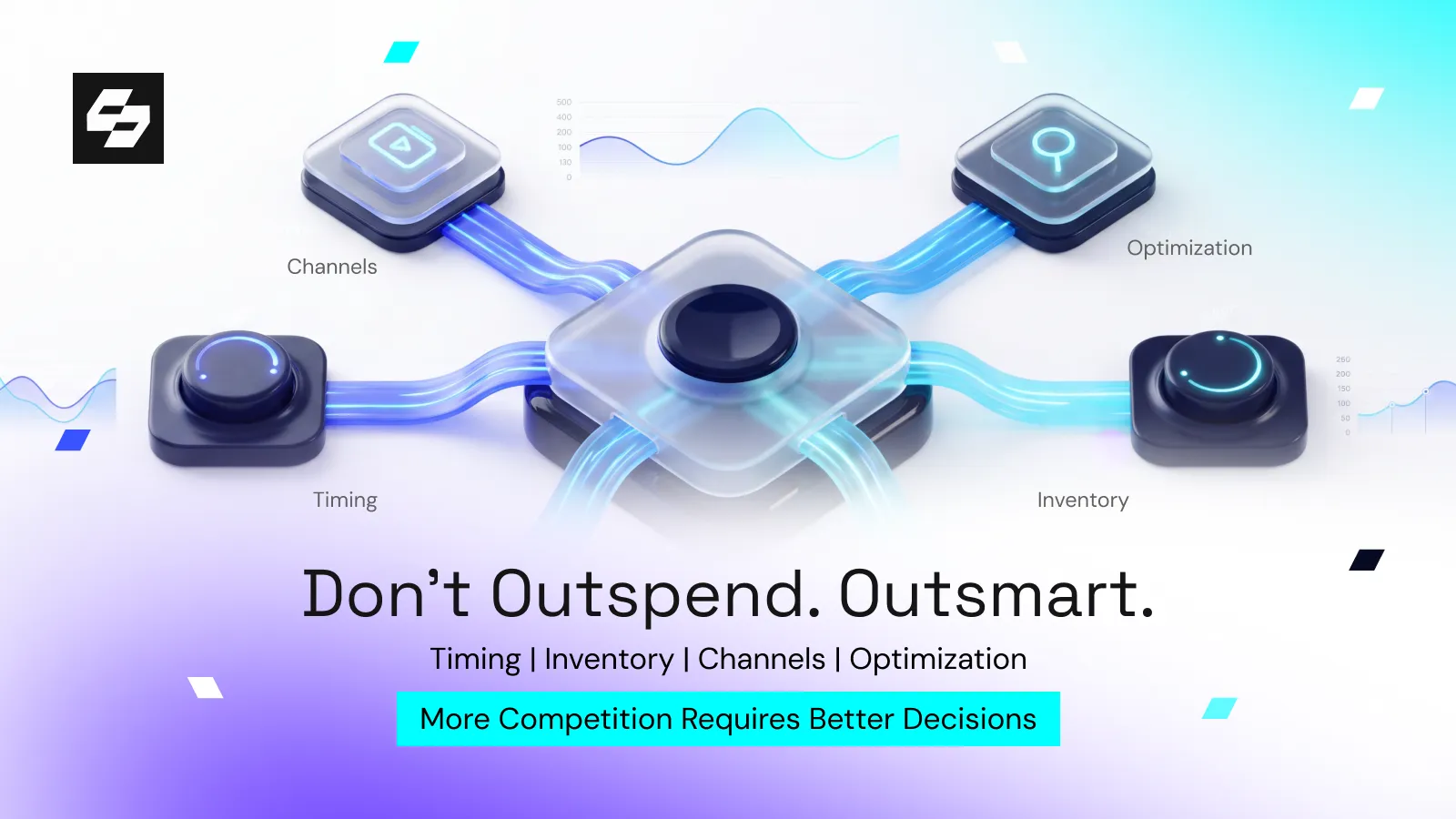
Smart media allocation relies on real-time optimization, channel flexibility, and supply path visibility to navigate market demand spikes.
How AI-Driven Optimization Helps Advertisers Respond
Election-season demand can change faster than traditional campaign review cycles.
A media buyer might identify a CPM increase during a morning performance check, only to discover that auction conditions have shifted again by the afternoon.
AI-driven optimization can help platforms respond to changing performance signals more quickly.
Automated systems can evaluate bids, placements, budget allocation, and delivery patterns within configured campaign rules.
When certain inventory becomes less efficient, optimization technology can identify alternative eligible opportunities based on available data.
This reduces the need for every adjustment to be made manually.
Still, automation needs clear objectives.
An algorithm optimized exclusively for inexpensive impressions may sacrifice audience quality. A system focused only on delivery volume may increase bids without adequately considering business outcomes.
Advertisers need transparent reporting and reliable performance signals to understand what optimization is actually achieving.
AI works best when it supports informed media decisions rather than hiding them.
How Screencore Supports Advertisers in Competitive Markets
At Screencore , we understand that programmatic efficiency depends on more than access to advertising inventory.
Advertisers need transparent transactions, reliable technology, and the flexibility to respond when market conditions change.
Our programmatic infrastructure connects advertisers and publishers across CTV, video, display, and mobile environments.
Through advanced audience targeting, AI-driven optimization, and cross-screen activation, Screencore helps advertisers manage campaigns across multiple advertising formats.
Transparent reporting provides visibility into spending and performance, while verified inventory and efficient supply paths support more informed buying decisions.
For advertisers facing changing auction conditions, these capabilities create opportunities to evaluate inventory, adjust campaign execution, and reduce avoidable media inefficiencies.
Our infrastructure also supports more than 500,000 real-time bid requests per second and connects over 30,000 publishers, according to Screencore's company media kit.
That scale supports access to a broad programmatic ecosystem, although inventory availability and pricing will always depend on individual campaign requirements and market conditions.
Election season is one example of why infrastructure flexibility matters.
The same principles apply when advertisers face increased competition during major sporting events, seasonal shopping periods, and other high-demand moments.
The Election Effect Doesn't End With Political Advertising
Election season can create a difficult environment for commercial advertisers, particularly when political demand overlaps with their target markets and preferred inventory.
But the impact is not uniform.
Some campaigns may face higher CPMs. Others may encounter delivery challenges or increased competition for specific placements. Many will experience little disruption.
The difference becomes clear in the data.
Advertisers need to understand where costs are changing, which inventory continues to perform, and whether their budgets are still reaching the audiences that matter.
Transparent supply paths, reliable infrastructure, and continuous optimization make these decisions easier to manage.
Political campaigns may change the competitive environment.
Commercial advertisers still need to make every media dollar count.
What Election Season Reveals About Adtech Infrastructure
Rising CPMs and tighter inventory competition are only part of the story. Behind every programmatic campaign sits a complex infrastructure responsible for processing bid requests, managing auctions, and maintaining reliable delivery.
What happens when that infrastructure faces sudden demand spikes?
In our previous article, Election Season Is a Stress Test for Programmatic Infrastructure, we examine the technical pressure behind election-period advertising, from auction latency and scalability to supply quality and transparency.
Read it to understand why infrastructure performance matters just as much as media buying strategy when advertising markets become more competitive.
Keep Your Advertising Performance on Track With Screencore
Election season can change auction competition, inventory availability, and media costs. Your advertising strategy needs the visibility and flexibility to respond.
Screencore helps advertisers navigate complex programmatic environments with transparent supply paths, AI-driven optimization, verified inventory, and cross-screen advertising capabilities.
Whether you're looking to improve buying efficiency, expand inventory access, or strengthen your programmatic strategy, our team can help you explore the right technology and supply solutions for your business.
Don't let changing market conditions dictate your advertising performance. Build a smarter programmatic strategy with Screencore.
Let's Make Your Media Spend Work Harder.