


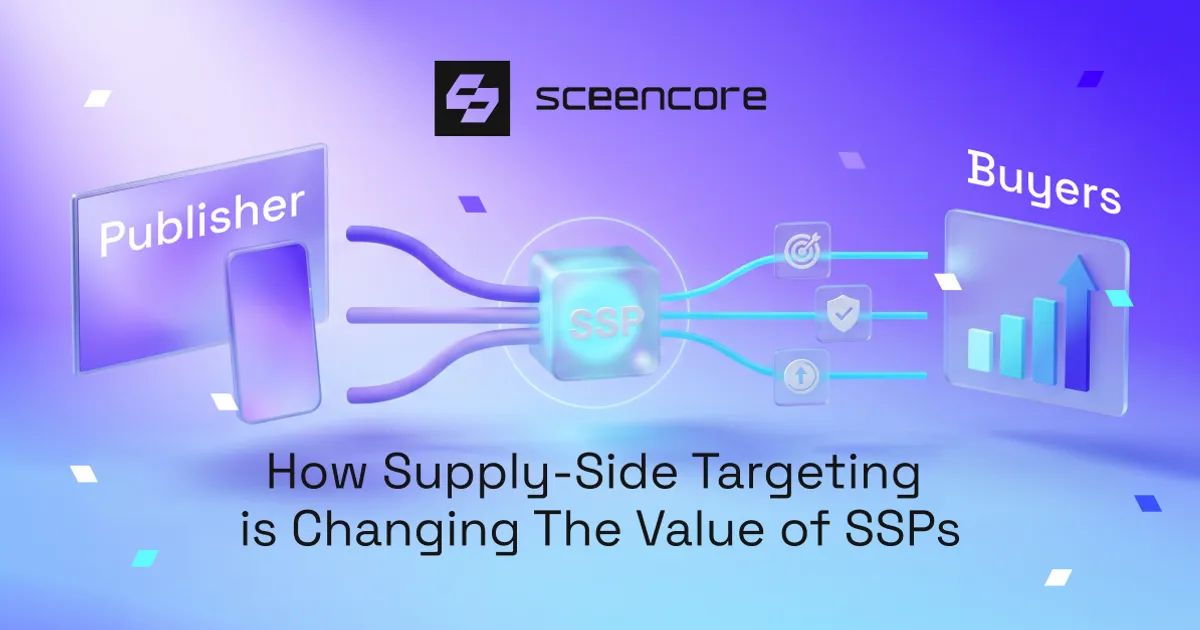
For years, supply-side platforms were judged by a fairly simple question: how much advertising demand could they bring to a publisher?
More buyers meant more competition. More competition could mean better prices. The SSP connected the inventory, managed the auction and helped publishers turn impressions into revenue.
That job still matters. A lot.
But something interesting is happening on the sell side of programmatic advertising. SSPs are starting to influence which impressions buyers see in the first place, rather than simply passing every available opportunity into an increasingly crowded auction.
The shift has a name: supply-side targeting.
And the numbers suggest buyers are taking it seriously.
According to OpenX's 2026 Supply-Side Intelligence Trend Report, supply-side targeting spend doubled year over year in 2025 within its marketplace. The company also reported significant growth in CTV spending that used supply-side targeting over several years.
This is more than another industry buzzword. It points to a change in how programmatic advertising is being organised, where targeting decisions happen and what makes an SSP valuable.
The interesting part? It starts before the bid.
What Is Supply-Side Targeting?
Supply-side targeting (SST) is the process of applying audience data, contextual signals and other buying criteria to advertising inventory on the supply side, before an impression is offered to potential buyers.
Traditionally, a demand-side platform (DSP) receives bid requests and decides which opportunities match an advertiser's campaign.
Supply-side targeting moves part of that selection process closer to the publisher.
An SSP or supply-side technology partner can use available data to identify which inventory opportunities are relevant to particular buyers, audiences or campaign goals.
Instead of asking every eligible buyer to evaluate a huge volume of requests, the system can help make the available supply more relevant before bidding begins.
Consider a travel advertiser interested in reaching people researching international holidays.
The conventional approach might involve receiving bid requests from thousands of sites and applications, then using DSP targeting to decide which impressions are worth buying.
A supply-side targeting arrangement can apply appropriate audience or contextual signals earlier, helping identify relevant opportunities before they enter the buyer's workflow.
The DSP still plays an important role in campaign decisions and bidding.
But the supply side contributes more intelligence to the process.
That's a meaningful change from simply making inventory available.
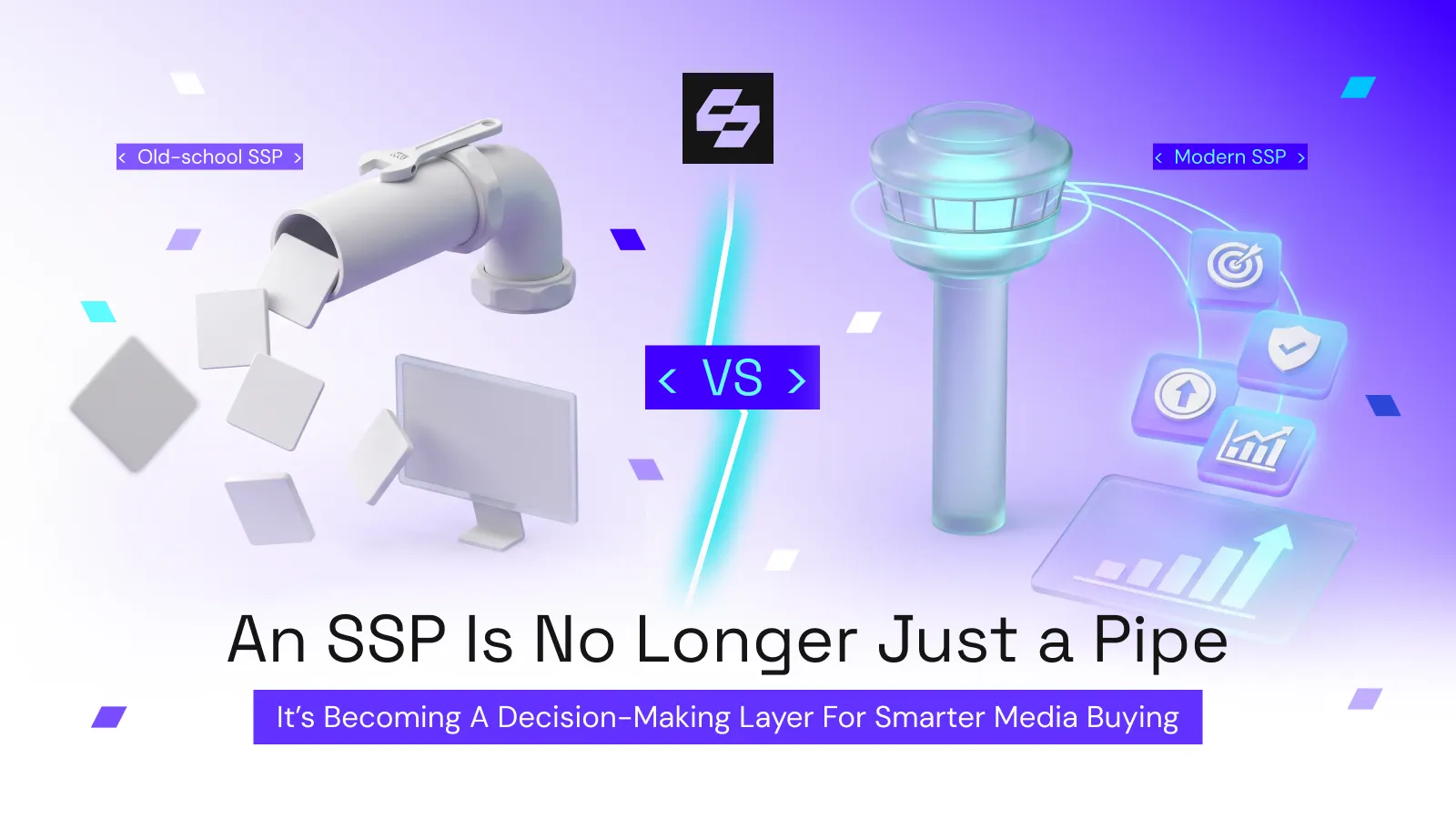
Modern supply-side platforms are evolving from passive auction pipes into intelligent decision-making layers that filter and enrich inventory before bidding.
Why Traditional SSPs Are Being Asked to Do More
An SSP built around auction connectivity solves a real problem.
Publishers need access to demand, competition for impressions and tools to manage monetisation. Advertisers need efficient access to inventory.
The trouble is that connecting more systems does not automatically make the buying process better.
An impression can travel through multiple intermediaries. Buyers may evaluate duplicate paths to similar inventory. Bid requests can consume technical resources without generating meaningful demand.
And somewhere in that process, useful information about the inventory can get lost.
More traffic through the pipes is not necessarily more value for the publisher.
This has pushed the market towards supply path optimisation, better inventory transparency and more deliberate selection of advertising opportunities.
Supply-side targeting takes that development further.
Rather than concentrating only on how inventory reaches buyers, it asks how relevant information can improve the selection of inventory itself.
A modern SSP therefore has the potential to contribute to auction efficiency, audience relevance and inventory quality alongside its traditional monetisation responsibilities.
That does not make every SSP an audience intelligence platform overnight.
It does mean publishers should pay closer attention to what their technology partners actually do before an auction takes place.
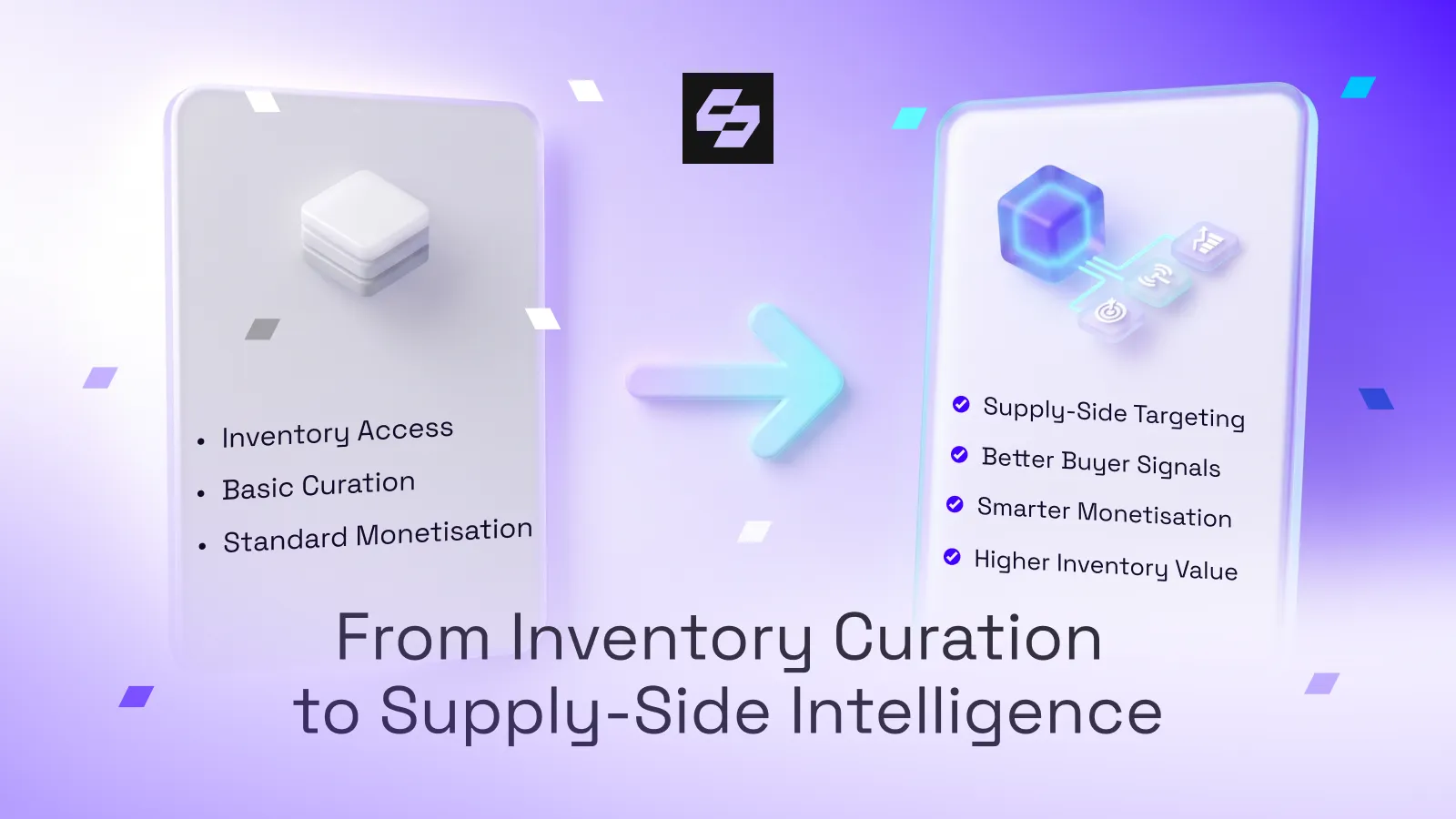
Moving beyond basic inventory curation to supply-side intelligence enriches bid requests with pre-auction buyer signals to unlock higher publisher inventory value.
Inventory Curation vs Supply-Side Targeting: What's the Difference?
These two terms are closely related, but they are not interchangeable.
Inventory curation generally involves selecting, filtering and packaging advertising opportunities according to agreed criteria.
A buyer might want inventory from specific publishers, relevant content categories or particular formats. A curated deal can organise those opportunities into a package, often accessed through a Deal ID.
This makes buying more manageable.
Supply-side targeting adds another layer.
Rather than relying only on inventory selection, it can apply eligible audience data, identity signals or performance models before the bid.
Imagine two CTV deals.
The first contains inventory from selected streaming applications. The buyer knows the environments included in the package.
The second uses an additional targeting layer to identify opportunities that match the advertiser's available audience criteria.
Both arrangements may be useful, but they solve different problems.
The first helps define where advertising can appear.
The second can also help determine which opportunities are most relevant within that supply.
There is a catch, though.
Supply-side targeting is only as good as its underlying data, permissions and matching methods. Poor signals do not become more reliable simply because they are applied earlier.
Putting a targeting label on an inventory package is not the same as improving the quality of the buying decision.
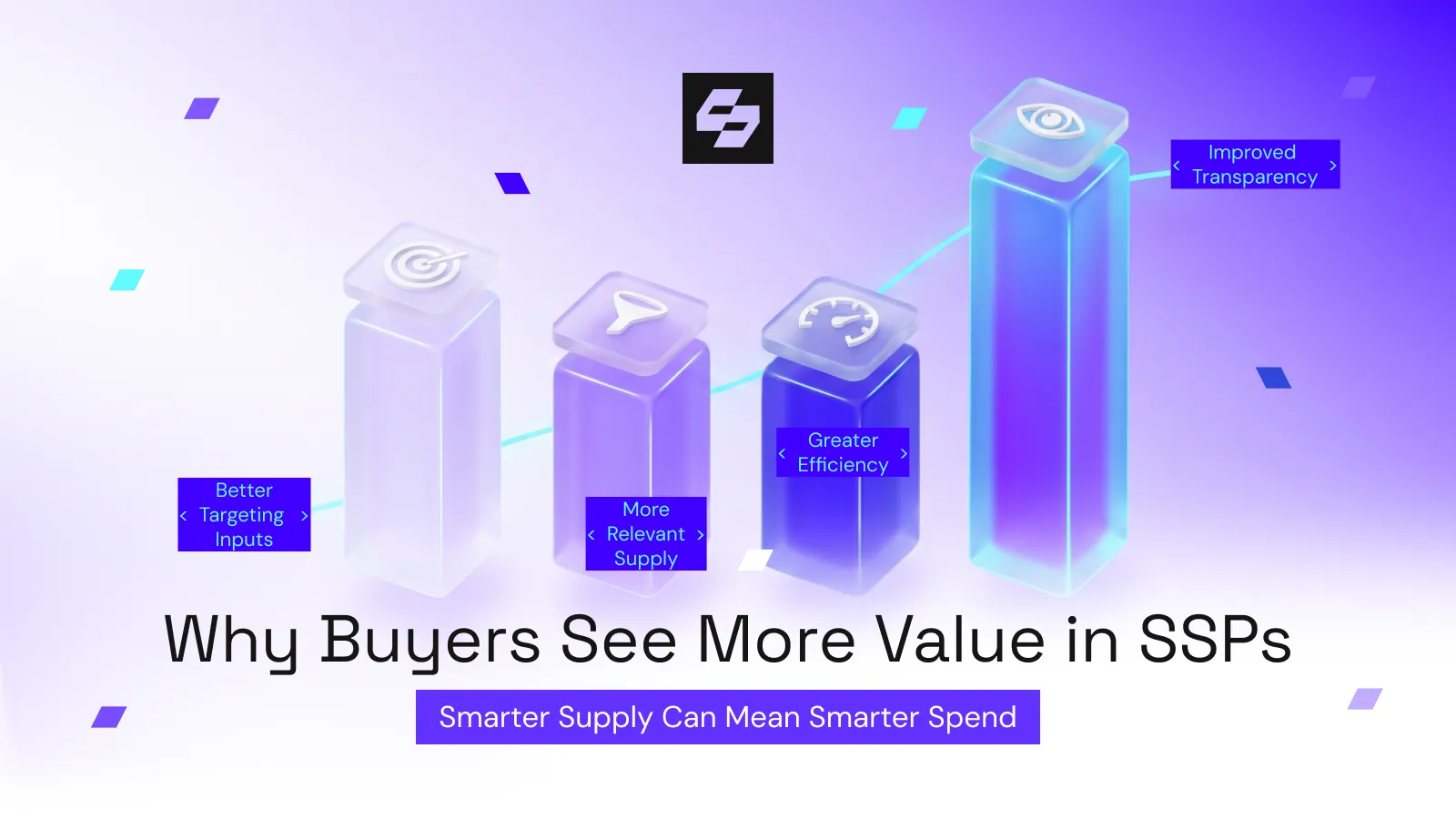
Pre-auction targeting inputs reduce programmatic bid noise and improve supply transparency, allowing buyers to allocate media spend toward higher-value impressions.
Why Buyers Are Moving Closer to the Supply Side
The appeal of supply-side targeting is straightforward: advertisers want to spend less time evaluating irrelevant opportunities and more money reaching audiences that matter.
When suitable signals are available at the supply source, buyers may be able to reduce unnecessary bid requests and improve the relevance of the opportunities they receive.
That can benefit the infrastructure.
It can also benefit the budget.
Consider an advertiser receiving large volumes of bid requests that are technically eligible but poorly matched to its campaign. The DSP still has to process and evaluate them, even if most never become competitive bids.
Pre-auction selection can help reduce that noise.
OpenX's October 2026 research provides an example of how the market is responding. Its report found that supply-side targeting spend doubled year over year in 2025 and highlighted growing use of audience data, quality signals, measurement and algorithmic optimisation.
The figures describe activity within OpenX's own marketplace, rather than a measured increase across the entire industry. Still, they offer a useful indication of buyer interest.
Advertisers are looking beyond basic inventory packaging.
They want supply that arrives with more relevant information attached.
For publishers, that creates an opportunity to make their inventory more useful to buyers before price becomes the only deciding factor.
How Supply-Side Targeting Can Change Publisher Revenue
Publishers do not earn more simply because their SSP processes more bid requests.
Revenue depends on which impressions are sold, how competitive the demand is and what buyers are willing to pay.
That distinction is central to supply-side targeting.
When an impression matches a buyer's audience or campaign requirements, it may attract stronger interest than a broadly available impression with limited information.
For example, a publisher with valuable business content may offer more than a generic display placement.
Its contextual environment may be particularly relevant to B2B advertisers. If those signals are accurately represented and available through suitable buying arrangements, advertisers have a better basis for recognising the opportunity.
The result could be more relevant demand, stronger competition or improved monetisation for certain inventory segments.
But none of these outcomes is automatic.
Highly restrictive targeting may reduce the number of eligible buyers. Data costs can offset some of the expected gains. Poor audience matching can create missed opportunities.
An SSP must balance precision with scale.
That balance is often more important than the sophistication of the targeting technology itself.
For publishers, the real question is whether supply-side targeting improves revenue after accounting for fill rate, eCPM, demand quality and the costs involved.
An impressive targeting feature means little if the inventory stops selling.
Why CTV Makes Supply-Side Intelligence More Valuable
Connected TV is a particularly interesting environment for supply-side targeting.
CTV inventory is fragmented across streaming applications, publishers, content types and devices. Advertisers often need more information than a basic placement description to evaluate an opportunity.
Content genre, streaming environment and other available signals can influence buying decisions.
A sports advertiser, for instance, may value relevant sports content differently from general entertainment inventory.
And not every CTV impression with a high price is automatically a premium opportunity.
Context matters. So does the quality of the supply path.
OpenX's research reported substantial growth in CTV spending using supply-side targeting between the first halves of 2022 and 2025.
That pattern makes commercial sense.
As programmatic CTV expands, buyers need better ways to identify appropriate inventory without examining every streaming opportunity in isolation.
Supply-side intelligence can support this process by helping organise and enrich available inventory before the buying decision.
Publishers still need to protect scale, ensure technical compatibility and measure outcomes accurately.
But the ability to communicate why a particular impression is relevant can become a competitive advantage.
Especially when several publishers are competing for the same advertising budget.
Clean Supply Paths Still Matter
There is a temptation to treat audience intelligence as the answer to every programmatic problem.
It isn't.
A perfectly targeted impression can still travel through an inefficient supply chain. It can still come from a poor-quality environment. It can still carry costs that are difficult for the buyer to understand.
This is why supply-side targeting and supply path optimisation should be viewed together.
Supply path optimisation (SPO) helps buyers assess how they access inventory, including the routes, intermediaries and information available along the way.
Supply-side targeting focuses on making eligible opportunities more relevant before bidding.
One improves the route. The other can improve the selection.
Both require transparency.
For publishers, that means looking closely at how an SSP represents inventory, manages demand relationships and reports performance.
For advertisers, it means asking whether additional targeting or curation layers are creating measurable value rather than simply adding another fee.
A cleaner path is useful. A relevant impression is useful.
Combining the two is where the economics become interesting.
The Privacy Question Supply-Side Targeting Cannot Ignore
Moving targeting decisions closer to publishers does not remove privacy responsibilities.
If anything, it makes the quality and permitted use of data more important.
Audience information may come from first-party relationships, contextual analysis or approved data providers. Different sources carry different restrictions.
Publishers and technology partners need to understand which signals can be collected, shared or activated under applicable privacy requirements.
Consent and data permissions matter. So does the risk of unnecessary data exposure.
Contextual signals can provide useful information without requiring the same level of individual identification as some audience-based techniques.
But a contextual category and a verified audience segment are not identical.
Advertisers should understand the difference, while publishers should avoid treating access to data as permission to use it for every purpose.
The most useful supply-side targeting strategy is one that delivers relevant opportunities without creating unnecessary privacy or operational risk.
Precision should never depend on pretending those limits do not exist.
What This Means for Screencore SSP
For Screencore, the changing role of SSPs reinforces an important principle: publisher monetisation needs more than access to buyers.
It needs a reliable way to connect inventory, manage competition, protect quality and understand performance.
Screencore SSP supports programmatic monetisation across web, mobile, digital audio and CTV inventory. Publishers can connect supply to advertising demand while managing auction activity through a central platform.
The SSP provides controls such as floor pricing, unwanted ad category blocking and creative quality management, alongside reporting on revenue trends and buyer demand.
These capabilities address important parts of the same operational challenge that is driving interest in supply-side intelligence.
Publishers need control over how inventory is sold, visibility into demand and the ability to make informed monetisation decisions.
Supply-side targeting represents a wider industry development beyond those established SSP functions. Its more advanced audience-matching and pre-auction capabilities should not be assumed to be available in every platform.
What is clear is the direction of buyer expectations.
Publishers increasingly need technology partners that can explain inventory quality, reduce unnecessary complexity and support stronger relationships between supply and demand.
An SSP's value is becoming harder to judge by demand connections alone.
How Do We Know Which Supply-Side Improvements Actually Work?
A publisher may report higher eCPMs after changing its monetisation setup.
Good news.
But was the improvement caused by better targeting, stronger advertiser demand, seasonality or a change in the inventory mix?
This is where measurement needs to go beyond a before-and-after dashboard.
The same challenge appears when advertisers evaluate performance across CTV, display, search and other channels. Several factors can influence results at once.
For a broader perspective, read our previous article, What Is Media Mix Modeling? A Beginner's Guide.
It explains how marketers can estimate the contribution of different advertising channels while accounting for factors such as seasonality, pricing and other business conditions.
For anyone evaluating new programmatic strategies, understanding what actually caused a performance change is far more useful than simply celebrating a better-looking report.
The Real Value of an SSP Is Changing
Supply-side targeting is changing how buyers evaluate programmatic inventory.
And that changes what publishers should expect from their SSPs.
Connectivity remains essential. Auctions still matter. Strong demand relationships will always be valuable.
But the ability to select, describe and deliver relevant inventory is becoming an increasingly important part of the sell-side proposition.
The most useful SSP is not necessarily the one sending the largest number of bid requests.
It is the one helping publishers turn their inventory into valuable, competitive advertising opportunities without sacrificing control or transparency.
That requires the right balance of demand access, inventory quality, reporting and efficient monetisation.
The old question was how many buyers an SSP could reach.
The better question is how much value it creates from the inventory publishers already have.
Make Your Inventory More Valuable with Screencore
Your inventory deserves more than another connection to an exchange.
Screencore helps publishers manage programmatic monetisation, access advertising demand and maintain greater control over inventory quality, pricing and performance.
Whether you're monetising a website, mobile application or CTV environment, our team can help you review your current setup and explore ways to improve demand competition and monetisation efficiency.
Contact the Screencore team to discuss your inventory, integration requirements and publisher revenue goals.