


For years, programmatic advertising has been built around channels. Brands planned campaigns separately for display, video, mobile, and CTV, optimizing each environment in isolation. It was a system designed for control, predictability, and scale.
But in 2026, that model no longer reflects how people actually consume content.
Audiences do not think in channels. They move seamlessly between screens, platforms, and formats, often within seconds. Attention is fragmented, unpredictable, and increasingly shaped by endless streams of content. As a result, programmatic strategy is being fundamentally rewritten.
The focus is shifting from where ads run to what they actually deliver.
The End of Channel Thinking
The traditional channel-based approach worked in a more structured digital environment. Advertisers could segment budgets, assign KPIs per platform, and optimize within those boundaries.
Today, those boundaries have disappeared.
Consumers scroll, stream, skip, and switch constantly. A video starts on mobile, continues on CTV, and ends with a search or conversion on another device. Each touchpoint is connected, yet many programmatic strategies still treat them as separate silos.
At the same time, the volume of content has exploded. Platforms are encouraging more output, more formats, and more constant engagement. The result is what many now call the “attention noise” — a space where every brand is competing for the same fleeting moments.
In this environment, simply being present across channels is no longer enough.
Why Attention Is the New Bottleneck
The biggest constraint in modern advertising is not inventory. It is attention.
There is more ad space available than ever before, but less time for users to engage with it. The window to capture interest is shrinking to seconds, sometimes milliseconds. If a message does not resonate immediately, it is lost in the feed.
This has forced a change in strategy.
Instead of maximizing exposure, brands are focusing on maximizing impact. The goal is no longer to appear everywhere, but to create meaningful interactions that drive measurable outcomes.
This shift requires a different kind of programmatic thinking. One that prioritizes relevance over reach, timing over frequency, and performance over volume.
Fragmented media environments create noise, duplicated spend, and disconnected customer journeys. Modern programmatic requires smarter execution focused on measurable outcomes.
From Impressions to Outcomes
One of the most important changes in programmatic strategy is how success is measured.
Impressions and clicks used to define performance. Today, they are only part of the picture. What matters more is what happens after the impression.
Did the user engage? Did they remember the brand? Did they take action?
Outcome-based advertising answers these questions. It connects campaign activity to real business results, whether that is conversions, brand lift, or long-term customer value.
At Screencore, this approach is at the core of how campaigns are built. Every impression is treated as an opportunity to deliver impact, not just visibility. By combining data intelligence with creative execution, campaigns are optimized for outcomes that matter.
Because impressions alone do not drive growth. Outcomes do.
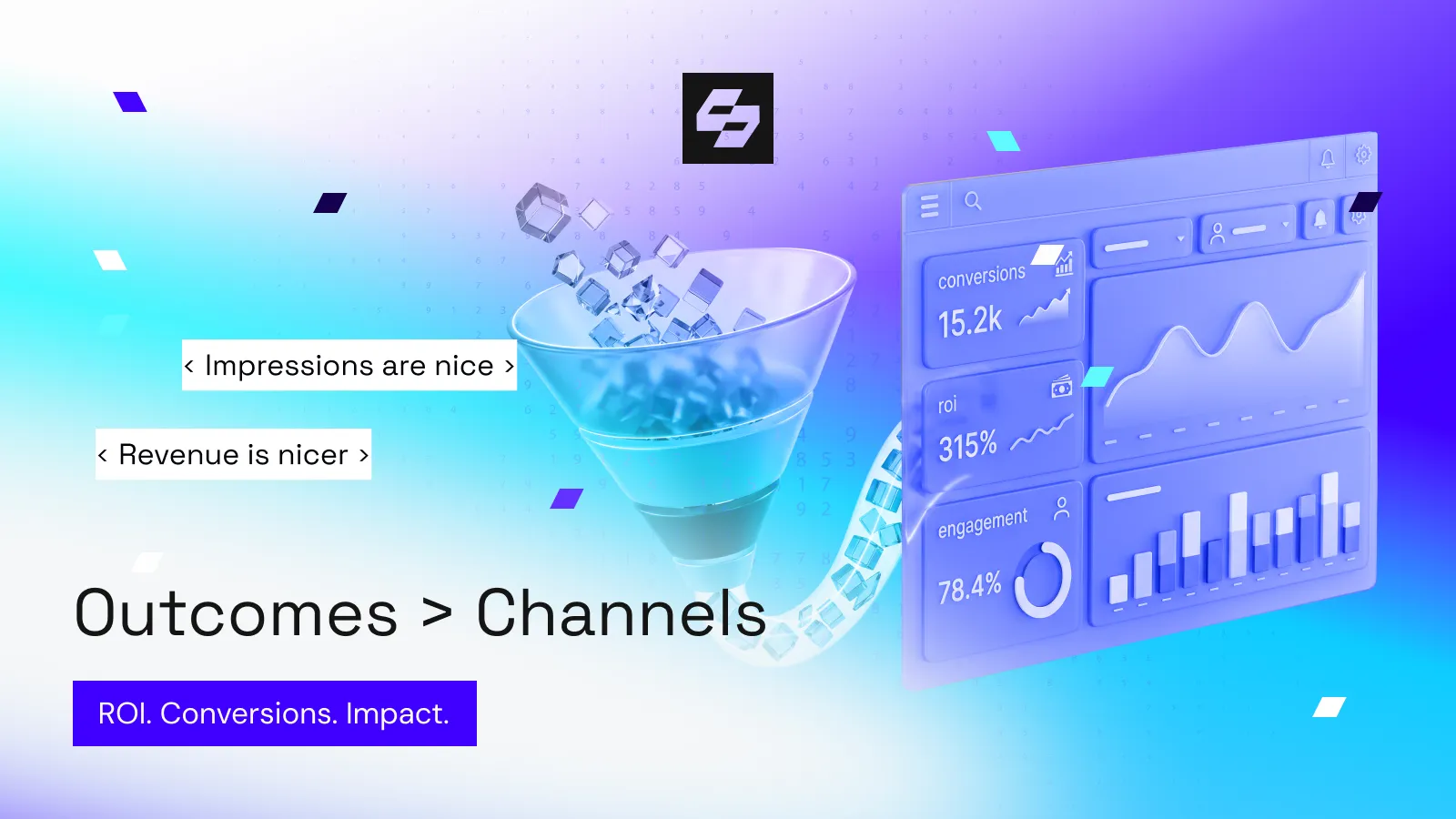
Modern advertisers are shifting from vanity metrics to ROI-driven programmatic strategies focused on conversions, engagement, and measurable business impact.
The Role of AI and Real-Time Optimization
As programmatic becomes more complex, manual optimization is no longer enough. The number of signals, formats, and variables has grown beyond what human teams can process in real time.
This is where AI changes the game.
Modern programmatic platforms use AI to analyze behavior, predict intent, and optimize campaigns continuously. Decisions are made in milliseconds, adjusting bids, creatives, and placements based on live performance data.
But automation alone is not the answer.
The real advantage comes from combining AI precision with human insight. Understanding context, creative nuance, and brand positioning remains essential. Technology enables scale, but strategy defines success.
Screencore is built on this balance. By combining advanced automation with human expertise, the platform delivers campaigns that are not only efficient but also meaningful.
Built for performance. Designed for people.
Omnichannel Is No Longer Optional
In a world where attention moves freely, campaigns must do the same.
Omnichannel programmatic is no longer a trend. It is the standard.
Brands need to deliver consistent messaging across CTV, video, display, and mobile, ensuring that each interaction builds on the previous one. This creates a connected experience rather than fragmented impressions.
Screencore enables this through a unified programmatic marketplace that connects advertisers and publishers across all screens. With over 2 billion monthly impressions, 300 million users, and operations in more than 150 markets, the platform provides both scale and precision.
The result is not just broader reach, but smarter reach.

As omnichannel advertising evolves, brands need transparent, AI-driven platforms that optimize performance across the entire customer journey — not isolated media channels.
Creativity in the Age of Noise
As content volume increases, creativity becomes a key differentiator.
When users are exposed to endless streams of ads, only those that stand out will be noticed. This is why creative strategy is becoming as important as targeting and optimization.
Strong visuals, immersive formats, and storytelling are no longer optional. They are essential for capturing attention and driving engagement.
Screencore takes a creative-first approach, ensuring that every campaign is not just delivered, but experienced. From CTV storytelling to interactive formats, advertising becomes something users engage with, not ignore.
Because in a noisy world, creativity cuts through.
A New Programmatic Mindset
The shift from channels to outcomes is not just a tactical change. It is a mindset shift.
It requires advertisers to rethink how they plan, execute, and measure campaigns. It means moving away from siloed thinking and embracing a more holistic, data-driven approach.
It also requires partners who understand this evolution.
Screencore is designed for this new reality. As a global programmatic marketplace, it connects brands and publishers through transparent, AI-powered technology. Every campaign is optimized for performance, clarity, and trust.
Because the future of programmatic is not about managing channels.
It is about delivering outcomes.
AI is not just optimizing campaigns anymore — it is becoming the foundation of how programmatic works.
If you want to understand how AI is transforming advertising from a feature into full infrastructure, explore our previous article “AI Is No Longer a Feature — It’s the Infrastructure of Programmatic”.
The way programmatic works is changing fast. The brands that adapt will outperform the ones that do not.
If you are ready to move beyond channel thinking and start building campaigns that deliver real results, our team is here to help.
If you are ready to turn programmatic into your competitive advantage, let’s talk.