



For years, artificial intelligence in advertising was treated like an upgrade. A smart add-on. A way to optimize bids, refine targeting, or improve reporting.
That era is over.
Today, AI is not a feature layered onto programmatic. It is the infrastructure that powers it. It sits at the core of how campaigns are planned, executed, measured, and scaled. And as the ecosystem shifts toward full-funnel strategies and connected TV (CTV), this transformation is accelerating fast.
The question is no longer whether to use AI in programmatic. It is whether your entire advertising stack is built around it.
From Optimization Layer to Operating System
Programmatic advertising has always been about automation. Real-time bidding, audience targeting, and cross-channel delivery were early signals of a system moving toward machine-driven execution.
But traditional programmatic relied on rules. AI has replaced rules with intelligence.
Instead of predefined logic, machine learning models now predict outcomes, adjust strategies, and optimize in real time. AI analyzes massive datasets, identifies patterns, and makes decisions faster than any human team could.
This shift changes everything. Campaigns are no longer “set and optimized.” They are continuously learning systems.
And this is especially visible in CTV.
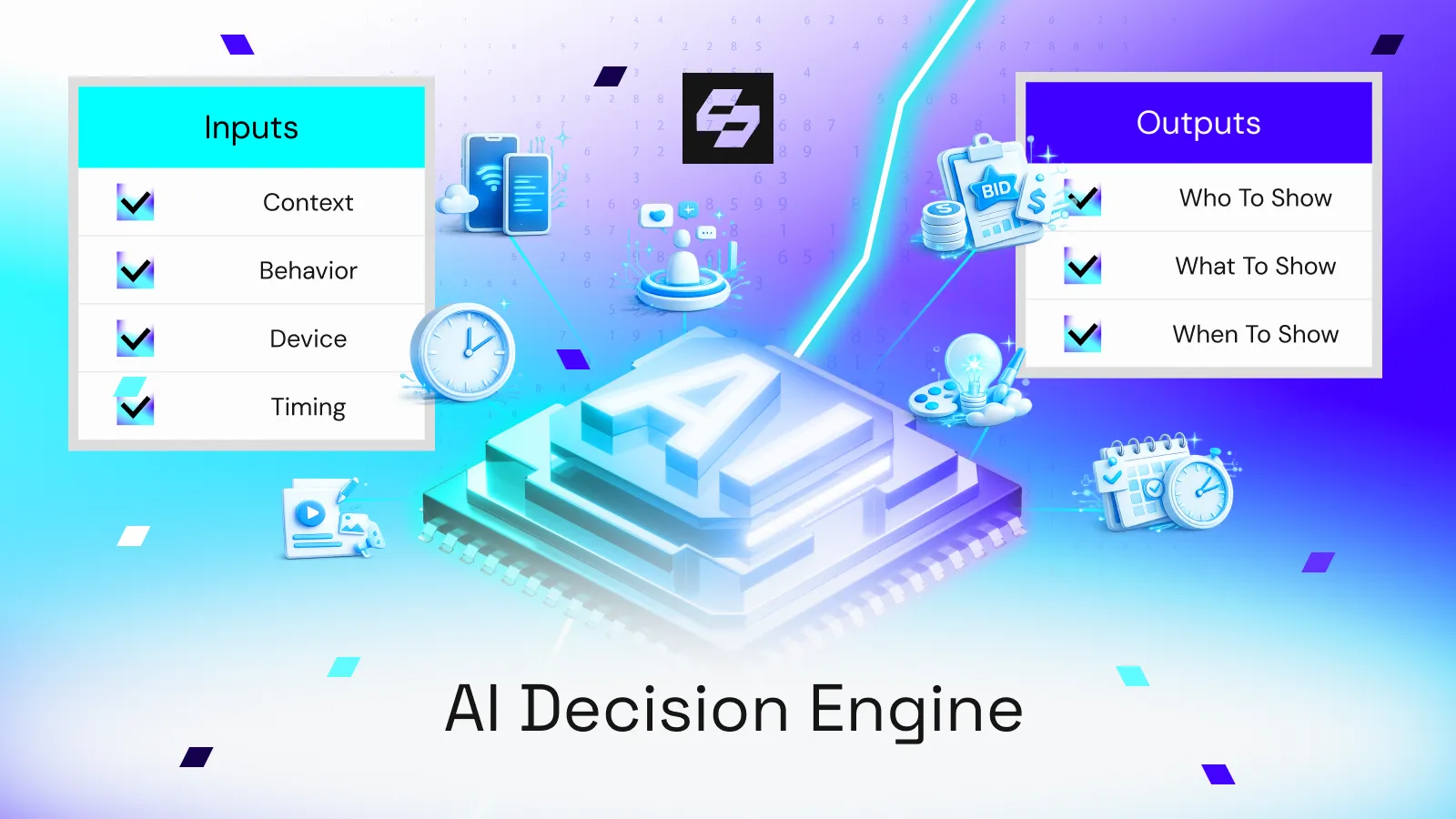
From signals to decisions — AI turns fragmented data into real-time programmatic actions.
CTV: Where AI Infrastructure Becomes Visible
Connected TV has become the clearest expression of AI-powered programmatic.
CTV combines the emotional impact of television with the precision of digital.
Advertisers can target households based on behavior, measure outcomes across devices, and optimize campaigns in real time.
But none of this works without AI.
Every impression in programmatic CTV is decided in milliseconds. Algorithms evaluate audience signals, predict performance, and determine bid value instantly.
Around 75% of CTV transactions are already programmatic, driven by automated systems.
AI is not supporting this process. It is running it.
As streaming becomes the dominant viewing environment, programmatic infrastructure must operate at scale, across fragmented supply, and with real-time decisioning. AI is the only way to make that possible.
The Rise of Full-Funnel Intelligence
Another major shift is the move from siloed metrics to full-funnel performance.
Historically, brand and performance were separate strategies. Upper funnel focused on awareness. Lower funnel focused on conversions. Different teams, different tools, different KPIs.
AI is collapsing those silos.
Modern programmatic systems can now connect signals across the entire funnel. They understand how exposure on CTV influences search, how video impacts conversions, and how frequency affects outcomes.
This is what defines the full-funnel era.
Industry research shows that cross-channel unification is becoming a key performance advantage, allowing marketers to deliver consistent messaging and measure impact holistically.
AI makes this possible by linking fragmented data into a single decision-making engine.

AI full funnel programmatic advertising vs traditional fragmented marketing funnel.
From Targeting to Prediction
The old model of programmatic was built on targeting.
Find the right audience. Deliver impressions. Measure results.
The new model is built on prediction.
AI does not just identify who to target. It predicts who is most likely to convert, when to reach them, and how to allocate budget dynamically. It optimizes not just media buying, but creative, timing, and frequency.
This predictive layer is becoming the foundation of every modern DSP and adtech platform.
We are also seeing the rise of AI-generated creatives. In 2026, a significant share of video ads will be created or enhanced using generative AI, enabling faster production and personalization at scale.
This means AI is not only deciding where ads go. It is shaping what those ads are.
Infrastructure, Not Add-On
Calling AI a “feature” today is like calling cloud computing a feature.
It misunderstands the role it plays.
AI now underpins:
Media buying and bidding
Audience modeling and segmentation
Creative generation and optimization
Attribution and measurement
Fraud detection and quality control
Even challenges like ad fraud are evolving with AI, requiring equally advanced AI-driven detection systems to maintain transparency and trust.
In other words, AI is the infrastructure layer that connects every part of programmatic.
Without it, the system does not scale.
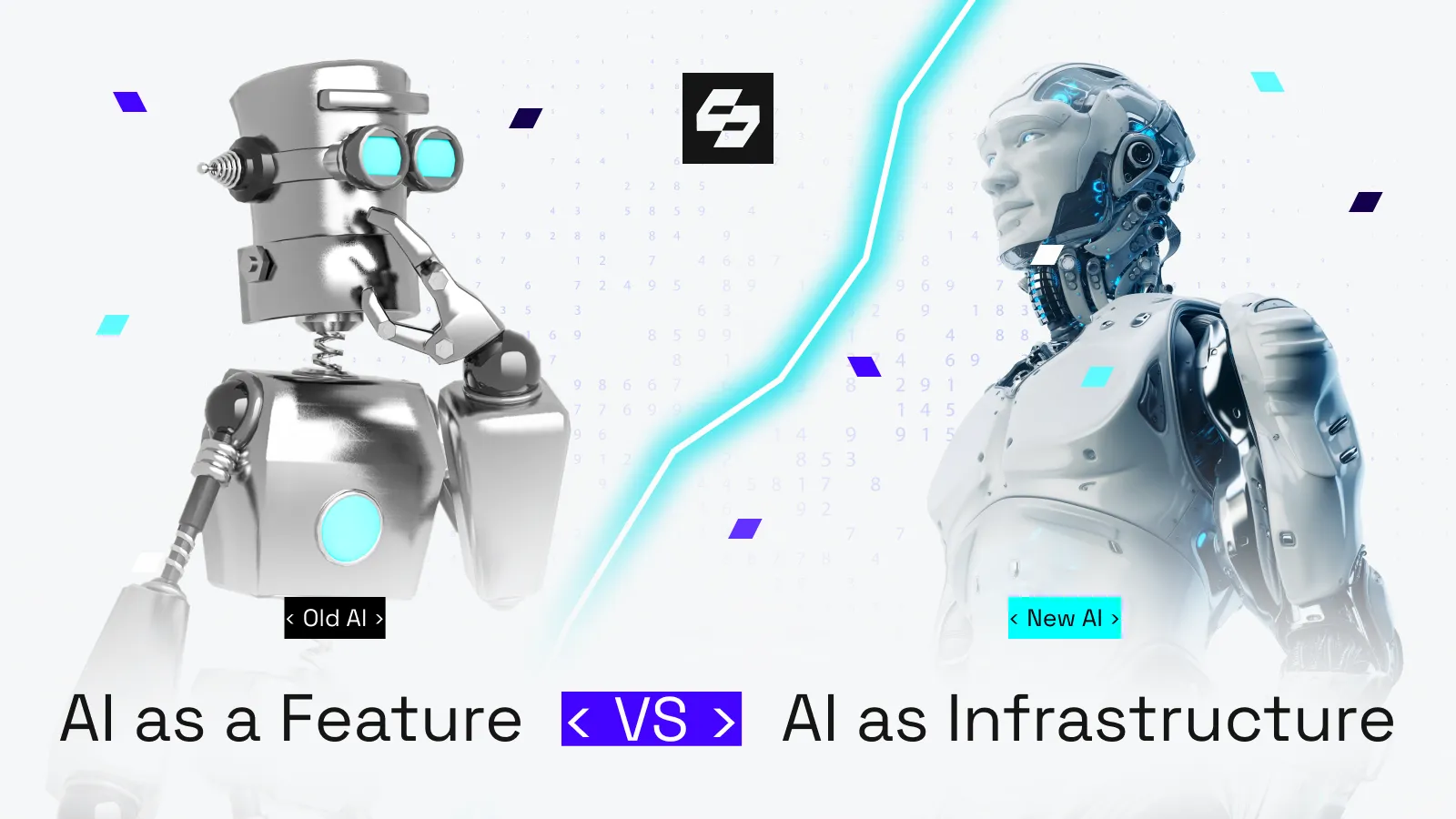
AI as a feature vs AI as infrastructure in programmatic advertising.
Why This Matters for Adtech Companies
For adtech companies, this shift is not theoretical. It is operational.
Building or scaling programmatic solutions today means building AI-first systems. Platforms that treat AI as an add-on will struggle to compete with those designed around continuous learning and automation.
This is particularly critical in high-growth channels like CTV, retail media, and DOOH, where data complexity and fragmentation demand intelligent orchestration.
At the same time, expectations are rising. Advertisers want measurable outcomes, transparency, and efficiency across every dollar spent.
AI is what enables that.
It ensures that campaigns are not only delivered, but optimized toward real business results.
The Future: Autonomous Advertising Systems
We are moving toward a future where programmatic becomes increasingly autonomous.
AI systems will manage campaigns end-to-end. They will allocate budgets, generate creatives, select channels, and optimize performance with minimal human intervention.
This does not remove the role of marketers. It elevates it.
Strategy, creativity, and differentiation will matter more than ever. But execution will be powered by intelligent infrastructure.
And the companies that embrace this shift early will have a clear advantage.
From Feature to Foundation
AI in programmatic has crossed a critical threshold. It is no longer something you add. It is something you build on.
As CTV grows, full-funnel strategies mature, and performance expectations increase, AI will define the winners in the adtech space.
The future of programmatic is not just automated.
It is intelligent, predictive, and infrastructure-driven.
CTV is not just another channel — it’s redefining how performance works across the entire funnel.
If you want to understand why display is losing ground and how full-funnel CTV is driving real business outcomes, don’t miss our previous article “Full-Funnel CTV & Performance TV: Replacing Display Advertising”.
The shift has already happened. AI is redefining programmatic — and the gap between leaders and laggards is growing fast.
If your platform isn’t built on AI-first infrastructure, you’re leaving performance, scale, and revenue on the table.
If you are ready to turn AI into your competitive advantage, our team is here to help. Let’s build a smarter, faster, and more profitable programmatic engine together.