


For years, digital advertising has been split into two worlds. On one side, brand marketers relied on TV for reach and storytelling. On the other, performance marketers leaned on display for clicks, conversions, and measurable outcomes. That division is now collapsing.
Connected TV (CTV) is rewriting the rules. What used to be a branding channel is rapidly evolving into a full-funnel, performance-driven environment. As this shift accelerates, display advertising is losing its dominance, and performance TV is taking its place.
This is not just another channel expansion. It is a structural change in how advertisers think about reach, measurement, and outcomes.
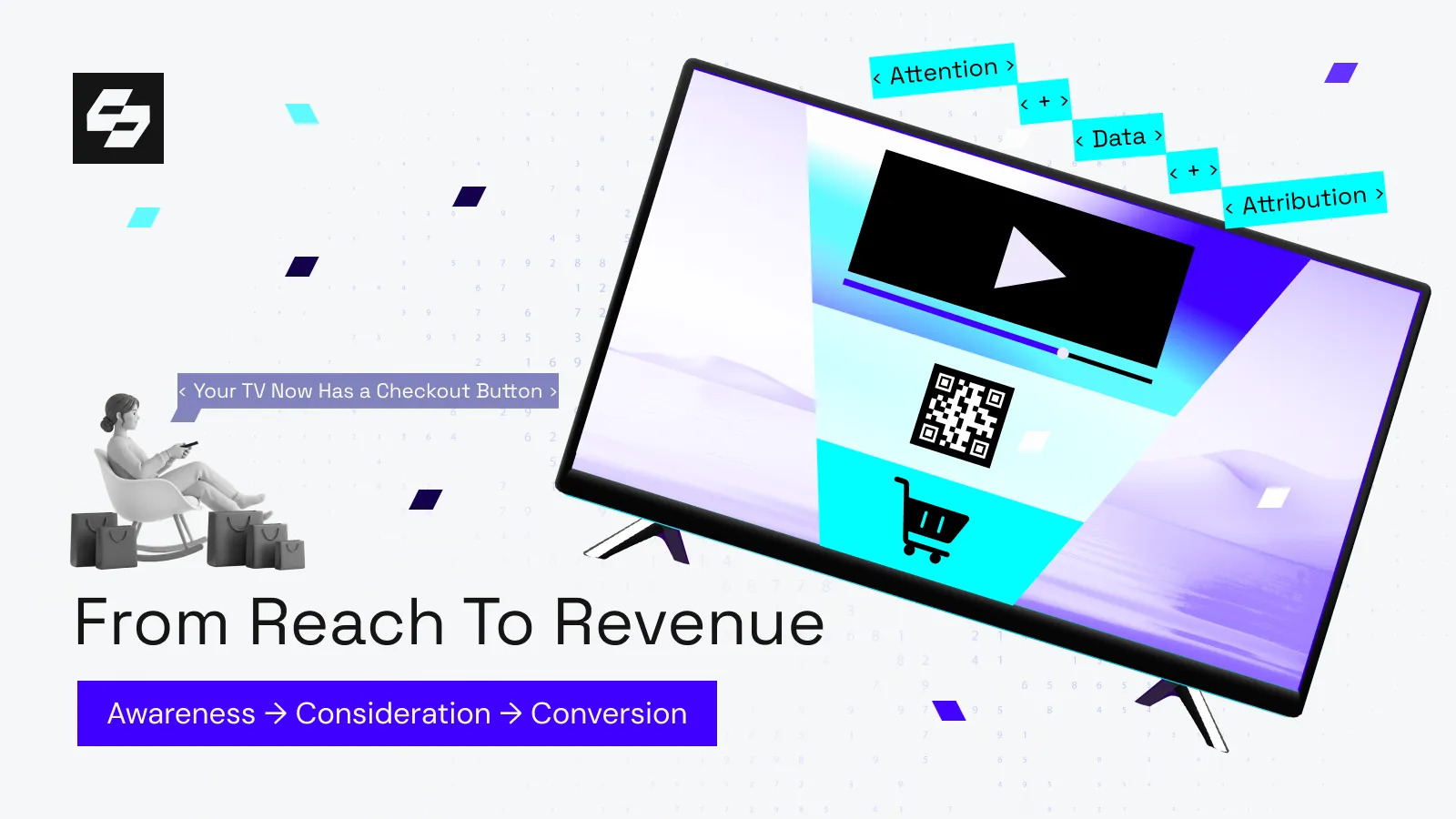
Full-funnel CTV advertising journey from awareness to conversion with shoppable TV and QR code interaction.
From Awareness to Action: The Rise of Full-Funnel CTV
CTV has matured far beyond its early promise. Initially positioned as a premium video channel for upper-funnel awareness, it now delivers measurable results across the entire customer journey.
What changed is not just the inventory. It is the infrastructure behind it.
Advancements in programmatic CTV, identity resolution, and real-time data activation have made it possible to connect exposure to outcomes. Advertisers can now track how a viewer moves from a TV impression to a website visit, app install, or purchase.
This evolution has turned CTV into a full-funnel engine. It combines the emotional impact of television with the precision of digital performance marketing.
The implication is clear. Marketers no longer need to choose between scale and accountability.
Why Display Advertising Is Losing Ground
Display advertising has long been the backbone of performance marketing. It offered granular targeting, clear attribution, and relatively low costs. But its effectiveness is declining.
Consumers are ignoring banners. Privacy regulations are limiting tracking. Signal loss is making attribution less reliable. And walled gardens are restricting access to data and inventory.
At the same time, user attention has shifted. Streaming platforms are now central to how people consume content. Viewers are spending more time on large screens, in high-quality environments, where display simply cannot follow.
The result is a growing mismatch. Display ads are optimized for an ecosystem that is fading, while CTV is aligned with where attention is moving.
Performance TV is filling that gap.
The Power of Performance TV
Performance TV is not just about running ads on streaming platforms. It is about applying performance marketing principles to television.
This includes audience targeting based on real data, optimization toward measurable outcomes, and attribution that connects impressions to conversions.
What makes CTV particularly powerful is its ability to deliver both scale and quality. Ads are shown in premium environments, often with full-screen visibility and sound on. This drives stronger engagement compared to traditional display formats.
At the same time, programmatic technology enables continuous optimization. Campaigns can be adjusted in real time based on performance signals, just like in digital channels.
This combination is redefining what TV can do. It is no longer a one-way broadcast medium. It is an interactive, data-driven performance channel.
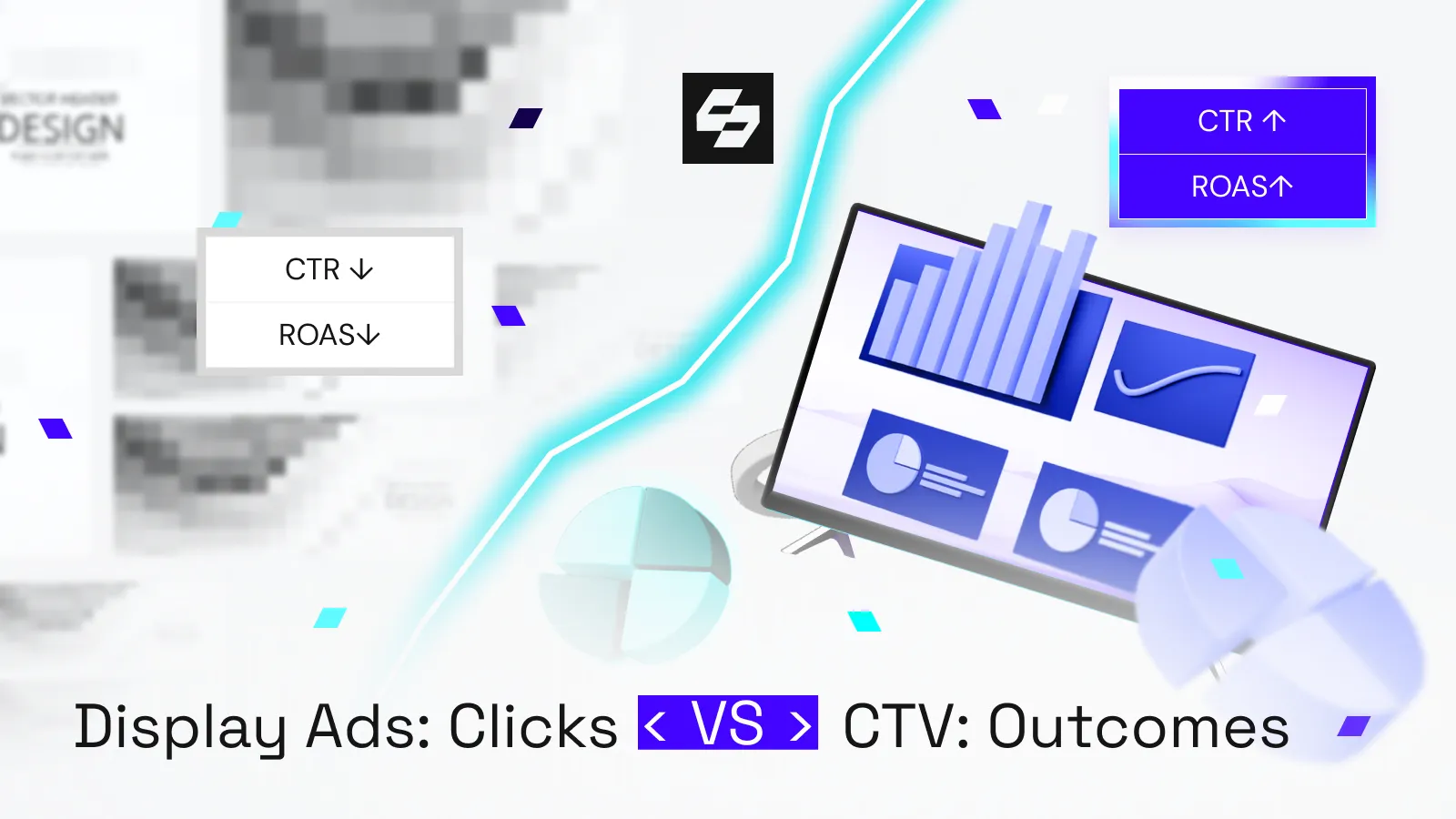
Display ads vs CTV performance comparison showing declining CTR and ROAS for display and growth for connected TV.
Measurement: The Missing Link Now Solved
One of the biggest barriers to TV adoption in performance marketing was measurement. Advertisers struggled to prove ROI beyond reach and frequency metrics.
CTV changes that.
With advanced attribution models, advertisers can now connect TV exposure to downstream actions. This includes website visits, app usage, and even offline conversions in some cases.
Cross-device tracking and probabilistic models help bridge the gap between screens. While privacy-first approaches limit deterministic tracking, new solutions are emerging that balance compliance with actionable insights.
The result is a more complete picture of the customer journey.
For the first time, TV can be measured with the same level of rigor as digital performance channels.

Shoppable CTV ad experience with pause screen QR code enabling direct purchase and measurable conversions.
Full-Funnel Strategy in Practice
A full-funnel CTV strategy does not replace other channels. It integrates with them.
Upper-funnel campaigns build awareness and interest through high-impact video. Mid-funnel tactics retarget engaged audiences across devices. Lower-funnel efforts focus on driving conversions with optimized messaging and frequency.
What makes CTV unique is its ability to operate across all these stages within a single ecosystem.
Advertisers can sequence messaging, control exposure, and optimize toward specific outcomes. This creates a more cohesive and efficient marketing strategy.
Instead of fragmented campaigns across multiple channels, brands can orchestrate a unified journey.
The Role of the Open Web and Programmatic Access
As CTV grows, access becomes a critical factor.
Many platforms operate as walled gardens, limiting transparency and control. This makes it harder for advertisers to manage campaigns holistically.
The open web offers an alternative. Programmatic access to diverse CTV inventory enables greater flexibility, better data integration, and more efficient optimization.
This is where infrastructure matters.
Solutions that simplify programmatic complexity and provide clear visibility into pipes, connections, and supply paths are essential. Without them, the promise of full-funnel CTV cannot be fully realized.
To fully grasp why performance TV and CTV are taking over, you need to understand what’s happening behind the scenes. Our article Open Web vs Walled Gardens: Programmatic Access Shrinking explains how limited access, rising costs, and reduced transparency in closed ecosystems are reshaping programmatic advertising — and why the open web is becoming a critical advantage for advertisers who want control, scale, and real performance.
What This Means for Advertisers
The shift toward performance TV is not optional. It is already happening.
Budgets are moving. Measurement expectations are rising. And the definition of performance is expanding beyond clicks and last-touch attribution.
Advertisers who embrace full-funnel CTV early will gain a competitive advantage. They will be able to reach audiences where attention is highest, measure outcomes more accurately, and optimize campaigns more effectively.
Those who stick to legacy display strategies risk falling behind.
The Future Is Full-Funnel, and It Is Already Here
The line between brand and performance is disappearing. CTV is at the center of this transformation.
It brings together storytelling, scale, and measurable impact in a single channel. It aligns with how consumers behave and how technology is evolving.
Performance TV is not just replacing display. It is redefining what digital advertising can achieve.
The question is no longer whether to invest in CTV. It is how to do it effectively.
Ready to Navigate the Full-Funnel CTV Era?
At Screencore, we help adtech companies simplify complexity and unlock the full potential of programmatic CTV.
If you are looking to build scalable, transparent, and performance-driven TV strategies, our team is ready to help.