



The digital advertising market is changing fast, and publishers are feeling the pressure.
For years, scale was the main currency of programmatic advertising. Larger audiences, more impressions, and broader reach helped publishers compete for advertising budgets in an increasingly crowded market. But in 2026, advertisers are no longer chasing scale alone.
They are chasing precision.
As media budgets tighten and RFP opportunities become smaller and more selective, publishers are being forced to rethink how they position themselves in the advertising ecosystem. The companies winning today are not necessarily the ones with the largest inventory pools. They are the ones with the strongest audience intelligence.
This is why first-party data has become one of the most valuable assets in modern media.
In a market where advertisers demand measurable outcomes, privacy-safe targeting, and trusted environments, first-party data is emerging as the new definition of scale.
Why the RFP Market Is Shrinking
Publishers across the industry are experiencing a major shift in advertiser behavior.
Brands are becoming more selective about where budgets are allocated. Instead of spreading campaigns broadly across open-market inventory, advertisers are narrowing partnerships to publishers that can demonstrate clear audience value, measurable engagement, and reliable targeting capabilities.
Economic pressure is one reason behind this change.
Marketing teams are under greater scrutiny to justify every dollar spent. Media buyers want stronger performance guarantees, cleaner supply paths, and more accountability across campaigns. At the same time, AI-driven optimization systems are helping advertisers consolidate spending toward publishers and platforms that consistently deliver high-quality signals.
The result is a smaller and more competitive RFP landscape.
Publishers are now competing for fewer opportunities while facing increasing pressure to prove the strategic value of their audiences.
This is especially visible among multicultural and independent publishers, many of whom are turning to first-party data strategies to differentiate themselves from larger media conglomerates. In this environment, raw traffic numbers are no longer enough.
Audience intelligence matters more.
First-Party Data Is Becoming the Publisher Advantage
The decline of third-party cookies fundamentally changed the advertising ecosystem.
For years, advertisers relied heavily on external identifiers to track users across the web and optimize targeting at scale.
That model is disappearing.
Privacy regulation, browser restrictions, and growing consumer awareness around data usage are forcing the industry toward privacy-first infrastructure. As a result, publishers now hold one of the most important competitive advantages in digital advertising: direct audience relationships.
First-party data allows publishers to understand user behavior within their own environments in ways that are privacy-compliant, accurate, and highly valuable for advertisers.
This includes contextual engagement patterns, subscription insights, content preferences, purchase intent signals, and authenticated audience behavior.
Unlike broad third-party audience segments, first-party data is rooted in real consumer interaction.
That creates stronger targeting opportunities for brands and more defensible monetization strategies for publishers.
In many ways, first-party data transforms publishers from inventory providers into strategic audience partners.
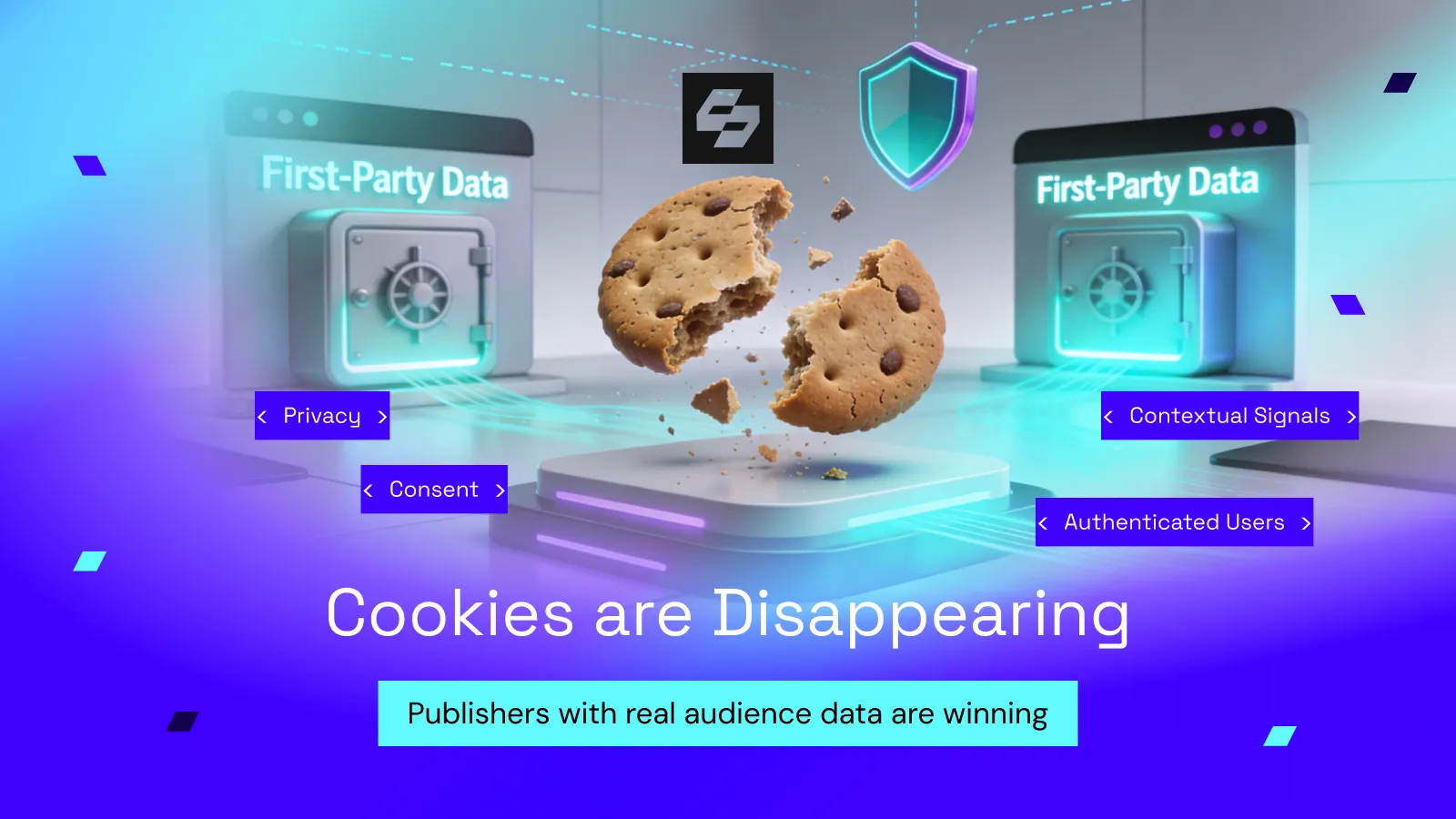
First-party data, consented audiences, and contextual targeting are shaping the future of digital advertising.
Why Advertisers Trust Publisher Data More
Trust is becoming one of the most important currencies in adtech.
Advertisers are increasingly skeptical of opaque audience models, low-quality third-party segments, and inconsistent identity frameworks. Many brands now prioritize publisher-direct relationships because they offer greater transparency into how audience data is collected and activated.
This is one reason curated marketplaces and direct programmatic partnerships are growing rapidly.
Publishers with strong first-party data capabilities can package premium inventory together with high-quality audience intelligence, creating more valuable and differentiated media opportunities. Instead of competing only on CPM pricing, they compete on audience quality and contextual relevance.
For advertisers, this reduces uncertainty.
Campaigns run within trusted environments, targeting becomes more precise, and measurement becomes easier to validate.
As signal quality becomes more important in AI-driven media buying systems, trusted publisher data becomes even more valuable.
The industry is moving away from anonymous scale and toward authenticated engagement.
Data Quality Is Replacing Inventory Volume
One of the biggest changes happening across programmatic advertising is the shift from quantity to quality.
For years, publishers focused heavily on maximizing impressions and increasing traffic. But modern advertising infrastructure increasingly rewards high-quality signals instead of unlimited scale.
A smaller but deeply understood audience can now generate more advertiser value than massive low-context inventory pools.
This changes how publishers think about growth.
Instead of chasing broad reach, publishers are investing in registration strategies, subscription ecosystems, contextual segmentation, commerce integrations, and audience enrichment technologies.
The goal is no longer simply attracting users.
The goal is understanding users.
This shift is especially important in verticals such as finance, healthcare, retail, entertainment, and multicultural media where contextual relevance and audience identity significantly impact campaign performance.
Publishers that can organize and activate audience intelligence effectively are becoming essential partners in modern programmatic ecosystems.
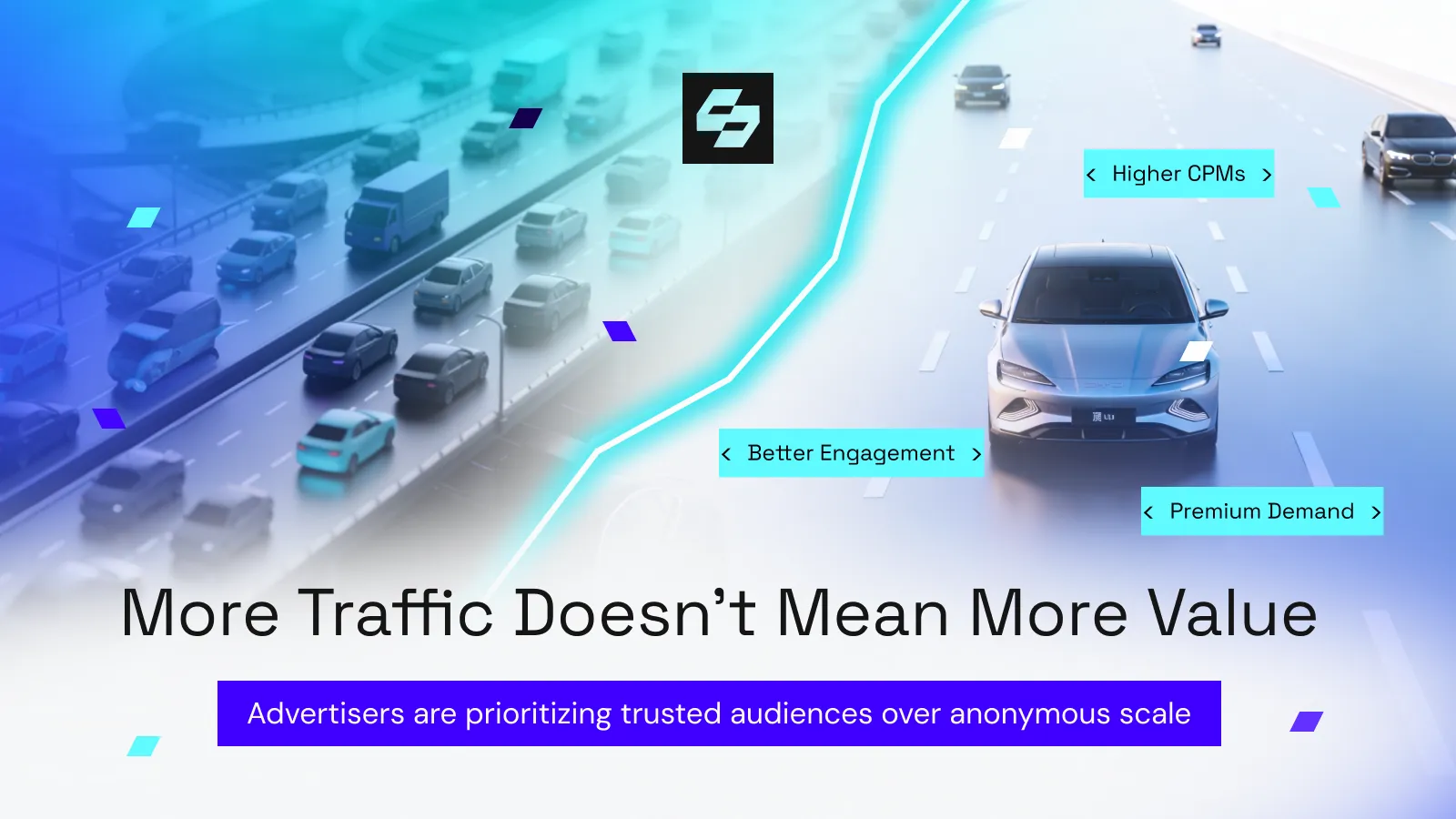
Advertisers are prioritizing trusted audiences, higher engagement, and premium demand over anonymous scale.
AI and Curation Are Strengthening the Role of First-Party Data
Artificial intelligence is accelerating the value of publisher-owned signals.
AI-driven media buying systems depend heavily on high-quality data inputs to optimize campaigns effectively. Weak audience signals create weak outcomes.
Strong contextual and behavioral signals create stronger performance models.
This is why curated supply and first-party data strategies increasingly go hand in hand.
Curated marketplaces allow publishers to combine premium inventory, trusted audience intelligence, and contextual relevance into more efficient buying environments. Instead of forcing advertisers to navigate fragmented open-market conditions, curated ecosystems provide cleaner, more predictable supply paths.
This improves optimization efficiency for both advertisers and AI systems.
As automation becomes more central to programmatic advertising, publishers with high-quality first-party data infrastructure will gain a major competitive advantage.
The future of monetization will depend less on raw inventory scale and more on signal strength.
Publishers Are Becoming Data Businesses
The role of publishers is evolving beyond content distribution.
Today’s leading media companies are increasingly operating like data and technology businesses. Audience analytics, identity management, contextual intelligence, and activation infrastructure are becoming core components of publisher strategy.
This evolution reflects a broader industry reality.
Advertisers no longer buy impressions alone. They buy audiences, context, outcomes, and trust.
Publishers that understand this shift are investing heavily in infrastructure that improves audience visibility, data organization, and monetization flexibility.
This includes clean room technologies, authenticated identity systems, AI-powered contextual analysis, and direct integration with programmatic buying platforms.
The market is rewarding publishers that can combine content quality with audience intelligence.
And as the RFP market continues shrinking, those capabilities become even more important.

Publishers with authenticated audiences and audience intelligence gain stronger monetization and premium advertising demand.
The Future of Publisher Monetization
The next phase of digital advertising will likely belong to publishers that control their own audience ecosystems.
First-party data is no longer a supporting asset. It is becoming the foundation of sustainable monetization.
Advertisers increasingly want privacy-safe targeting, trusted media environments, measurable engagement, and transparent supply chains. Publishers that can deliver those capabilities through strong audience intelligence will remain highly valuable in a competitive market.
This does not mean scale disappears completely.
But scale without signal is becoming less relevant.
In modern programmatic advertising, audience understanding creates more value than audience volume alone.
That is why first-party data is becoming the new scale.
The rise of first-party data is closely connected to another major trend transforming digital advertising: curated supply.
In our previous article, we explored why advertisers are moving away from open-market buying and prioritizing cleaner, more transparent programmatic ecosystems. Read why curated supply is reshaping programmatic.
Build Future-Ready Publisher Infrastructure With Screencore
At Screencore, we help publishers and adtech companies build scalable infrastructure designed for modern monetization.
As first-party data becomes central to programmatic strategy, publishers need flexible technology that supports audience intelligence, curated supply, identity management, and transparent activation across channels.
Whether you are scaling publisher monetization, optimizing programmatic infrastructure, or building privacy-first advertising solutions, our team can help.
Build smarter advertising infrastructure for the future with Screencore.