



Earlier brands embraced the ecosystem because it allowed campaigns to reach audiences faster and more precisely than traditional media buying ever could. But in 2026, the conversation around programmatic advertising has fundamentally changed.
Today, advertisers are asking a different question: where exactly is the money going?
The issue is no longer only about performance. It is about visibility, accountability, and control across an increasingly fragmented adtech supply chain. As media investments continue shifting into programmatic and CTV environments, marketers are becoming less willing to accept black-box operations, hidden fees, questionable inventory quality, and unclear reporting standards.
The transparency crisis in adtech has officially moved from industry discussion to boardroom priority.
The Growing Trust Gap in Programmatic Advertising
Modern programmatic ecosystems involve multiple intermediaries. Between DSPs, SSPs, exchanges, verification vendors, identity providers, and data platforms, advertisers often struggle to understand how much working media actually reaches premium inventory.
This complexity has created a widening trust gap.
Industry conversations in 2026 increasingly focus on opaque auction mechanics, supply chain duplication, hidden take rates, and inflated performance metrics. Advertisers are questioning whether automation optimized the system for brands — or simply for intermediaries.
Connected TV has amplified these concerns. While CTV remains one of the fastest-growing advertising channels, buyers are becoming more selective about inventory transparency and reporting quality. According to recent industry reporting, over 90% of advertisers now rank transparency and inventory quality among their top decision-making criteria for streaming investments.
The era of “trust us” media buying is ending.
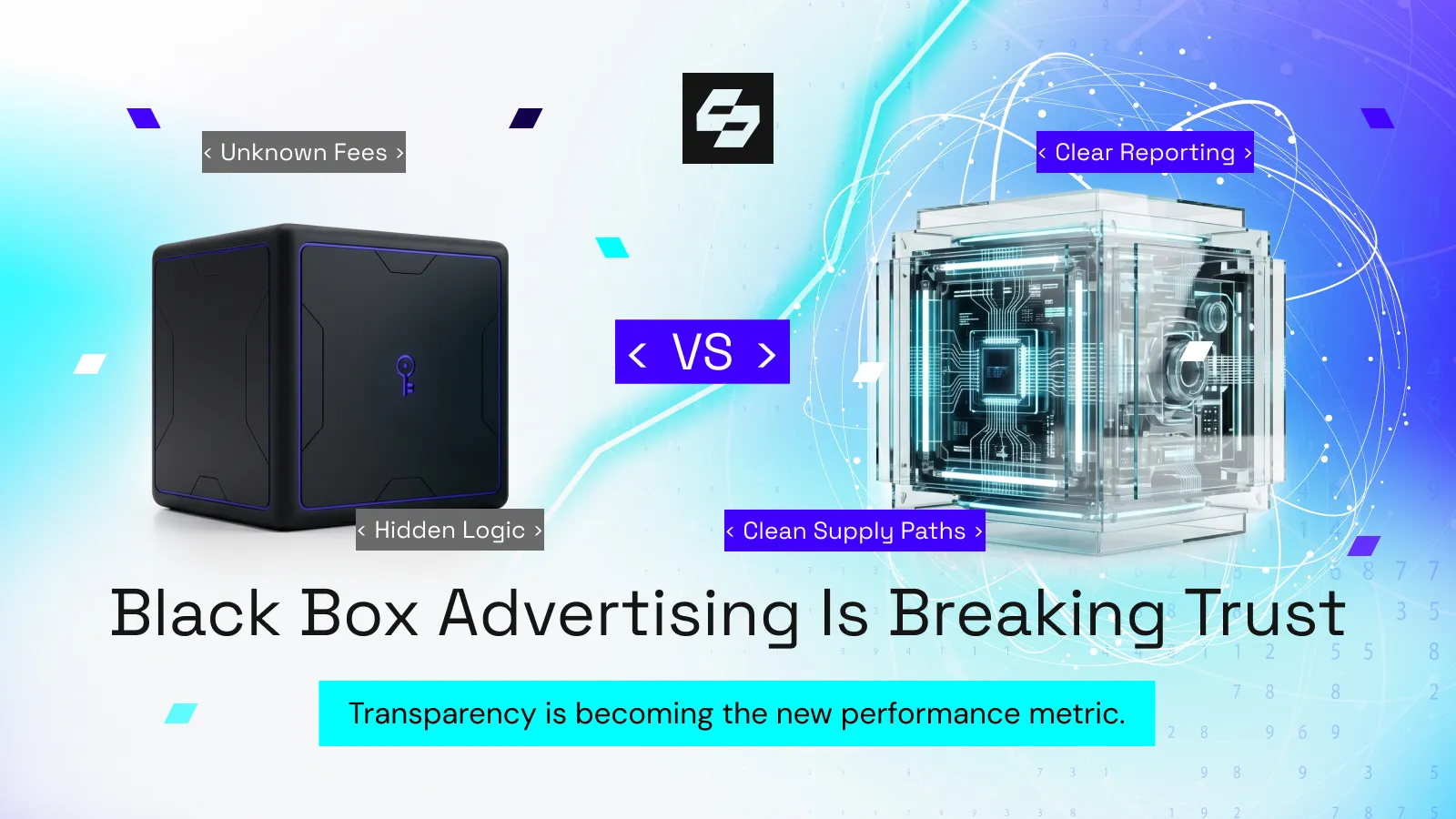
Transparent programmatic advertising with clean supply paths, clear reporting, and reduced hidden fees.
Why Advertisers Want More Control
Brands today operate under intense pressure to justify every marketing dollar. Economic uncertainty, rising acquisition costs, and increasing executive scrutiny are forcing advertisers to rethink how programmatic budgets are allocated.
As a result, many companies are bringing strategic capabilities in-house or demanding deeper operational visibility from partners.
Advertisers want direct answers to questions such as:
Which publishers are actually delivering impressions?
How many intermediaries touch the bid request?
What percentage of spend reaches the publisher?
Are campaign KPIs driven by genuine audience engagement or low-quality placements?
These are no longer technical concerns reserved for ad operations teams. Transparency has become a strategic business issue tied directly to media efficiency and brand safety.
The shift is especially visible in curated supply paths and private marketplace strategies. Instead of relying on broad open-market buying, advertisers increasingly prioritize direct publisher relationships, curated inventory packages, and SPO frameworks that reduce unnecessary reselling layers.
In simple terms, advertisers want fewer unknowns between their budget and the consumer.
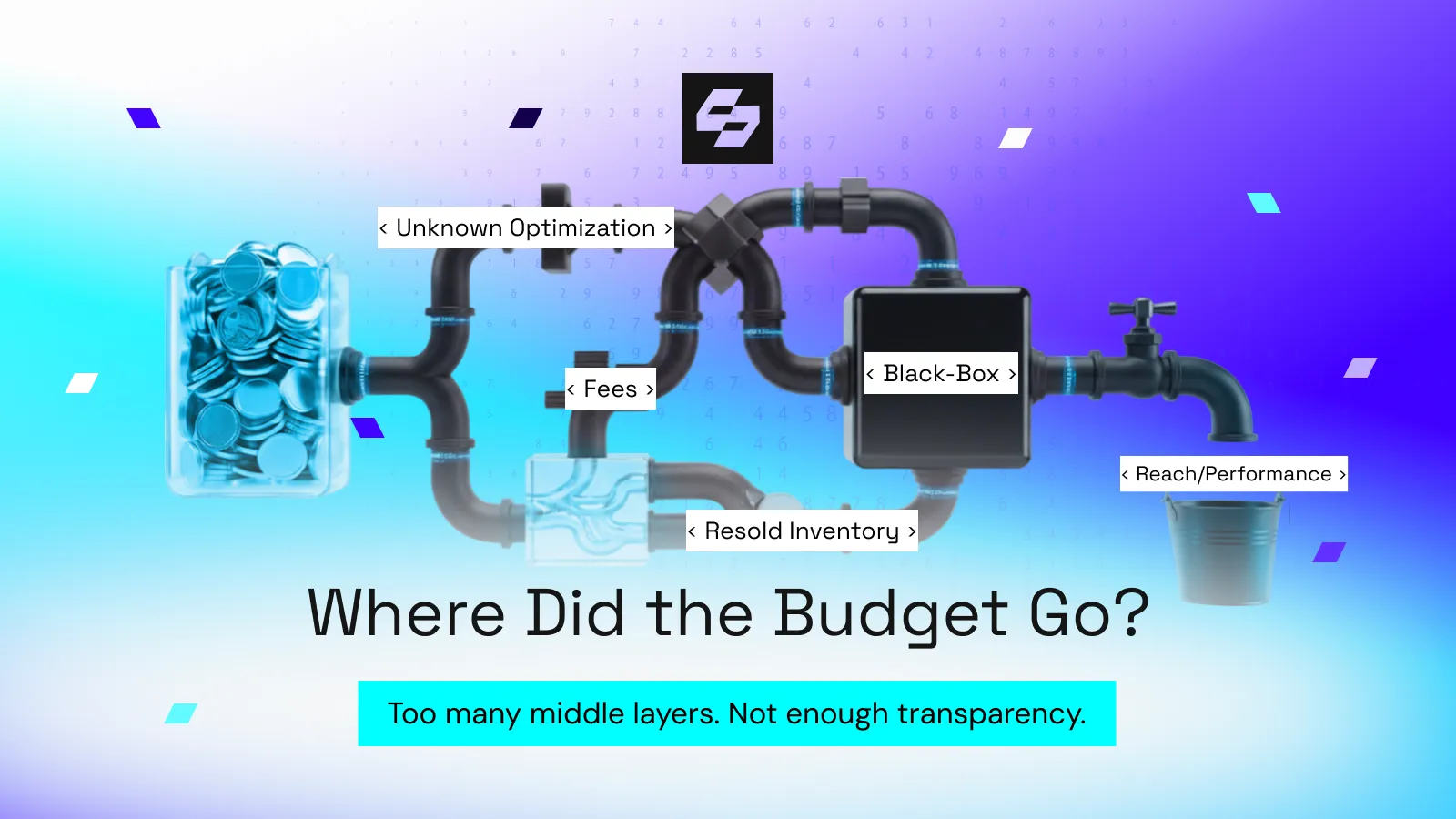
Hidden fees and complex ad tech supply chains reduce transparency and campaign efficiency.
The Hidden Cost of Opaque Supply Chains
One of the biggest challenges in adtech is that inefficiency often remains invisible.
A campaign may appear successful on paper while still leaking value through duplicated auctions, invalid traffic, made-for-advertising inventory, or unclear fee structures.
This creates a dangerous illusion of performance.
Industry experts increasingly warn that high viewability rates or unusually strong completion metrics do not always reflect meaningful audience attention. In some cases, advertisers discover that automated optimization systems prioritize cheap inventory rather than genuine business outcomes.
The problem becomes even more severe in open auction environments where supply paths are difficult to audit at scale.
Research into adtech infrastructure has repeatedly highlighted how opaque inventory pooling and poor supply chain validation allow low-quality or misleading inventory to enter premium buying environments.
For brands, this means wasted spend, weaker campaign effectiveness, and reduced trust in programmatic execution.
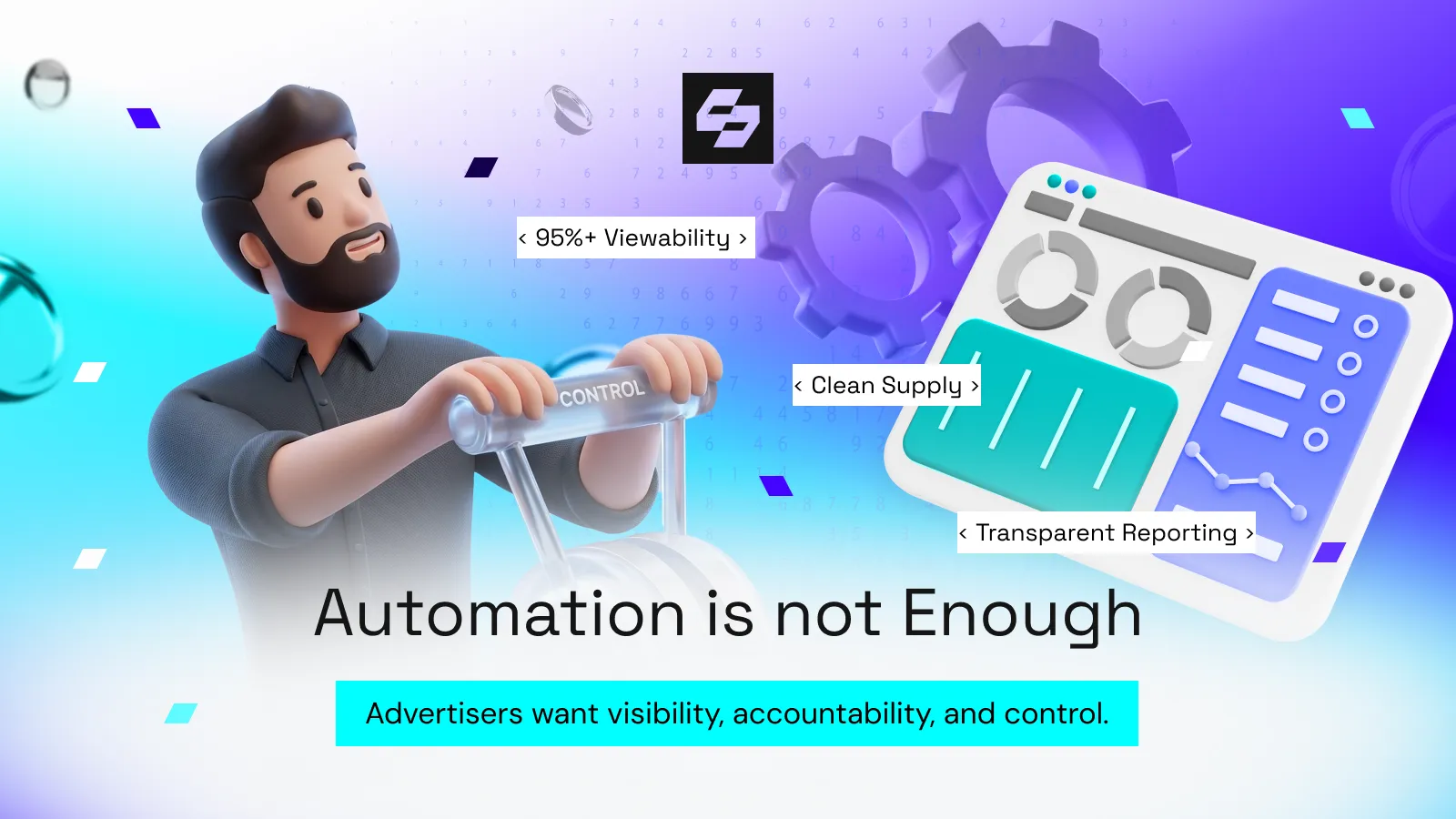
Advertisers demand visibility, accountability, and control in modern programmatic media buying.
AI Is Accelerating the Need for Transparency
Artificial intelligence is rapidly reshaping media buying. Automated bidding systems, predictive optimization, AI-generated audiences, and autonomous campaign management are becoming standard across modern DSPs.
But AI also increases the importance of transparency.
If advertisers cannot understand how optimization decisions are being made, trust erodes even faster.
This is becoming one of the defining challenges of AI-powered advertising infrastructure. Brands want automation, but they also want explainability. They want machine learning systems that improve performance while still providing clear visibility into inventory sourcing, auction logic, and measurement methodology.
Without transparency, AI risks amplifying existing inefficiencies instead of solving them.
This is why many forward-thinking advertisers are now prioritizing infrastructure partners that offer greater operational clarity, direct reporting access, and cleaner supply chain architecture.
The future of programmatic will not belong to platforms with the most complexity. It will belong to platforms that simplify complexity for advertisers.
Transparency Is Becoming a Competitive Advantage
The industry is entering a new phase where transparency itself becomes a differentiator.
Publishers are promoting cleaner supply paths. Agencies are building curated ecosystems. DSPs are emphasizing log-level visibility and supply chain disclosure. Industry organizations are launching new governance initiatives focused specifically on programmatic accountability.
This shift reflects a broader market reality: advertisers are no longer satisfied with abstract performance promises. They want measurable outcomes tied to trustworthy infrastructure.
At the same time, consumers are becoming more privacy-conscious, regulators are increasing scrutiny around data practices, and brands face growing pressure to ensure responsible media investments.
All of these forces point toward the same conclusion.
Transparency is no longer optional in adtech.
It is becoming the foundation of sustainable growth.
What This Means for the Future of Programmatic
The next evolution of programmatic advertising will likely focus less on scale for the sake of scale and more on efficiency, quality, and accountability.
Advertisers are moving toward leaner supply chains, direct inventory relationships, curated marketplaces, and infrastructure models that prioritize control over opacity.
This does not mean automation is disappearing. Quite the opposite.
Programmatic advertising will continue growing across CTV, retail media, omnichannel activation, and AI-driven optimization. But the systems that succeed will be those that provide advertisers with greater transparency into how campaigns are executed and measured.
The industry is effectively recalibrating.
For years, automation prioritized convenience. Now advertisers want confidence.
And confidence comes from visibility.
The conversation around transparency is closely tied to the broader evolution of programmatic performance and media outcomes.
In our previous article, we explored how advertisers are redefining success metrics, operational efficiency, and programmatic strategy for 2026. Read more about the future of programmatic strategy.
Build Transparent Advertising Infrastructure With Screencore
At Screencore, we believe the future of adtech belongs to transparent, scalable, and performance-driven infrastructure.
As advertisers demand greater visibility into media execution, platforms must evolve beyond black-box operations and fragmented supply chains. Our team helps businesses build smarter programmatic ecosystems designed for operational clarity, measurable outcomes, and long-term efficiency.
If your company is ready to take greater control over programmatic strategy, CTV monetization, or advertising infrastructure, connect with our team today.