



Artificial intelligence is changing more than campaign optimization. It is reshaping relationships across the entire advertising technology ecosystem.
For years, the ad tech market has been defined by clear roles. DSPs bought media. SSPs managed supply. Publishers monetized inventory. Data providers enriched audiences. Measurement companies verified results.
Today, AI is blurring those boundaries.
As reported by AdExchanger, new AI-driven workflows are pushing companies into areas that once belonged exclusively to their competitors. The result is a growing number of partnerships between former rivals, creating a new generation of ad tech "frenemies." At the same time, another shift is gaining momentum: social video is growing faster than Connected TV (CTV), raising important questions about where advertisers should place their next dollar.
These two trends may seem unrelated at first glance, but they point to the same reality. The future of programmatic advertising will be defined by convergence, efficiency, and measurable outcomes.
AI Is Turning Competitors Into Collaborators
Artificial intelligence is accelerating consolidation across the ad tech landscape.
Historically, companies built specialized products designed to solve specific challenges. However, AI-powered platforms are increasingly capable of handling multiple functions simultaneously. Creative generation, audience segmentation, campaign optimization, reporting, and attribution can now operate within a single ecosystem.
This evolution creates overlap between businesses that previously occupied separate parts of the supply chain.
According to industry discussions highlighted by AdExchanger, companies are beginning to work together in ways that would have seemed unlikely only a few years ago. DSPs are moving deeper into data management. SSPs are offering audience solutions. Measurement providers are becoming optimization partners. Cloud infrastructure providers are entering areas traditionally controlled by media buying platforms.
The motivation is simple. AI reduces the operational friction that once justified maintaining multiple disconnected systems.
Advertisers increasingly want fewer tools, fewer integrations, and fewer data silos. They want unified workflows that deliver faster decisions and better performance.
For ad tech vendors, this means the competitive landscape is becoming more fluid. Companies that once competed directly may now find opportunities to collaborate if it helps deliver more value to advertisers.
In many ways, AI is becoming the great connector of programmatic advertising.
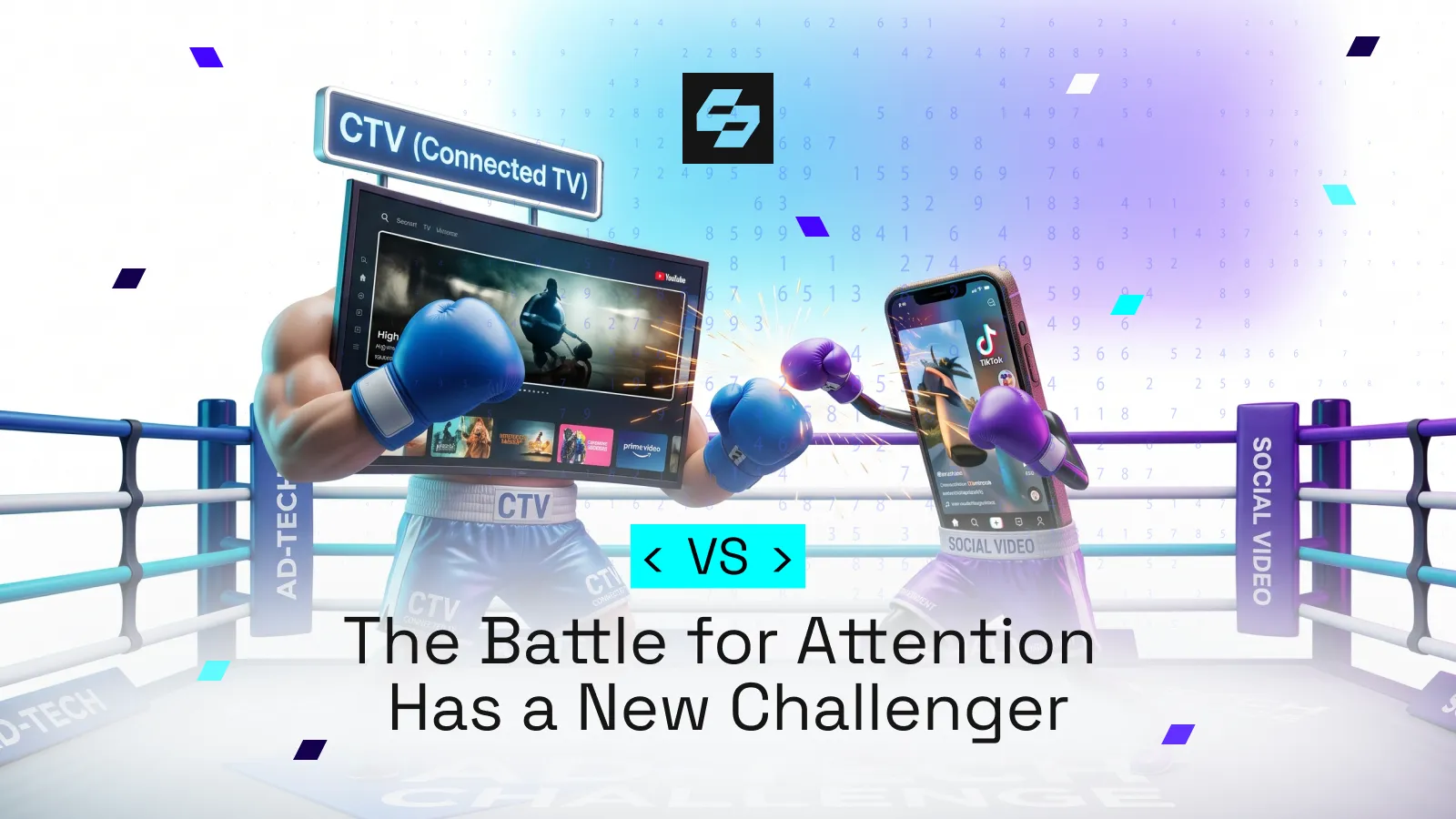
Social Video is growing faster than CTV, reshaping media strategies and programmatic advertising investments.
The New Battle Is About Ownership
As AI expands platform capabilities, a larger question emerges: who owns the advertiser relationship?
Traditionally, every layer of the ad tech stack controlled a specific piece of the value chain. AI challenges that model by enabling companies to extend their reach far beyond their original function.
An SSP may want to control audience activation. A DSP may want to own measurement and attribution. A data platform may want to manage campaign execution.
The lines are becoming increasingly blurred.
For advertisers, this trend creates opportunities. Integrated platforms can reduce complexity, improve efficiency, and accelerate decision-making.
However, it also raises concerns around transparency and dependency. As platforms expand their capabilities, buyers must ensure they maintain visibility into performance metrics, optimization logic, and data ownership.
The companies that succeed in the AI era will likely be those that balance automation with transparency.
Is Social Video Becoming The New Growth Engine?
While AI is reshaping relationships within ad tech, media consumption trends are creating another major shift.
According to the latest industry forecasts cited by AdExchanger, social video advertising spend is expected to grow 13% year-over-year, outperforming CTV's projected 11% growth rate.
This does not mean CTV is declining. Quite the opposite. Connected TV remains one of the fastest-growing channels in digital advertising.
The difference is that social video is benefiting from a combination of factors that make it particularly attractive to performance-focused marketers.
First, social platforms offer highly personalized ad experiences. AI-driven recommendation engines continuously optimize content delivery and audience targeting.
Second, measurement is generally more straightforward. Advertisers can often track engagement, clicks, conversions, and purchases within a single ecosystem.
Third, social platforms have mastered the art of reducing friction between discovery and action. Consumers can watch content, engage with brands, and complete purchases without leaving the platform.
This level of integration remains difficult to replicate in most CTV environments.

AI is blurring traditional ad tech roles, turning competitors into strategic partners.
Why CTV Still Matters
Despite social video's rapid growth, reports of CTV's demise are greatly exaggerated.
The reality is that CTV continues to offer unique advantages that social platforms cannot easily replace.
Premium video environments provide brand-safe inventory, high viewer attention, and increasingly sophisticated audience targeting capabilities. Streaming platforms continue investing heavily in advertising technology, retail media partnerships, and advanced measurement solutions.
Live sports, premium entertainment, and long-form content remain powerful drivers of advertiser demand.
In addition, many marketers are beginning to recognize that social video and CTV serve different objectives within the customer journey.
Social video often excels at driving immediate engagement and measurable actions. CTV remains highly effective for building awareness, strengthening brand perception, and reaching audiences in premium viewing environments.
Rather than competing directly, the two channels are becoming complementary parts of modern media strategies.
AI Will Influence Both Channels
Artificial intelligence is likely to accelerate growth across both social video and CTV.
In social environments, AI powers personalization, recommendation engines, creative optimization, and audience targeting.
In CTV, AI is helping improve contextual targeting, campaign optimization, audience segmentation, and measurement capabilities.
As AI-driven automation becomes more sophisticated, the distinction between channels may matter less than the outcomes they deliver.
Advertisers increasingly want unified planning, execution, and measurement across every screen. The winners will be platforms that can connect data, audiences, and performance signals across fragmented media environments.
This is where modern programmatic infrastructure becomes critical.

Advertisers are shifting budgets toward channels that deliver measurable results and stronger engagement.
The Bigger Lesson For Advertisers
The biggest takeaway from these developments is not that social video is replacing CTV or that competitors are suddenly becoming friends.
The real story is convergence.
AI is accelerating the consolidation of tools, workflows, and partnerships throughout the advertising ecosystem. At the same time, media channels are evolving toward a more connected and performance-driven future.
For advertisers, success will depend on maintaining flexibility.
Brands need technology partners that can adapt to changing market dynamics, support cross-channel activation, and provide transparency across increasingly automated environments.
The future belongs to organizations that can combine the power of AI with strong data foundations, curated supply strategies, and measurable business outcomes.
As the lines between competitors, platforms, and media channels continue to blur, one thing becomes clear: the next generation of programmatic advertising will be less about individual tools and more about intelligent ecosystems working together.
The shift toward AI-powered collaboration is also transforming how buyers think about supply paths, inventory quality, and programmatic efficiency.
Ready To Future-Proof Your Programmatic Strategy?
At Screencore, we help advertisers, publishers, and media owners navigate the rapidly evolving programmatic ecosystem with scalable infrastructure, transparent monetization solutions, and future-ready advertising technology.
Whether you're exploring AI-powered optimization, CTV monetization, curated marketplaces, or advanced programmatic workflows, our team is ready to help.