


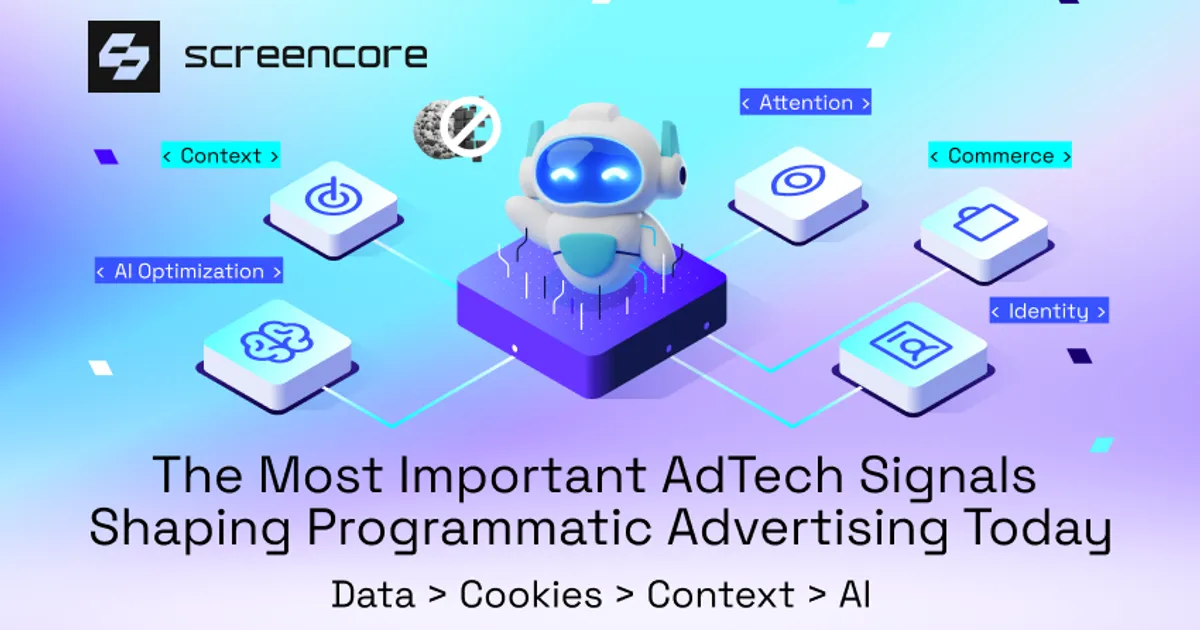
Programmatic advertising moves fast, but every week a few developments reveal where the industry is truly heading. The latest adtech discussions and announcements show a clear pattern: Connected TV is becoming more performance-driven, identity strategies are evolving beyond legacy signals, auctions are getting more automated, and AI is shifting from experimentation to operational infrastructure.
For advertisers and publishers, the challenge is no longer understanding individual headlines — it is interpreting the signals behind them. When viewed together, recent updates paint a picture of an ecosystem preparing for a more automated, data-driven, and standardized future.
Programmatic Is Becoming Performance-Led — Especially in CTV
One of the most noticeable trends across recent industry conversations is the shift of performance advertisers into television environments. Streaming platforms are no longer seen only as brand awareness channels. Instead, they are evolving into measurable, outcome-driven environments where programmatic buying plays a central role. As programmatic TV expands, performance marketers are bringing expectations of transparency, attribution, and faster optimization cycles.
New platforms and partnerships around structured content signals illustrate this change. Innovations that standardize metadata across streaming content allow advertisers to target audiences based on context rather than relying on fragmented identifiers. Structured content graphs give buyers a common language when negotiating deals, enabling deeper targeting while maintaining privacy standards.
This shift toward standardized signals reflects a broader evolution in how CTV inventory is packaged and sold. Advertisers are increasingly demanding clarity around program-level data, while publishers are under pressure to offer inventory that fits programmatic workflows rather than traditional TV sales models.
Identity Is Moving Toward Collaboration, Not Competition
Identity continues to be one of the most important signals shaping the future of programmatic advertising. Recent industry developments suggest that identity solutions are consolidating and expanding through partnerships and acquisitions rather than competing as isolated alternatives.
The growth of unified ID frameworks shows how the market is adapting to signal loss and privacy regulation. Identity providers are strengthening cross-device recognition and building larger data graphs, which signals a move toward collaborative ecosystems rather than fragmented solutions.
For publishers, this means identity strategies are becoming less about adopting a single technology and more about integrating multiple frameworks into existing programmatic infrastructure. For advertisers, the takeaway is clear: identity is becoming a shared layer across the ecosystem, helping AI models and bidding systems operate with more consistent signals.

As third-party cookies disappear, programmatic advertising is shifting toward richer signals like first-party data, attention metrics, commerce data, and AI predictions.
Auctions Are Quietly Becoming More Automated
Another important development highlighted in recent programmatic updates is the transformation of deal-making itself. Although automation has long been a promise of programmatic advertising, many private marketplace transactions still rely on manual negotiation and fragmented workflows. New API-based integrations between major platforms show how the industry is finally addressing this gap.
Automation is increasingly moving upstream into deal creation, pricing, and provisioning. By standardizing how deals are structured and activated, platforms are reducing friction between buyers and sellers. These changes are particularly relevant for CTV and premium video environments, where guaranteed deals and curated marketplaces continue to grow.
The broader signal here is that auctions are evolving beyond real-time bidding mechanics. They are becoming end-to-end automated ecosystems where planning, execution, and optimization happen within connected workflows rather than isolated tools.

Programmatic advertising ecosystem showing DSP SSP CTV retail media and AI agents connected through ad exchange.
AI Is Becoming Operational Infrastructure
Across multiple announcements, AI is shifting from experimental pilots to production-ready systems that influence every stage of the advertising lifecycle. From agent-based campaign planning to deep learning integrations within bidstreams, automation is moving closer to the core of programmatic infrastructure.
New tools and partnerships demonstrate how AI is embedding itself directly into activation environments. Instead of operating as an external optimization layer, machine learning models are being integrated into curation tools, identity frameworks, and campaign planning platforms.
This shift indicates that AI is no longer a standalone feature. It is becoming the operating logic behind auctions, measurement, and audience discovery. For advertisers and publishers, this means the competitive advantage will increasingly come from how effectively AI systems interpret standardized data signals.

AI interpreting programmatic advertising signals including audience data, context, targeting, and optimized bids.
What These Signals Mean for Advertisers
Taken together, recent programmatic updates highlight a transition toward more structured and automated buying environments. Advertisers entering CTV should expect increased pressure to define clear performance goals and measurement frameworks. Structured metadata and creative identifiers are becoming essential for accurate reporting and cross-platform analysis, especially as streaming environments scale.
Advertisers should also prepare for workflows where AI handles more tactical decision-making. Rather than managing dozens of manual optimizations, teams will focus more on strategy, creative development, and governance. This does not eliminate the need for human oversight, but it changes where expertise delivers the most value.
What These Signals Mean for Publishers
For publishers, the biggest takeaway is the growing importance of clean supply paths and standardized inventory signals. As automation increases, buyers are gravitating toward curated environments that offer transparency and efficiency. Platforms that align with structured frameworks and adopt automation-friendly workflows are more likely to attract premium demand.
The rise of creative identifiers and standardized metadata also suggests that publishers must invest in data quality and consistency. Clear signals make it easier for AI-driven buying systems to evaluate inventory, which directly impacts fill rates and revenue potential.
Why These Changes Matter Now
What makes today’s programmatic landscape different from previous cycles is the convergence of multiple trends at once. CTV growth, identity evolution, auction automation, and AI adoption are not separate developments. They are interconnected signals that point toward a more integrated and intelligent ecosystem.
Instead of chasing every new headline, industry leaders are focusing on infrastructure that supports long-term scalability. Standards, structured data, and automation are becoming the foundations that allow innovation to move faster without creating fragmentation.
Continue The Conversation
Automation and AI agents are reshaping programmatic. See how standards and intelligent systems are redefining ad workflows: Agentic AI in Ad Advertising: Standards vs Reinvention.
Step Into Smarter Programmatic Growth
The adtech landscape is evolving fast, and the companies that win are the ones that turn change into momentum. At Screencore, we partner with advertisers and publishers to transform emerging trends into scalable execution — from advanced CTV monetization to automation-ready programmatic strategies and future-proof identity frameworks.
The next chapter of programmatic isn’t coming — it’s already here. Let’s build your advantage together.