


Agentic AI is rapidly becoming one of the most discussed innovations in adtech, yet much of the conversation still focuses on hype rather than practical adoption. Many companies imagine agentic AI as a completely new infrastructure that replaces existing programmatic workflows. In reality, the most effective path forward is not reinvention but evolution — building intelligent systems on top of proven industry standards. For platforms, publishers, and advertisers alike, the real opportunity lies in combining structured frameworks with autonomous decision-making to create faster, safer, and more scalable advertising operations.
What “Agentic AI” Really Means in Programmatic
In programmatic advertising, agentic AI refers to systems that can interpret goals, make decisions, and execute actions with minimal manual input. Instead of simply analyzing campaign performance, AI agents can adjust targeting strategies, manage pacing, coordinate with supply partners, and optimize outcomes continuously. This changes the role of automation from reactive optimization to proactive orchestration.
However, agentic AI does not exist in isolation. These systems depend on structured data models that help them understand campaign intent and inventory characteristics. When signals are standardized, AI agents can interpret requests accurately and collaborate across platforms without confusion. The shift toward agent-driven workflows therefore reinforces the importance of consistent schemas rather than replacing them. Industry discussions increasingly highlight that AI agents perform best when they operate within established programmatic standards, because those standards encode years of operational knowledge into predictable formats.
Low-quality signals are fading. Agentic AI requires structured data, standardized schemas, and clean inventory signals to execute autonomous decisions at scale.
Why Reinventing the Stack Slows Down Innovation
Whenever a new technology appears, the industry often assumes that a complete rebuild is necessary. Some vendors promote entirely new protocols designed specifically for AI agents, but history shows that radical reinvention can slow adoption. Programmatic advertising already runs on infrastructure that supports massive transaction volumes and complex marketplace dynamics. Replacing that infrastructure introduces fragmentation and forces partners to relearn systems that already function at scale.
Using existing standards provides continuity. Frameworks such as OpenRTB and AdCOM have evolved through real-world implementation and have become shared languages for buyers and sellers. When agentic AI leverages these foundations, it benefits from interoperability that already exists across the ecosystem. Rather than designing new communication models from scratch, companies can extend current frameworks to support AI-driven workflows. This approach reduces integration costs and accelerates deployment timelines, allowing innovation to happen without disrupting revenue-critical operations.
The Role of Standards in Agentic AI Frameworks
Standards play a crucial role in enabling AI agents to communicate effectively across platforms. Structured schemas give agents clarity about inventory types, creative attributes, and contextual signals. When these definitions remain consistent, autonomous systems can execute decisions with greater precision and accountability. Without a shared framework, agents risk misinterpreting campaign requirements or making inconsistent optimization choices.
Beyond technical clarity, standards also introduce governance. As AI becomes more autonomous, transparency becomes essential for maintaining trust between buyers, publishers, and technology partners. Standardized frameworks help create audit trails, define permissions, and ensure that agents act within agreed parameters. This governance layer is particularly important in an environment where automation operates at high speed and scale. By grounding AI development in familiar protocols, adtech companies can adopt innovation while preserving reliability.
Agentic AI performs best within structured programmatic frameworks. Standards like OpenRTB and AdCOM provide the foundation — strategy unlocks measurable outcomes.
Industry Examples: Security, Identity, and Optimization
Early implementations of agentic AI demonstrate how standards-driven frameworks can improve real-world outcomes. In security workflows, AI agents can monitor auctions continuously, identifying irregular patterns and validating signals before bids are submitted. Because standardized metadata describes inventory consistently, agents can evaluate risk factors more accurately and prevent fraudulent activity from entering the supply chain.
Identity management is another area where structured frameworks enable innovation. As AI agents begin to act on behalf of advertisers or publishers, identity standards help define permissions and ensure accountability. This allows agents to operate autonomously while still maintaining clear ownership and governance over decision-making processes. Standardization ensures that every action remains traceable, which is critical for enterprise adoption and regulatory compliance.
Optimization is perhaps the most visible benefit of agentic AI. Autonomous systems can adjust strategies in real time, analyzing performance signals and adapting delivery without human intervention. When these signals are structured through programmatic standards, agents can learn more effectively from consistent data inputs. This leads to smarter pacing decisions, improved targeting accuracy, and better alignment with campaign goals, all while maintaining transparency for partners.
Why Standards Accelerate Adoption Across Adtech
One of the biggest advantages of using established frameworks is the speed at which innovation can spread across the ecosystem. Because standards already connect DSPs, SSPs, and measurement platforms, AI agents built on these protocols can integrate quickly with existing workflows. This interoperability reduces friction between partners and creates a shared environment where experimentation becomes easier.
Standards also help avoid fragmentation. If every company develops proprietary AI communication models, advertisers would face a complex web of incompatible systems. By aligning with common frameworks, the industry can evolve collectively rather than splitting into isolated solutions. This collaborative approach allows innovation to scale while preserving the efficiency that programmatic advertising has achieved over the past decade.
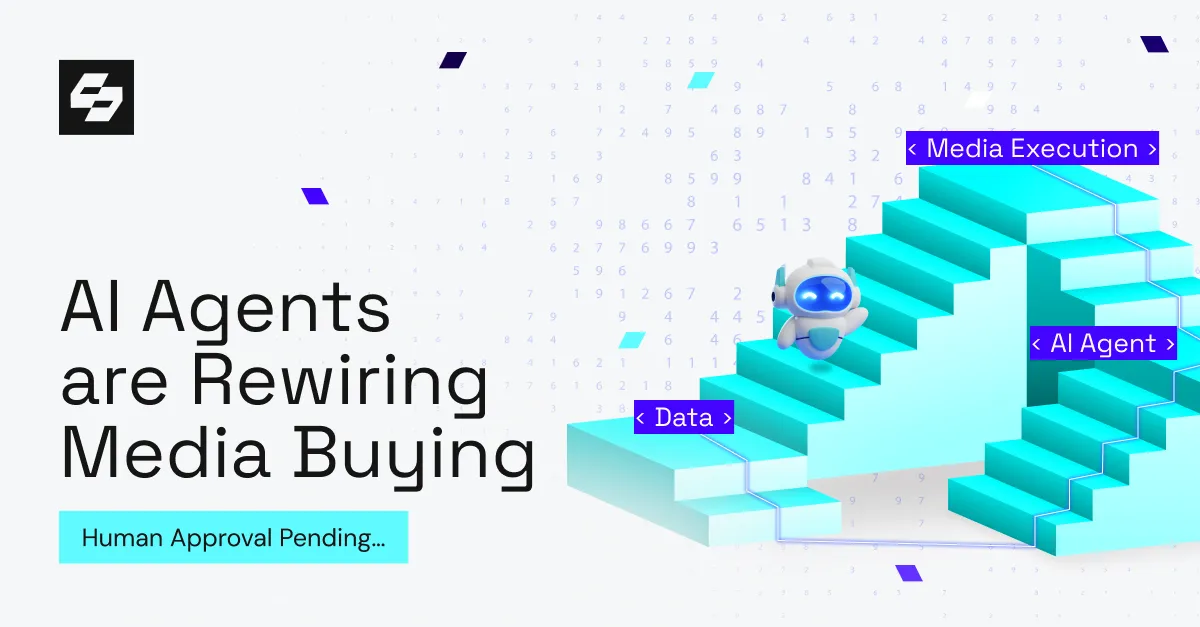
From structured data to autonomous execution, agentic AI transforms media buying into continuous orchestration — powered by interoperable programmatic standards.
How Publishers and Platforms Should Prepare
For publishers and adtech platforms, preparing for agentic AI does not require abandoning current technology stacks. The most effective strategy is to ensure that existing data flows follow structured schemas and remain compatible with evolving frameworks. Companies that focus on transparency, interoperability, and governance will be better positioned to adopt AI-driven workflows without introducing unnecessary complexity.
Transitioning toward agentic AI should be viewed as a gradual evolution rather than a disruptive shift. By strengthening data quality, aligning with industry standards, and exploring automation use cases, organizations can introduce AI agents into their operations with confidence. The goal is not to replace programmatic systems but to enhance them with intelligent orchestration that drives efficiency and growth.
The rise of AI agents is also reshaping supply paths and reseller dynamics — especially in CTV. If you want to understand how new regulations and platform changes affect independent publishers, check out our previous analysis: CTV Resellers Crackdown: What Indie Publishers Should Know.
The Future of Agentic AI in Advertising
Agentic AI represents a natural progression of programmatic advertising rather than a radical departure from it. By combining autonomous intelligence with established standards, the industry can unlock new levels of efficiency while maintaining transparency and trust. As frameworks continue to evolve, companies that prioritize interoperability will likely move faster and achieve more sustainable results.
At Screencore, we see agentic AI as an opportunity to build smarter infrastructure without sacrificing the foundations that already work. The future of advertising will not be defined by replacing standards, but by empowering them with intelligent automation.
Ready to Explore Agentic AI for Your Ad Stack?
If you’re planning your AI roadmap or looking to align with emerging programmatic AI frameworks, our team can help you design scalable solutions built on industry standards.
Contact our experts. Let’s build the future of intelligent advertising together.