



Artificial intelligence has become the engine of modern programmatic advertising. It decides bids, predicts outcomes, optimizes budgets, and matches ads to audiences at a speed no human team could match. But as AI takes on more responsibility inside ad tech stacks, a critical question is emerging across the industry: not what AI can do — but what it should do.
The future of programmatic will not be defined by how much automation a platform offers. It will be defined by how responsibly that automation is built, governed, and applied. Data quality, privacy protection, and human oversight are no longer optional features. They are the foundation of trust, performance, and long-term growth.
AI will not replace marketers — but it will clearly separate those who understand how to use it responsibly from those who do not.
Why AI Alone Is Not Enough
AI is extremely good at finding patterns. It can process millions of signals in milliseconds and optimize toward a defined goal. But AI has one critical limitation: it does not understand context, intent, or consequences the way humans do.
If an AI model is trained on noisy data, it will optimize noise. If it is fed biased or incomplete signals, it will reinforce those biases at scale. And if it is left unchecked, it may optimize toward short-term metrics while quietly damaging brand safety, user trust, or long-term performance.
This is why responsible AI in ad tech starts long before automation. It starts with data discipline.
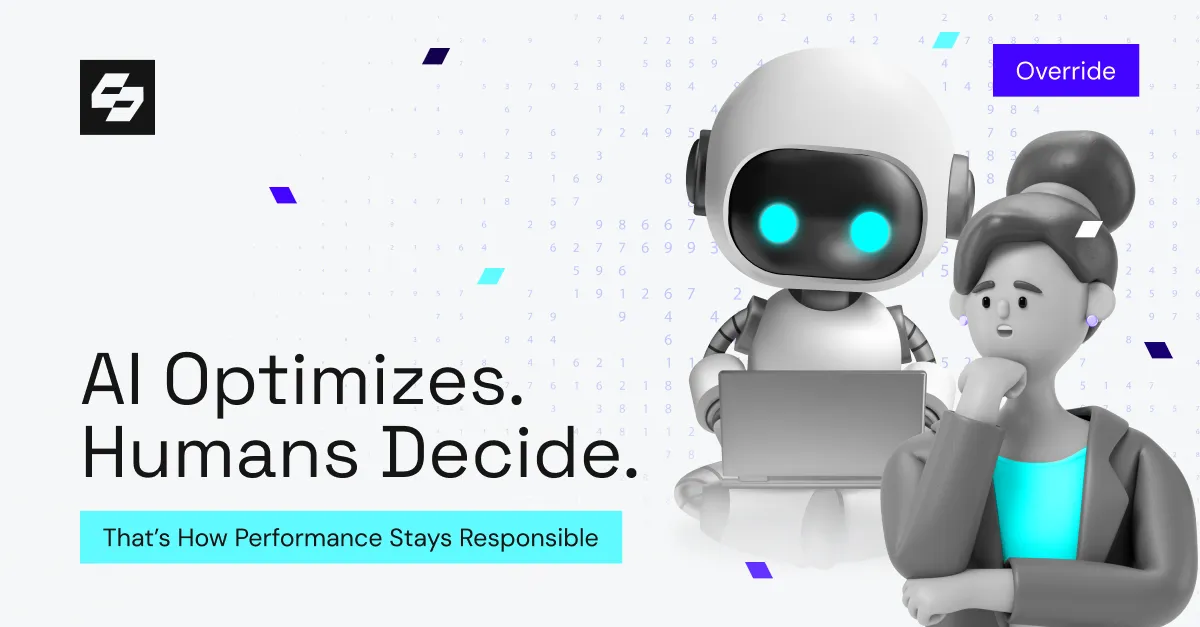
AI handles real-time optimization while human experts maintain strategic oversight and decision-making authority.
Data Quality Is the First Layer of Responsibility
No AI system is better than the data that feeds it. In programmatic advertising, data fragmentation, duplication, and mislabeling remain persistent challenges. Overlapping audiences, resold inventory, inflated signals, and unclear supply paths create an environment where AI can make fast decisions — but not always good ones.
A responsible ad tech stack prioritizes clean, validated data inputs. That means reducing unnecessary intermediaries, validating supply paths, and ensuring that audience and contextual signals reflect real user behavior, not assumptions or recycled segments.
When data quality improves, AI becomes more accurate, more predictable, and more aligned with business outcomes. When data quality is ignored, automation simply accelerates inefficiency.
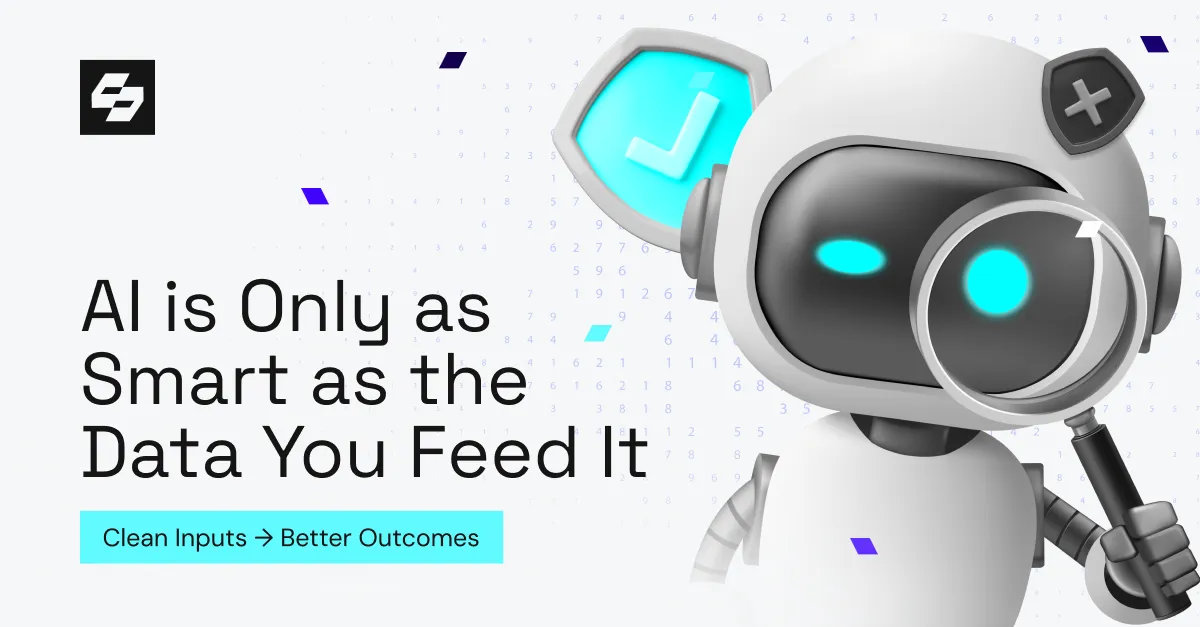
Responsible AI ad tech requires clean data inputs to eliminate noise and ensure programmatic optimization translates into real business outcomes.
Privacy Is Not a Constraint — It Is a Design Principle
As third-party cookies disappear and global privacy regulations tighten, responsible AI must operate within strict privacy boundaries. This does not weaken AI. In fact, it strengthens it.
Privacy-first architectures force platforms to rely on contextual signals, first-party data, and real-time intent rather than invasive tracking. This shift pushes AI models to become smarter, not broader. Instead of chasing individuals across the web, AI learns to understand moments, environments, and relevance.
A responsible AI-driven stack treats privacy compliance not as a legal checkbox, but as a core design principle. It ensures consent management, data minimization, and secure processing are built directly into optimization logic. The result is advertising that respects users while still delivering measurable performance.

Using AI to win long-term user trust through secure data processing and consent-driven optimization.
Why Human Oversight Still Matters
Automation should never mean abdication.
AI excels at execution, but humans remain essential for strategy, judgment, and accountability. Responsible platforms build human oversight into their systems, allowing experts to review optimization logic, validate outcomes, and intervene when patterns raise concerns.
This human layer is especially critical when AI decisions affect brand reputation, budget allocation, or user experience. Marketers need to understand why a system makes certain choices, not just see the results after the fact.
Explainable AI, transparent reporting, and human-in-the-loop controls are what transform automation from a black box into a trusted partner.
Responsible AI Drives Better Performance
There is a misconception that responsibility slows growth. In reality, the opposite is true.
Platforms that invest in data quality, privacy-first design, and human oversight deliver more stable performance over time. Campaigns become more predictable. Optimization becomes more efficient. And trust between advertisers, publishers, and platforms grows stronger.
Responsible AI reduces wasted spend, protects brand equity, and supports sustainable scaling — especially in complex environments like CTV and omnichannel programmatic, where poor signals can quickly distort outcomes.
The Industry Is Already Moving This Way
The shift toward responsible AI is not theoretical. Leading buyers and platforms are already deprioritizing opaque data practices, unreliable segments, and automation they cannot audit.
DSPs are demanding cleaner inputs. Publishers are investing in verified supply. And advertisers are asking tougher questions about how AI decisions are made.
This evolution mirrors the broader transition away from Deal-ID dependency and toward transparent, performance-driven buying models. If you want deeper context on that shift, we recommend revisiting our previous article on why publishers must adapt as DSPs move beyond Deal-IDs.
Together, these trends point to a single conclusion: responsible AI is becoming the new competitive advantage in ad tech.
Building the Right Stack for the Future
A responsible AI-driven ad tech stack is not defined by how advanced its algorithms sound in marketing copy. It is defined by how well it balances speed with scrutiny, automation with accountability, and performance with trust.
As the industry matures, platforms that treat AI as a partner — not a replacement for human judgment — will lead the next phase of programmatic advertising.
If you are building toward that future and want guidance on designing an AI-driven stack that delivers performance without compromise, our team is ready to help.
Let’s talk about building responsible, future-proof programmatic solutions.