


Programmatic advertising was built on the promise that more data would lead to better decisions. More signals, more segments, more targeting layers. But today, that promise is breaking down. Instead of clarity, many DSPs are drowning in fragmented datasets, duplicated signals, and noisy audience definitions that look impressive on paper but fail to deliver performance.
The industry has entered a phase where data volume no longer equals value. In fact, excessive data often hides real intent rather than revealing it. AI is not about replacing marketers — it is about redefining how intelligence is applied. The same principle applies to audience targeting. The future belongs to platforms that can turn raw data into actionable intent, not those that simply collect more of it.
At Screencore, we see this shift happening across every channel — especially in CTV and immersive video environments — where signal quality matters more than ever.
The Problem With Data Overload in Programmatic
Modern bidstreams carry thousands of attributes, IDs, contextual tags, and behavioral hints. But not all data is created equal. Much of it is outdated, inferred, resold, or detached from real user intent. When DSPs optimize toward these bloated datasets, they risk bidding on assumptions rather than reality.

Volume is vanity. Value is sanity. When you confuse raw data with intelligence, you aren't optimizing campaigns — you're just funding the noise.
This is particularly dangerous in CTV. Unlike desktop or mobile, CTV lacks consistent user-level feedback loops. When transparency is limited and identity signals are weak, low-quality data quickly becomes amplified. Campaigns scale, but performance stalls. CPMs rise, but outcomes become harder to explain.
Data overload creates three core problems. It slows decision-making, it distorts optimization models, and it inflates costs without improving results. AI does not fix this automatically. Without clean inputs, even the smartest algorithms simply optimize noise faster.
Why AI Changes the Equation — If Used Correctly
AI’s real power in programmatic is not prediction alone. It is prioritization. AI excels at identifying which signals matter right now and which ones should be ignored. Instead of stacking endless audience layers, AI-boosted targeting focuses on dynamic patterns that reflect real intent in the moment.
This means shifting away from static audience packages and toward on-demand audience curation. Rather than buying predefined segments built months ago, DSPs can assemble audiences in real time based on live behavior, contextual relevance, device signals, and placement quality.
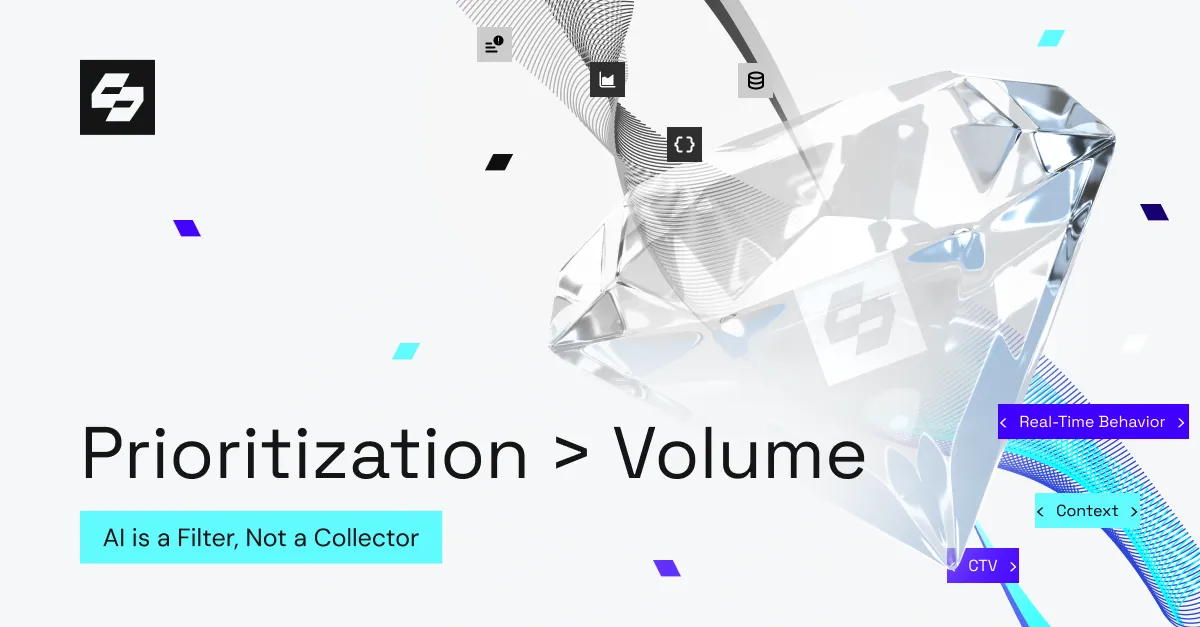
True AI isn't a vacuum; it's a filter. We don't just collect the bidstream — we refine it, prioritizing clear signal over endless volume.
At Screencore, our AI models evaluate bidstream signals continuously, filtering out duplicated, resold, or low-confidence data before bids are placed. The result is not just cleaner auctions, but more accurate targeting that adapts as user intent evolves.
From Segments to Signals: The Rise of Intent-Based Audiences
Intent-based audiences are not defined by who users were yesterday, but by what they are doing right now. They emerge from patterns across content consumption, device behavior, session context, and ad environment quality.
In CTV, this is especially powerful. A viewer’s engagement with specific content genres, time-of-day habits, ad completion behavior, and screen environment can signal intent far more reliably than legacy demographic labels. AI connects these dots at scale, turning fragmented signals into unified buying decisions.
This approach benefits advertisers immediately. Campaigns become more efficient because budgets are allocated toward impressions with real relevance. Waste drops because DSPs stop chasing broad segments that look large but convert poorly. Performance becomes more predictable because optimization is grounded in real behavior, not assumptions.
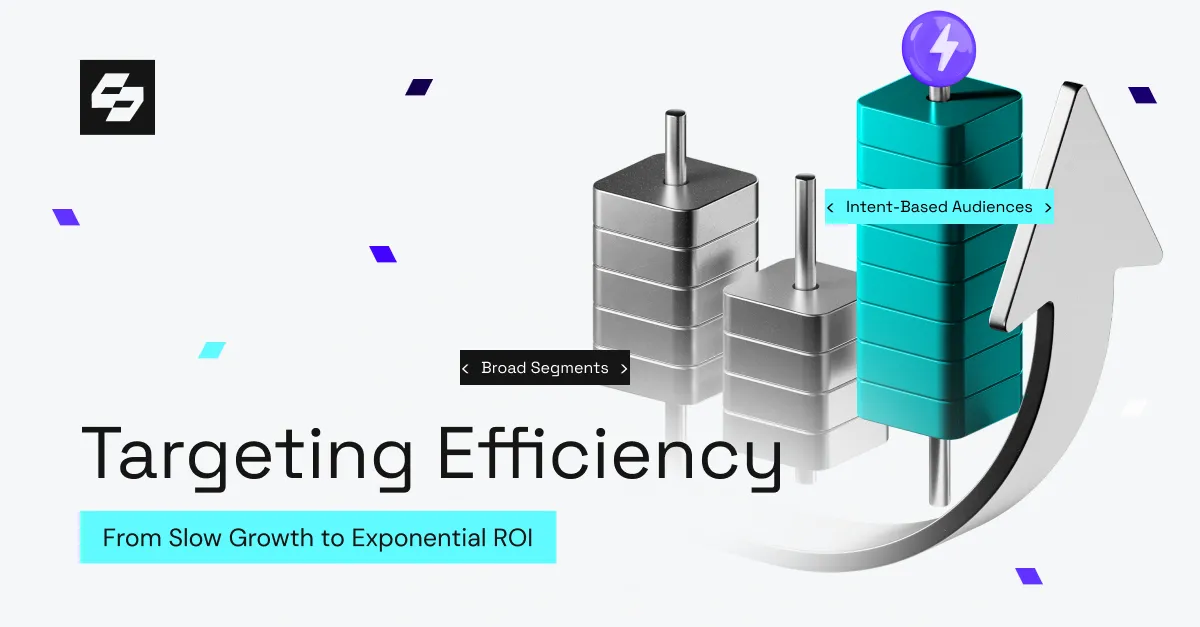
Static segments look backward; intent looks forward. We shift budgets from broad assumptions to precise, real-time behavior that drives exponential ROI.
Clean Supply Is the Foundation of Smart AI
AI-boosted targeting only works when supply paths are clean. If impressions are resold, duplicated, or misrepresented, intent signals lose meaning. That is why Screencore’s marketplace is built on direct publisher connections and real-time quality enforcement.
Processing hundreds of thousands of requests per second across web, mobile, CTV, audio, and immersive formats, Screencore filters bidstreams before AI models ever act on them. Suspicious inventory is removed instantly. Signal fidelity is preserved. Optimization happens on verified data, not inflated volume.
This is how AI becomes an advantage instead of a risk. By pairing real-time verification with machine learning, DSPs can move faster without sacrificing control.
What Advertisers Should Expect From AI-Boosted Targeting
Advertisers evaluating AI-driven platforms should look beyond buzzwords. The real question is not whether AI is used, but how it is trained and what data it trusts. A strong DSP should be able to explain how it prioritizes signals, how it avoids data duplication, and how it adapts targeting logic across channels.
Transparency is key. If a platform cannot show why a bid was placed or which signals influenced the decision, AI becomes a black box rather than a performance engine. At Screencore, every optimization is traceable, allowing advertisers to understand not just results, but the logic behind them.
Why This Shift Matters Now
As privacy regulations tighten and third-party identifiers continue to disappear, intent-based targeting will become the default, not the exception. AI will be the only scalable way to interpret complex, privacy-safe signals in real time.
DSPs that cling to data volume will struggle with rising costs and declining trust. Those that embrace clean data, verified supply, and AI-driven prioritization will deliver stronger ROI and more resilient performance.
The efficiency of your Demand-Side Platform (DSP) hinges on clean data and accurate targeting.
Is your CTV strategy legal for 2026? Data overload hurts your ROI, but ignoring privacy regulations hurts your existence. As we shift toward intent-based targeting, the demand for transparency is non-negotiable. If you missed our breakdown of the incoming privacy shifts and transparency standards, catch up now. Don't build your future on a foundation that's about to be regulated away. See the 2026 Outlook.
Build Smarter Audiences & Boost Your ROI
Stop letting data overload complicate your programmatic strategy.
At Screencore, we believe AI should deliver clarity, speed, and real accountability, helping advertisers and publishers move beyond data noise toward verifiable, intent-based performance.
Ready to activate AI-boosted targeting built on clean auctions and verified signals?
Schedule your discovery call now and learn how quickly we can transform your audience quality and bottom line.