



Connected TV has become the fastest-growing channel in digital advertising. Budgets are shifting from linear TV to streaming platforms at record speed, driven by scale, premium content, and advanced targeting promises. But behind the growth headlines sits a growing problem the industry can no longer ignore: CTV is expanding faster than its transparency and governance.
CTV is exploding, attracting massive ad budgets, but its reporting is terrible. You pay top dollar, but you don't get the basics. CTV offers less transparency than basic digital video platforms like YouTube. Buyers know their ad ran, but they often don't know where it ran, if the viewer was paying attention, or if the ad actually worked. This lack of clear, verifiable data is a major risk for anyone treating streaming as their main advertising future.
By 2026, CTV will no longer be judged only by reach or CPMs. It will be judged by trust. Regulation, privacy expectations, and demand for clean data flows are converging to reshape how streaming ads are bought, sold, and measured.
Why Transparency Is Becoming the Defining CTV KPI

The Fragmentation Tax: Maze illustration showing how advertiser budget is lost and taxed by excessive hops and opacity in the CTV supply path.
CTV promised TV-like impact with digital-level precision. What many buyers received instead was fragmented supply, duplicated bid paths, unclear app-level placement, and limited insight into where ads actually appeared.
In many cases, advertisers cannot confidently answer basic questions: which app delivered the impression, how many intermediaries touched it, or whether the audience data was authentic. This lack of clarity inflates costs, weakens performance, and increases brand risk.
Transparency is no longer a “nice to have.” It is becoming the minimum requirement for budget allocation. By 2026, streaming platforms and DSPs that cannot clearly validate inventory sources, audience signals, and delivery context will struggle to attract premium demand.
At Screencore, where we process hundreds of thousands of requests per second across web, mobile, and CTV, this shift is already visible. Buyers are no longer asking for more volume. They are asking for proof.
Regulation Will Force the Industry to Grow Up
Privacy regulation is no longer theoretical. GDPR, CCPA, and emerging regional frameworks are already changing how data can be collected, shared, and activated. CTV has not escaped this scrutiny — and in many cases, it has lagged behind.
Unlike web environments, many CTV apps still rely on loosely governed identifiers, limited consent signals, and opaque data-sharing practices. That gap will not survive the next wave of enforcement.
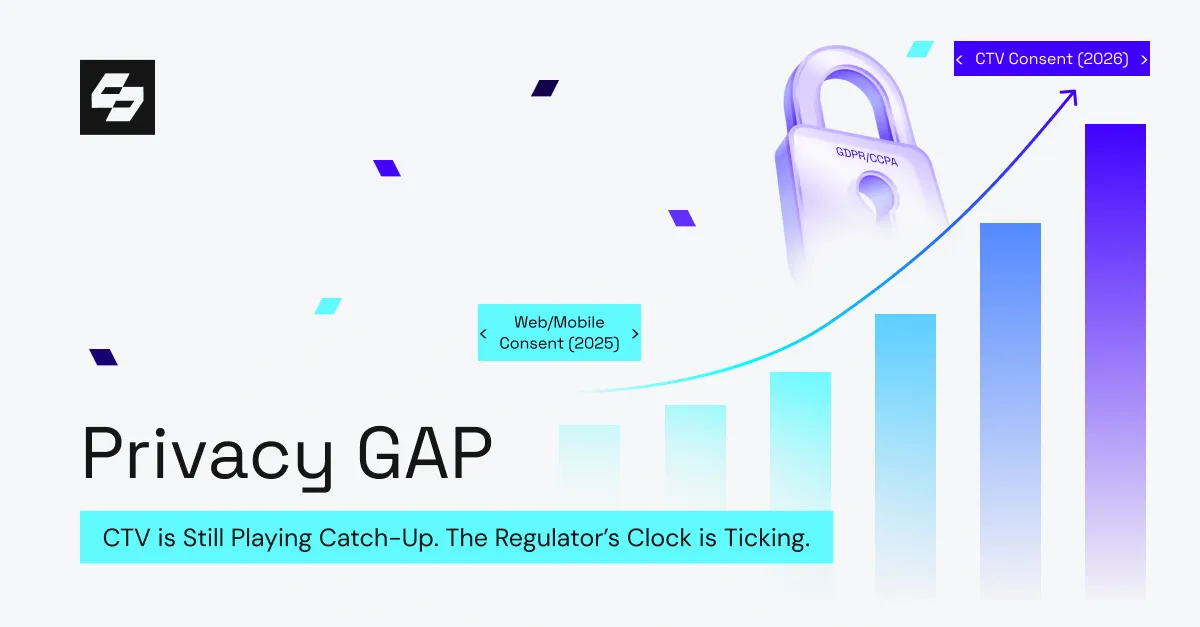
CTV Privacy Gap 2026: Chart illustrating how CTV consent and privacy compliance lag behind Web and Mobile environments, signaling future regulatory risk.
By 2026, regulators will expect streaming ecosystems to demonstrate clear consent handling, transparent data usage, and accountability across the entire supply path. DSPs and marketplaces that cannot enforce privacy-safe bidding and real-time compliance checks will expose advertisers to unnecessary risk.
The result is inevitable: privacy-first architecture will become a competitive advantage, not a constraint.
The Hidden Cost of Opaque CTV Supply
Lack of transparency does more than violate best practices. It quietly destroys performance.
When inventory is resold through multiple layers, signals degrade. When bid requests are duplicated, auctions inflate. When audience data cannot be verified, targeting becomes guesswork. And when advertisers cannot see where ads run, optimization turns reactive instead of strategic.
This is why many CTV campaigns look strong on the surface but underperform against true business outcomes. Reach without accountability is not performance. It is exposure without assurance.
By 2026, advertisers will increasingly shift spend toward platforms that offer clean auctions, direct publisher access, and real-time quality enforcement — even if that means buying fewer impressions at higher confidence.
How Transparency Will Redefine the DSP Role
DSPs will play a central role in determining whether CTV matures or fragments further. The old model of prioritizing access over integrity will no longer work.
Winning DSPs will be those that actively reject resold inventory, eliminate bid duplication, and enforce strict supply-path validation. They will treat data quality as a performance lever, not a reporting footnote.
At Screencore, we’ve built our marketplace around this philosophy. Our open RTB environment connects buyers directly to premium publishers across CTV and digital formats, minimizing unnecessary hops and preserving signal fidelity. Combined with always-on brand safety and verification partnerships, this approach creates a cleaner, more predictable CTV buying experience.
The future DSP is not a traffic aggregator. It is a trust layer.
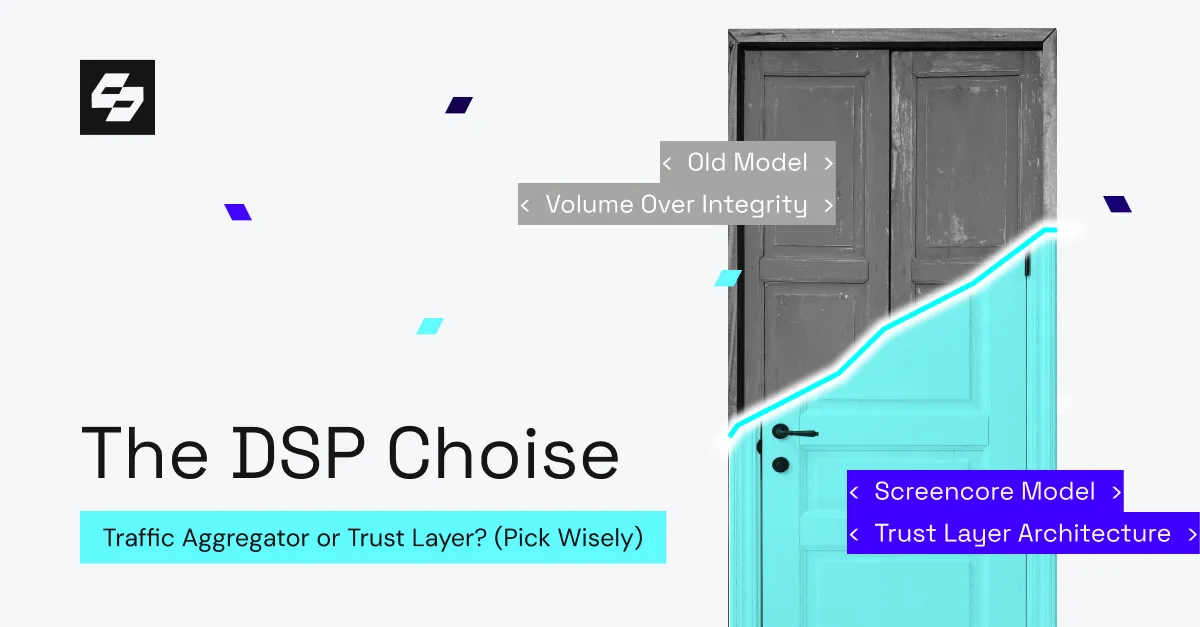
The DSP Choice: Visual metaphor comparing the old programmatic model (Volume Over Integrity) to the Screencore Trust Layer Architecture for cleaner CTV bidding.
Publishers Will Be Rewarded for Clean Supply
This transformation does not only benefit advertisers. Publishers who invest in transparent integrations, direct connections, and privacy-compliant data practices will see stronger demand and more stable revenue.
As regulation tightens and buyers become more selective, premium inventory will no longer compete on volume alone. It will compete on reliability, clarity, and user experience. Clean supply paths reduce auction noise, improve yield stability, and attract long-term demand partnerships.
By 2026, publishers who prioritize integrity over short-term fill will be better positioned to thrive in a regulated, performance-driven CTV ecosystem.
What Advertisers Should Demand Moving Forward
Advertisers entering CTV in the next two years should rethink how they evaluate partners. Asking about reach and CPMs is no longer enough. The real questions are about visibility, verification, and control.
Brands should expect transparency into supply paths, real-time brand safety enforcement, and clear reporting that explains not just what happened, but why. DSPs that cannot provide these answers will increasingly fall out of favor — regardless of scale.
CTV 2026 Will Reward Clarity Over Chaos
The next phase of streaming advertising will not be defined by who owns the most inventory. It will be defined by who can prove the quality of every impression.
Regulation will raise the floor. Privacy will reshape data usage. And transparency will determine who earns advertiser trust.
Don't let inefficiency steal your budget. For a deeper look at the immediate ROI gains unlocked by true infrastructure integrity, click through to our deep-dive: “What DSPs Lose When They Ignore Audience Overlap — And How Clean Data Sales Can Save Campaign ROI.”
Is your current DSP playing defense or offense? See the ROI difference when performance is engineered, not hoped for. Schedule your strategic audit.